On this page
- Nazaré in 2026: Still Worth the Journey, But Go in With Clear Eyes
- What Kind of Place Is Nazaré, Really?
- The Big Waves — What’s Actually Happening at Praia do Norte
- The Old Town on the Cliff (Sítio) and Why Most Visitors Skip It
- Traditional Fishing Culture — What Survives in 2026
- Where to Eat in Nazaré — Specific Spots, Honest Opinions
- 2026 Budget Reality — What Everything Costs
- Day Trip or Overnight?
- Getting to Nazaré and Getting Around
- Practical Wisdom for the Waves, the Crowds, and the Cliffs
- Frequently Asked Questions
💰 Click here to see Portugal Budget Breakdown
💰 Prices updated: August, 2026. Budget figures are estimates — always verify before travel.
Exchange Rate: $1 USD = €0.86
Daily Budget (per person)
Shoestring: €40.00 – €90.00 ($46.51 – $104.65)
Mid-range: €130.00 – €200.00 ($151.16 – $232.56)
Comfortable: €250.00 – €500.00 ($290.70 – $581.40)
Accommodation (per night)
Hostel/guesthouse: €15.00 – €45.00 ($17.44 – $52.33)
Mid-range hotel: €100.00 – €190.00 ($116.28 – $220.93)
Food (per meal)
Budget meal: €10.00 ($11.63)
Mid-range meal: €35.00 ($40.70)
Upscale meal: €100.00 ($116.28)
Transport
Single metro/bus trip: €2.00 ($2.33)
Monthly transport pass: €40.00 ($46.51)
Nazaré in 2026: Still Worth the Journey, But Go in With Clear Eyes
Nazaré has been one of Portugal’s most visited Atlantic towns for years, and the 2026 season is shaping up to be its busiest yet. The world surfing media keeps circling back here every autumn, and that attention has turned a working fishing town into something more complicated — part living museum, part surf pilgrimage site, part tourist trap with excellent seafood. If you arrive expecting a quiet village of women in traditional dress and empty cliff paths, you will be surprised. If you arrive knowing what it actually is — a loud, proud, slightly chaotic place where enormous waves and real local life still coexist — you will love it.
What Kind of Place Is Nazaré, Really?
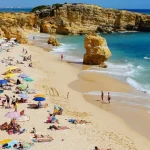
Nazaré sits on the Silver Coast (Costa de Prata) in the Oeste region of central Portugal, about 120 kilometres north of Lisbon. It is not Algarve-polished. The seafront promenade, the Avenida da República, feels more like a seaside town in the 1980s than a curated Instagram destination — and that is a compliment. There are tiled buildings, fish drying on wooden racks in the sun, and women still selling dried and salted fish from beach carts on the lower promenade in the early morning.
The town splits into three distinct zones. Praia is the beach-level neighbourhood where most tourists stay — it has the long sandy beach, the restaurants, the souvenir shops. Sítio is the clifftop old town, reached by a funicular built in 1889, and it feels genuinely apart from the crowds below. Pederneira is the third neighbourhood on a second hill, mostly residential, rarely visited. Most people see only Praia and think they have seen Nazaré. They have not.
The town year divides roughly into two personalities. From June to September, the beach is packed with Portuguese families and European tourists. From October to March, the big swells arrive and the surf world descends. The shoulder months — April, May, late September — offer the best balance: manageable crowds, open restaurants, and the Atlantic still showing itself.

The Big Waves — What’s Actually Happening at Praia do Norte
Praia do Norte is on the north side of the headland, separated from the main beach. The waves here regularly reach 20 to 30 metres during major swells, making them among the tallest ever ridden anywhere in the world. The reason is geological: an underwater canyon called the Nazaré Canyon, one of the largest submarine canyons in Europe, channels deep-water energy directly toward shore, amplifying swells that would dissipate elsewhere.
Standing on the cliff above Praia do Norte during a big swell event is one of the most physically arresting experiences in Portugal. The sound reaches you before the sight does — a low, rhythmic detonation that you feel in your chest more than hear with your ears. When a set wave finally rises and a surfer drops into it, the scale becomes genuinely difficult to process. Human figures look like dust particles against white water the size of a building.
In 2026, the Nazaré Tow Surfing Challenge (the WSL big wave event held here) continues to draw crowds to the clifftop from October onward. The event is not held on a fixed date — it operates on a waiting period format, meaning organizers call it when conditions are right, sometimes with 48 hours notice. Follow the WSL app or the Nazaré official surf pages if catching a competition day matters to you.
Outside competition events, you can watch free surfers and tow teams working the break on any major swell day from October through March. The viewing point at the Forte de São Miguel Arcanjo is free to access and gives an excellent angle. Arrive early — by 9 or 10 in the morning during a known swell day, the clifftop fills quickly. Parking at Praia do Norte is limited and gets chaotic; if you are staying in town, walk over the headland path (about 20 minutes from the funicular top station).
The Old Town on the Cliff (Sítio) and Why Most Visitors Skip It
The funicular (Elevador da Nazaré) runs from the lower town up to Sítio and costs €1.30 each way in 2026. Most day-trippers ride it up, take a photo of the view, and ride back down in under twenty minutes. This is a mistake.
Sítio is a proper old neighbourhood with a different rhythm entirely. The central square, Praça de Sousa Oliveira, is surrounded by a working church (the Santuário de Nossa Senhora da Nazaré), a handful of restaurants that serve real local lunches rather than tourist menus, and elderly residents who sit outside in the afternoons as though the town below does not exist. The church itself is significant — it dates from the 12th century in its origins and contains a grotto where a statue of the Virgin Mary was reportedly hidden during Moorish occupation. The tiled interior is modest but genuinely atmospheric.
The clifftop viewpoint, the Miradouro do Suberco, looks directly down onto the main beach and out over the Atlantic. On clear days you can see up the coastline toward São Martinho do Porto. The drop below is vertiginous enough that you feel it in your legs.

Plan at least 90 minutes in Sítio, ideally timed for lunch. There are fewer than a dozen restaurants here and they fill up, especially on weekends. The slower pace after the beach-level energy is noticeable immediately — and a significant part of understanding what Nazaré actually is.
Traditional Fishing Culture — What Survives in 2026
Nazaré’s fishing identity is real, but it takes some effort to separate what is genuine from what has been staged for visitors. The town was built around artisanal fishing — particularly the characteristic wooden boats called barcos de praia that were launched directly through the surf from the beach. These boats are no longer used for active fishing, but several are preserved on the beach as heritage objects.
What does survive is the dried fish trade. In the early mornings, particularly from spring to autumn, you will still find polvo (octopus) and various fish spread on wooden drying frames called estendedouros along the lower promenade. The smell is briny and intense in the best possible way — salt and sun and ocean all at once. Women in traditional dress — the seven-layered skirts (sete saias) that Nazaré is known for — are still sometimes present, though the younger generations largely do not wear them daily. If you see older women in full traditional dress near the fish market area in the morning, they are generally not a tourist attraction; they are doing their day.
The Museu Dr. Joaquim Manso on the seafront promenade covers Nazaré’s fishing history with genuine depth. It is small, not particularly glossy, and worth an hour of your time. Admission is around €2 in 2026. The fishing boats section and the photographs of old surf launches are the strongest parts.

The active fishing port has largely shifted north toward the marina area. Small trawlers still unload early morning catches, and if you are an early riser — before 7am — you can watch this directly at the port without any ceremony or fuss.
Where to Eat in Nazaré — Specific Spots, Honest Opinions
The seafront restaurants on the lower promenade range from excellent to mediocre, and the distinction often comes down to whether they are chasing the tourist lunch or actually cooking. Here is what holds up in 2026.
A Tasca do Sebo
A small, unpretentious spot just off the main promenade. Strong on caldeirada (the local fish stew cooked in layers with potatoes and tomato), and the grilled horse mackerel (carapau grelhado) here is as good as anywhere in the Centro region. Cash preferred. Expect to pay €12–16 for a full fish lunch with wine.
Mar Bravo
Reliable and slightly more polished, with a direct view of the beach. Better for visitors who want a comfortable sit-down meal without worrying about whether the kitchen is working that day. The seafood rice (arroz de marisco) is the thing to order here — it arrives soupy and fragrant with a dark crust around the clay pot edges. Mid-range prices, around €18–25 per person with drinks.
Restaurants in Sítio
For lunch in the clifftop neighbourhood, O Casalinho on Praça de Sousa Oliveira is a local standby. Grilled fish, simple salads, honest portions. Around €10–14 per person. The tables outside face the square and catch the afternoon sun. This is where you eat when you want to feel like you are in a Portuguese town rather than a beach resort.
Pastelaria do Centro
For breakfast or a mid-morning coffee, this pastelaria on Rua Mouzinho de Albuquerque does proper pastéis de nata — the custard tarts arrive warm, the pastry shatters cleanly, and the custard centre still moves slightly when you pick it up. A coffee and two tarts costs under €3.

2026 Budget Reality — What Everything Costs
Nazaré is not cheap by Portuguese regional standards anymore. The wave tourism and general Silver Coast demand have pushed prices notably higher since 2023. Here is an honest picture of what to expect in 2026.
- Budget accommodation (guesthouses, simple pensões): €55–75 per night for a double room in the low season; €85–120 in summer peak.
- Mid-range hotels (seafront or Sítio area): €120–180 per night in summer. Some properties now charge a premium for Atlantic-facing rooms.
- Comfortable/boutique stays: €200–280 per night. There are a handful of well-converted properties; the supply of true boutique accommodation remains limited.
- Lunch at a local restaurant (full meal with wine): €12–18 per person at simple tascos; €20–30 at mid-range spots.
- Funicular (return): €2.60
- Museum entry (Museu Dr. Joaquim Manso): €2
- Surf lesson (if offered on the main beach in calmer conditions): €35–50 for a beginner group session. Note that Praia do Norte is emphatically not for beginners — lessons operate on the main southern beach only.
- Parking (day rate in the central car parks): €6–10 depending on season. During major swell events, informal parking areas fill early and some charge €15 or more.
The cost gap between visiting midweek in spring versus a summer Saturday is significant — both in accommodation and in how enjoyable the experience actually is.
Day Trip or Overnight?
Nazaré is 120 kilometres from Lisbon, which makes it technically doable as a day trip. But the honest answer is that a day trip gives you the beach and a lunch — it does not give you Nazaré.
If your purpose is specifically to watch big waves at Praia do Norte during a swell event, a day trip is often the right call. You come up on the bus or by car, spend the morning at the cliff, eat lunch in Sítio, and head back. That is a complete and satisfying day.

If you want to understand the town — the fishing culture, the quiet of Sítio in the evening, the early morning port activity, the way the light hits the Atlantic just before sunset from the clifftop — stay at least one night, preferably two. The town shifts after the day-trippers leave. Streets quiet down, the local restaurants fill with residents, and the sound of the Atlantic takes over. That version of Nazaré is worth the extra night.
Nazaré also works well as part of a Silver Coast loop: Óbidos (30 minutes south) and Alcobaça (15 minutes east) are both strong day-trip companions if you are staying for two nights. The Alcobaça monastery is one of the most impressive Gothic buildings in Portugal and takes under two hours to visit properly.
Getting to Nazaré and Getting Around
By Bus from Lisbon
Rede Expressos operates direct services from Lisbon’s Sete Rios terminal to Nazaré. Journey time is around 1 hour 45 minutes. As of 2026, services run multiple times daily with the first morning departure around 7:30am. Tickets cost approximately €12–15 one way booked in advance online. The bus drops you at the Nazaré bus station on the edge of the lower town, about a 10-minute walk from the seafront.
By Car
The A8 motorway from Lisbon makes the drive straightforward — roughly 1 hour 20 minutes in normal traffic. Exit at Valado dos Frades and follow signs into town. Be aware that parking in the central beach area is tight in summer and completely chaotic during swell events. If you are arriving for a wave event, consider parking near the Sítio funicular at the top and walking or taking the funicular down.

By Train
There is no direct train to Nazaré. The closest CP rail station is Valado-Nazaré, on the Oeste line running from Lisbon’s Oriente station. The station is about 6 kilometres from town and has no reliable local bus connection to the centre. You would need a taxi or a ride-share from the station, which adds cost and complication. The bus is significantly more convenient for rail-free travellers.
Getting Around Town
The lower town and beach area are walkable. The funicular handles the cliff connection. If you want to reach Praia do Norte, the coastal path from the Sítio clifftop is about 20 minutes on foot and gives you good views along the way. Taxis and ride-shares (Bolt operates in Nazaré as of 2026) cover the gaps. Cycling is possible but the hills between neighbourhoods make it impractical for most visitors.
Practical Wisdom for the Waves, the Crowds, and the Cliffs
A few things that most travel articles on Nazaré either skip or get wrong:
- The main beach is safe for swimming in summer, but it is flagged frequently due to Atlantic rip currents. Always check the flag system before entering the water — a yellow flag means caution, red means no swimming. Lifeguards are present June through September.
- Praia do Norte is never safe for swimming. Do not go near the water’s edge here, ever. During swell events, sneaker waves have reached areas that look safe. The warning signs are serious.
- The best photography of the big waves is from the Forte de São Miguel Arcanjo cliff platform, not from the beach. The telephoto angle from above compresses the scale impressively. A 200mm lens or equivalent on a phone gets you close enough.
- Nazaré gets very cold and windy in winter. Bring a proper windproof layer even if you are visiting during a swell event in October or November. The clifftop at Praia do Norte channels wind aggressively and the temperature feels significantly lower than the forecast suggests.
- Traditional dress sightings are most common in the early morning and around the fish market area. Approaching older women for photos without asking is widely considered rude by locals. A simple gesture or smile and a raised camera will usually get you a friendly response if you ask.

Frequently Asked Questions
When is the best time to see the big waves at Nazaré?
The main big wave season runs from October to March. The largest swells typically arrive in November, December, and January. September and February can also produce significant waves. Summer months (June to August) see small to flat conditions at Praia do Norte — the main beach is better for swimming in those months.
Can you swim at Nazaré beach?
Yes, the main Praia da Nazaré is a lifeguarded beach suitable for swimming in summer when conditions allow. Always check the flag system. Praia do Norte, where the big waves occur, is never safe for swimming and entry to the water is prohibited regardless of conditions.
How do I get from Lisbon to Nazaré without a car?
The most practical option is the Rede Expressos bus from Lisbon’s Sete Rios terminal, which runs several times daily and takes about 1 hour 45 minutes. Tickets cost around €12–15 booked in advance. The train to Valado-Nazaré station is an option but requires a taxi for the final 6 kilometres into town.
Is Nazaré worth visiting outside the big wave season?
Yes. The summer beach season (June to September) is busy and lively, with the long sandy beach and full restaurant scene in operation. Spring visits in April and May offer the best balance of decent weather, open businesses, and manageable crowds. The fishing culture and Sítio old town are worth seeing year-round.
What is the traditional dress of Nazaré women and do people still wear it?
The traditional dress includes seven layers of brightly coloured skirts, called sete saias, worn over petticoats. It originates from the fishing community and was practical as well as distinctive. Some older women still wear it daily, particularly in the Sítio neighbourhood and near the fish market. Younger generations generally do not, though it appears at festivals and cultural events.
📷 Featured image by Filiz Elaerts on Unsplash.