On this page
- What Kind of Place Is Peniche?
- Surfing in Peniche — Breaks, Schools & the World Surf League Legacy
- Berlengas Islands — How to Get There and What to Actually Expect
- Forte de São João Baptista — Sleeping Inside a 17th-Century Fort
- The Old Town, the Peninsula & Fortaleza de Peniche
- Where to Eat in Peniche
- Day Trip or Overnight? Honest Advice for Both
- Getting to Peniche — Bus, Car & Practical 2026 Updates
- 2026 Budget Reality — What to Expect to Spend
- Frequently Asked Questions
💰 Click here to see Portugal Budget Breakdown
💰 Prices updated: August, 2026. Budget figures are estimates — always verify before travel.
Exchange Rate: $1 USD = €0.86
Daily Budget (per person)
Shoestring: €40.00 – €90.00 ($46.51 – $104.65)
Mid-range: €130.00 – €200.00 ($151.16 – $232.56)
Comfortable: €250.00 – €500.00 ($290.70 – $581.40)
Accommodation (per night)
Hostel/guesthouse: €15.00 – €45.00 ($17.44 – $52.33)
Mid-range hotel: €100.00 – €190.00 ($116.28 – $220.93)
Food (per meal)
Budget meal: €10.00 ($11.63)
Mid-range meal: €35.00 ($40.70)
Upscale meal: €100.00 ($116.28)
Transport
Single metro/bus trip: €2.00 ($2.33)
Monthly transport pass: €40.00 ($46.51)
Peniche has always attracted two very different types of visitor: surfers chasing the famous Supertubos break, and day-trippers who want to reach the Berlengas Islands. In 2026, both groups are running into the same problem — last-minute planning no longer works here. Berlengas boat permits sold out weeks in advance during summer 2025, and that pattern is holding in 2026. If Peniche is on your itinerary, the booking logistics need to happen before anything else. Once you sort that, you get one of the most rewarding coastal towns in Portugal.
What Kind of Place Is Peniche?
Peniche sits on a peninsula that juts into the Atlantic about 80 kilometres north of Lisbon. It is not a resort town. There are no beach clubs pumping music at noon, no manicured promenades lined with chain restaurants. What you get instead is a working fishing harbour that smells of salt and diesel in the best possible way, nets drying on the docks, and a population that was here long before tourism arrived and fully intends to stay.
The town centre is compact and slightly rough around the edges — faded tiles, narrow streets, a market that sells the morning’s catch. Surfers move through on foot or battered bikes. Families from Lisbon park up at the beach on weekends. Foreign travellers with big board bags line up at the bus station. It all mixes together without friction. Peniche has the rare quality of being genuinely popular without having been turned into a performance of itself.
The peninsula geography shapes daily life here. The town faces both the sheltered eastern bay and the open Atlantic on the west. Wind is constant and sometimes brutal — the kind that flattens your hair and makes café terraces suddenly feel essential. That same wind is why the Berlengas archipelago, just 12 kilometres offshore, can look clear and reachable from the harbour wall one moment and disappear into Atlantic mist the next.

Surfing in Peniche — Breaks, Schools & the World Surf League Legacy
Supertubos is the reason professional surfing came to Peniche. The break produces a fast, hollow, barrelling wave that has featured on the World Surf League Championship Tour for years. It sits just south of Peniche near the village of Baleal, and watching it on a good swell day — even from the sand — is genuinely spectacular. The wave pitches hard and fast, and on a solid day you will understand immediately why it earned the nickname “the Portuguese Pipeline.”
Supertubos is not for beginners. Neither is Molhe Leste, the break at the harbour mouth that rewards experienced surfers on north swells. For people learning, Baleal beach on the north side of the peninsula is the go-to spot. The water is calmer, the waves more forgiving, and the beach is lined with surf schools that have been operating here long enough to have their systems dialled in.
A few schools worth knowing about:
- Baleal Surf Camp — one of the longest-running operations in the area, with accommodation packages that make sense if you’re staying multiple days
- Peniche Surf School — well-regarded for beginner lessons, English-speaking instructors, and equipment rental by the hour or day
- Lagide Surf School — smaller, often less crowded in the water, good for intermediate surfers wanting more personalised coaching
Group lessons in 2026 run between €35 and €55 for a two-hour session including board and wetsuit. Equipment rental alone — board plus wetsuit — is roughly €25 to €35 per day depending on the school and season.

Berlengas Islands — How to Get There and What to Actually Expect
The Berlengas archipelago is a UNESCO Biosphere Reserve sitting 12 kilometres off the Peniche coast. The main island, Berlenga Grande, is the only inhabited one — and inhabited is generous. There is a small lighthouse, a fort converted into a hostel, a handful of fishermen’s cottages, and one restaurant that serves grilled fish in portions that make you wonder whether anyone on the island ever goes hungry.
The crossing takes about 35 to 40 minutes on the ferry operated by Viamar from Peniche harbour. Crossings run from June through September, with the most frequent service in July and August. Outside those months, weather cancellations are common and the service can be suspended entirely from October onwards. Check current schedules directly with Viamar before planning anything.
In 2026, the island access system that was trialled in 2025 remains in place. Day visitors need a permit, which is purchased through the ICNF (Instituto da Conservação da Natureza e das Florestas) online booking portal. The daily visitor cap is strictly enforced. During July and August, permits for weekends sell out three to four weeks ahead. Book the permit first, then book the ferry.
What the island actually delivers: silence, colour, and the sense of being somewhere genuinely remote despite the ferry connection to the mainland. The water around Berlenga Grande is clear enough that you can watch fish from the rocks without a mask. Kayaking through the sea caves — particularly the Furado Grande grotto — is the one activity that every visitor should do if conditions allow. Kayak hire is available on the island for around €15 to €20 for two hours.

The cliffs are red granite, deeply eroded, and home to nesting seabirds including guillemots. Arriving early on the first ferry means you have the trails and rock pools mostly to yourself before the second wave of day visitors arrives. The smell of the ocean is different out here — cleaner, colder, with an edge of iodine that stays in your lungs for hours after you return to the mainland.
Forte de São João Baptista — Sleeping Inside a 17th-Century Fort
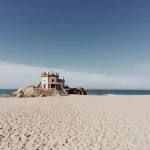
The small fort on Berlenga Grande is one of the more unusual places to sleep in Portugal. Built in the 17th century to defend the islands against pirate raids and foreign navies, the Forte de São João Baptista is connected to the main island by a narrow stone causeway. At high tide, the water comes close on both sides and the crossing feels genuinely dramatic.
Inside the fort walls, a basic hostel operates during the summer season. Accommodation is dormitory style — bunk beds, shared bathrooms, no air conditioning, and no Wi-Fi. This is not a luxury experience. The appeal is entirely atmospheric: you are sleeping inside a centuries-old fortification on an island in the Atlantic, and when the day-trippers take the last ferry back to Peniche, the island belongs to roughly 30 people. That’s it.
Bookings for the fort hostel open in spring and go fast. The price in 2026 is around €15 to €20 per person per night. You will need to bring your own food or plan to eat at the island’s single restaurant. The restaurant — Restaurante Mar e Sol — serves grilled fish, arroz de lingueirão (razor clam rice), and cold Sagres beer. Simple, local, and worth every euro.
If you’re planning to stay overnight on Berlenga, contact the Câmara Municipal de Peniche well in advance. The fort hostel is managed through official channels and sells out by May for the summer season in most years.

The Old Town, the Peninsula & Fortaleza de Peniche
Back on the mainland, Peniche itself has more depth than most visitors allow time for. The Fortaleza de Peniche — the large fort at the southern tip of the peninsula — was used as a political prison under the Salazar dictatorship until 1974. It held anti-fascist prisoners and resistance fighters, including some of Portugal’s most significant political figures of the 20th century. The escape of 10 political prisoners through the prison sewers in 1960 is one of the defining stories of Portuguese resistance history.
Today the fortaleza houses a museum — Museu Municipal — that covers both the maritime history of Peniche and the prison history with real seriousness. Entry is around €2.50 to €3. Give it an hour minimum if you want to read the exhibits. The building itself, sitting at the edge of the Atlantic with waves breaking against the walls on rough days, is striking enough to be worth the walk even without going inside.
The old town between the harbour and the fortaleza is where Peniche feels most like itself. The Mercado Municipal (town market) opens in the mornings and sells local produce, cheese, and seafood. The streets around Rua Alexandre Herculano have a concentration of tascas — small, no-fuss restaurants — that serve lunch menus to local workers. If you eat where the workers eat, you spend less and eat better.
The church of Nossa Senhora da Ajuda, on a rise above the harbour, is worth looking into for the azulejo panels inside. The tiles are 18th century and in good condition — the kind of detail that’s easy to walk past if you’re not looking for it.
Where to Eat in Peniche

Peniche has a fishing fleet. That means the seafood is fresh in a way that coastal restaurants further south often can’t match anymore. The local speciality is obrigada, a style of slow-cooked seafood dish, but the thing most visitors end up ordering is simply grilled fish — sea bass, bream, or whatever came in that morning — with boiled potatoes and salad.
Specific places worth your time:
- Restaurante Nau dos Corvos — west of the town centre, facing the Atlantic cliffs. The view alone is worth the walk. Fresh fish, good arroz de marisco (shellfish rice), and honest prices for the setting.
- Tasca do Joel — small, local, no English menu, and arguably the best grilled fish in town. Lunch only. Get there before 1pm if you want a table without waiting.
- A Sardinha — a step up in price and presentation, popular with Lisbon weekenders, solid wine list, and excellent caldeirada (Portuguese fish stew).
- Marisqueira Atlântida — if you want shellfish in quantity — percebes (barnacles), amêijoas (clams), camarão (prawns) — this is the place. Not cheap, but the produce is as local as it gets.
For breakfast, the pastelarias around the market square sell pastéis de nata and galão (milky espresso) for under €2. The natas here are less famous than Lisbon’s but made daily and worth having warm with your coffee before heading to the beach or the harbour.
Day Trip or Overnight? Honest Advice for Both
Peniche is 80 kilometres from Lisbon and reachable in about an hour by car, or 1.5 to 2 hours by bus. On paper it works as a day trip. In practice, whether it makes sense depends on what you want to do.
Come for a day trip if: You are not going to Berlengas, you just want to see the fortaleza, eat lunch, walk the cliffs, and return. This is a perfectly satisfying day out from Lisbon and requires no special planning beyond the bus schedule.

Stay overnight if: You want to surf (two or more days makes far more sense financially and physically), if you have Berlengas permits for an early ferry, or if you plan to do the full island overnight. The town is affordable to stay in, and being there in the evening — when the day visitors have gone and the harbour fishing boats are lit up — is a different experience from what you get in the middle of a busy afternoon.
Accommodation options range from surf camp packages to small guesthouses in the old town. The area around Baleal, just north of Peniche, has more rental options and a slightly more relaxed beachside atmosphere if you prefer to be closer to the calmer surf beach.
Getting to Peniche — Bus, Car & Practical 2026 Updates
There is no train to Peniche. The railway line does not extend this far along the coast, and there are no current plans for that to change. The options are bus or car.
By bus: Rede Expressos and Rodoviária do Oeste both run services from Lisbon’s Campo Grande bus terminal to Peniche. Journey time is approximately 1 hour 40 minutes to 2 hours depending on the service and stops. In 2026, there are roughly six to eight daily departures in each direction. Fares sit around €8 to €12 one way. The Peniche bus terminal is in the centre of town, a short walk from the harbour.
By car: Take the A8 motorway north from Lisbon and exit at Óbidos, then follow the IC1 west to Peniche. The drive takes about 55 to 70 minutes from central Lisbon depending on traffic. Parking in Peniche is generally available near the harbour and along the peninsula, though on peak summer weekends the main lots fill up by mid-morning.

2026 update: The Rede Expressos mobile app now covers this route with real-time seat booking, which is useful during summer when buses to Peniche can fill up on Friday afternoons. If you’re travelling on a summer weekend, booking a day ahead through the app is worth doing.
2026 Budget Reality — What to Expect to Spend
Peniche remains one of the more affordable coastal destinations within a day’s reach of Lisbon. Prices have risen since 2024, partly due to increased demand and partly due to broader inflation, but it hasn’t been priced out of range for budget-conscious travellers.
Accommodation
- Budget: Surf camp dorms, hostel beds — €20 to €35 per night
- Mid-range: Guesthouses, small hotels in the old town or Baleal — €70 to €120 per night
- Comfortable: Better-appointed seafront hotels or villa rentals — €140 to €220 per night
Food & Drink
- Lunch at a tasca (daily menu with drink): €10 to €14
- Grilled fish dinner at a mid-range restaurant: €18 to €28 per person
- Seafood at a marisqueira: €35 to €55 per person depending on what you order
- Coffee and pastry at a pastelaria: €1.50 to €2.50
Activities
- Berlengas ferry return: €22 to €28 per person (Viamar 2026 pricing)
- Berlengas day permit: €3 to €5 per person
- Surf lesson (2 hours, board and wetsuit included): €35 to €55
- Kayak hire on Berlenga: €15 to €20 for 2 hours
- Fortaleza museum entry: €2.50 to €3
A realistic daily budget for a couple doing Peniche properly — good meals, one activity, ferry to Berlengas — lands around €100 to €140 per person including mid-range accommodation. You can do it for less with dorm beds and tasca lunches, and you won’t feel like you’re cutting corners.
Frequently Asked Questions
Do I need to book the Berlengas Islands ferry in advance?
Yes, especially from June to August. The daily visitor cap means permits sell out weeks ahead on summer weekends. Book the ICNF access permit through the official online portal first, then book the Viamar ferry separately. Last-minute spots occasionally appear on weekdays in shoulder season, but don’t count on it.

Is Peniche suitable for beginner surfers?
Yes. Baleal beach on the north side of the peninsula is well-suited to beginners, with gentle waves and multiple surf schools offering lessons. Supertubos and the harbour breaks are for experienced surfers only. Most schools assess your level before putting you in the water and will steer you to the right spot.
Can you visit Peniche and the Berlengas Islands in a single day trip from Lisbon?
Technically yes, but it’s a long day with very little breathing room. The first bus from Lisbon leaves early and the last Berlengas ferry back to Peniche needs to be caught on time. An overnight stay in Peniche makes the Berlengas visit far more enjoyable and removes the time pressure significantly.
When is the best time of year to visit Peniche?
June and September offer the best balance — warm enough for swimming, Berlengas ferries running, and fewer crowds than July and August. Surfers often prefer autumn and winter for bigger, more consistent swells. The town itself is worth visiting year-round; the tourist infrastructure just thins out considerably from October onward.
Is there an ATM and mobile phone signal in Berlenga Grande?
There is no ATM on the island. Bring cash for the restaurant and kayak hire, as card payment is not guaranteed. Mobile signal exists but can be patchy. The island has no shops, so bring any supplies — sunscreen, water, snacks — from Peniche before boarding the ferry.
📷 Featured image by Julian Dik on Unsplash.