On this page
- Why This Road Trip Works in 2026
- Planning Your Route: Structure and Logic
- The Alentejo Coast: Empty Beaches and Fishing Villages
- Mértola: The Detour That Earns Its Place
- Évora: The Inland Anchor You’ll Want Two Nights For
- The Marble Triangle: Estremoz, Borba, and Vila Viçosa
- Monsaraz and the Alqueva Dark Sky Reserve
- Where to Eat Along the Route
- Where to Sleep: Accommodation on the Route
- Wine and Olive Oil Stops Worth Slowing Down For
- Driving Logistics: Tolls, Fuel, and Connectivity
- Best Time to Drive This Route
- Budget Breakdown: What to Expect Daily in 2026
- Frequently Asked Questions
💰 Click here to see Portugal Budget Breakdown
💰 Prices updated: September, 2026. Budget figures are estimates — always verify before travel.
Exchange Rate: $1 USD = €0.88
Daily Budget (per person)
Shoestring: €40.00 – €70.00 ($45.45 – $79.55)
Mid-range: €150.00 – €300.00 ($170.45 – $340.91)
Comfortable: €400.00 – €1,000.00 ($454.55 – $1,136.36)
Accommodation (per night)
Hostel/guesthouse: €15.00 – €50.00 ($17.05 – $56.82)
Mid-range hotel: €70.00 – €150.00 ($79.55 – $170.45)
Food (per meal)
Budget meal: €10.00 ($11.36)
Mid-range meal: €25.00 ($28.41)
Upscale meal: €60.00 ($68.18)
Transport
Single metro/bus trip: €1.90 ($2.16)
Monthly transport pass: €40.00 ($45.45)
By 2026, Alentejo has quietly become one of the most searched road trip destinations in Southern Europe — and the infrastructure is finally catching up. The A26 improvements and expanded EV charging points along the IC33 mean the old excuse of “too hard to reach” no longer holds. What hasn’t changed is the scale of the reward: cork forests that smell like warm bark after rain, white-walled villages balanced on hilltops, and a coast so wild it makes the Algarve look over-managed. The challenge most travellers face is stitching together the coast and the interior without backtracking or wasting half a day on the wrong roads. This itinerary solves that.
Why This Road Trip Works in 2026
Alentejo covers roughly a third of Portugal‘s land area and holds less than 8% of its population. That ratio is exactly what makes driving it so satisfying — you get long, straight roads through golden plains with almost no traffic, then suddenly a fortified hilltop village appears on the horizon. In 2026, the region has also invested heavily in rural tourism infrastructure. New agritourism estates (herdades) have opened between Beja and the coast, and the Rota dos Vinhos do Alentejo has updated its signage and added English-language QR stops at key quintas.
The route described here runs approximately 520 kilometres in total if you drive it start-to-finish without side roads. Most travellers split it over six to eight days. Seven is the sweet spot: enough time to slow down without feeling like you’re killing time.
A rental car is non-negotiable. There is no meaningful public transport connecting the coast to Monsaraz, Estremoz, or Vila Viçosa. Book your car in Lisbon or Setúbal before heading south — returning it to Évora or the same Lisbon depot is the cleanest option logistically.
Planning Your Route: Structure and Logic
The itinerary divides naturally into two halves. The first takes you south from Setúbal along the coast road (the N261 and N393) to the beaches of the Litoral Alentejano. The second turns inland from Odemira or Santiago do Cacém and pushes east through rolling cork and olive country toward Évora, then northeast into the marble triangle and finally down to the Alqueva reservoir and Monsaraz.
Drive the coast first. In summer the Atlantic breeze makes it bearable before you hit the dry interior. In spring and autumn, the coast is lush green and near-empty. Either way, arriving at the coast before the interior means you end the trip in Alentejo’s most dramatic historical landscapes, which makes for a better psychological journey.

Suggested day-by-day structure:
- Day 1: Lisbon or Setúbal → Vila Nova de Milfontes (approx. 2h 30min drive)
- Day 2: Base at Milfontes, explore Almograve and Zambujeira do Mar
- Day 3: Drive inland via Odemira → Mértola (1h 45min), overnight
- Day 4: Mértola → Beja → Évora (2h total)
- Day 5: Full day in Évora
- Day 6: Évora → Estremoz → Borba → Vila Viçosa loop (day trip by car)
- Day 7: Évora → Monsaraz → Alqueva → return north
The Alentejo Coast: Empty Beaches and Fishing Villages
The Litoral Alentejano sits inside the Southwest Alentejo and Vicentine Coast Natural Park, which means no beach bars blasting music, no jet ski rentals, and no concrete hotels blocking the dunes. What you get instead are cliffs the colour of dried blood and sand that’s cold even in July because the Atlantic doesn’t warm up here the way it does further south.
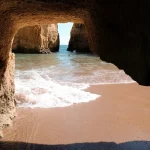
Vila Nova de Milfontes is the coastal hub. It’s a proper small town with a whitewashed historic centre, a river (the Mira) on one side and the ocean on the other. The beach at Milfontes is wide and exposed. The beach at Praia das Furnas, 3 kilometres north, sits inside a sheltered cove under ochre cliffs and is significantly more dramatic. Walk down the wooden stairs and you’ll find yourself in something that feels genuinely secret, even in August.
Zambujeira do Mar, 30 kilometres south, is where the landscape turns more rugged. The road drops through pine and eucalyptus forest before the village appears — a cluster of whitewashed houses above a beach pinched between two headlands. The water here is a deep, bruised blue-green. It’s where NOS Alive’s coastal sibling (Festival Sudowest) takes place each August, so avoid that specific week unless you’ve come for the music.
Almograve, between the two, is the least visited and the most honest. No cafés with Instagram menus, just a beach backed by low cliffs and a scattering of locals with fishing rods. The spray from the Atlantic here has a particular salt-and-kelp sharpness that you notice the moment you step out of the car.
Mértola: The Detour That Earns Its Place
Most road trip itineraries skip Mértola. That’s a mistake. The town sits on a promontory above the Guadiana River, with a Moorish castle and a church that was a mosque until the 13th century — you can still see the mihrab inside. The Islamic influence here is tangible and specific in a way it isn’t in Évora or Lisbon. The Museu de Mértola holds one of the finest collections of Islamic-era artefacts in Portugal, much of it excavated locally.

It’s also a practical overnight stop between the coast and Évora. The drive from Zambujeira do Mar to Mértola takes about two hours via the IP8, and from Mértola to Évora is another 1h 45min the following morning. Staying here breaks what would otherwise be a punishing single-day drive.
Évora: The Inland Anchor You’ll Want Two Nights For
Évora is the spine of any Alentejo itinerary. The city’s Roman temple, 2,000-year-old aqueduct, and UNESCO-listed old town sit inside medieval walls that you can walk almost completely. Most visitors give it a day. Two nights is closer to what the city deserves.
The Capela dos Ossos (Bone Chapel) at the Church of São Francisco is the most photographed sight and rightfully so. The skulls and femurs of roughly 5,000 Franciscan monks line the walls and columns from floor to ceiling. The inscription above the entrance reads: “We bones that are here, for yours we wait.” Stand in there for five minutes and the medieval worldview becomes oddly legible.
The Roman Temple of Diana — though it was probably dedicated to the Imperial Cult rather than Diana — stands in the middle of the city like something left behind by mistake, 14 Corinthian columns in pale granite still intact. At night, when it’s lit from below, the columns cast long shadows across the square and the effect is quietly extraordinary.
The old town’s narrow streets are paved in irregular limestone and lined with whitewashed houses trimmed in yellow ochre. In the afternoon heat, the marble reflects the light so intensely you need sunglasses at street level. That physical quality — the almost aggressive brightness of the stone — is something photographs don’t fully prepare you for.
The Marble Triangle: Estremoz, Borba, and Vila Viçosa
Thirty kilometres northeast of Évora, the landscape changes. The earth turns white and the quarries appear — vast open cuts in the hillsides where some of the world’s finest marble has been extracted since Roman times. This is the triangle formed by Estremoz, Borba, and Vila Viçosa, and it’s unlike anywhere else in Portugal.

Estremoz has an upper and lower town. The lower town’s market square (held on Saturdays) is one of the most genuine rural markets in the Alentejo — farmers selling hand-thrown clay figurines alongside local sausages, cheeses, and honey. The upper town is enclosed in 13th-century walls and contains a royal palace now operating as a pousada (state-run historic hotel). The views from the castle tower over the marble-white plains stretch for 40 kilometres on a clear day.
Vila Viçosa was the seat of the House of Bragança, the dynasty that ruled Portugal from 1640 until the Republic in 1910. The Paço Ducal (Ducal Palace) facing its enormous praça is the largest palace complex in Portugal — bigger than Sintra’s Pena, less famous, and significantly less crowded. The apartments are shown by guided tour only; book in advance at the palace ticket office or online.
Borba between the two is smaller and worth a 45-minute stop for the marble fountain in its town square and the local wine cooperative, which produces some of the region’s most robust reds.
Monsaraz and the Alqueva Dark Sky Reserve
Monsaraz is what most people picture when they imagine a Portuguese hilltop village — and it earns that image. The medieval village sits 342 metres above the Alqueva reservoir, its white houses and castle visible from 20 kilometres away across the cork plains. There are only a few streets inside the walls and permanent residents number in the dozens, but the setting is extraordinary enough to justify the short drive from Évora (about 55 minutes).
The Alqueva reservoir below is Europe’s largest artificial lake, created in 2002 by damming the Guadiana. What has developed since then is an unexpected dark sky tourism industry. In 2026, the Starlight Dark Sky Reserve centred on Alqueva remains one of only a handful in Europe with certified zero light pollution. Several local operators now run night sky boat tours on the reservoir and solar observatory experiences at the Herdade dos Grous estate. The silence out there — no road noise, no wind turbines, just the occasional frog from the lake edge — makes the experience feel genuinely remote even though you’re 90 minutes from Évora.

Where to Eat Along the Route
The Alentejo is not a cuisine for the indifferent. The food is heavy, pork-forward, and deeply regional, and the best of it is found in town-centre tascas rather than any restaurant with a menu in multiple languages.
In Vila Nova de Milfontes, the cluster of restaurants along Rua do Cais serves grilled sea bass and percebes (barnacles) direct from Sines port. Arrive before 13:00 or after 14:30 if you want a table without waiting.
In Mértola, the café attached to the museum complex is simple but uses local olive oil from the Guadiana valley. Ask for the pezinhos de coentrada (coriander pork trotters) if it’s on the daily chalkboard.
In Évora, the Mercado Municipal on Rua da República has a food hall-style setup with local producers selling cheese, smoked sausage, and wine. For a sit-down meal, the streets behind the cathedral — particularly Rua de Burgos — have a concentration of genuine local restaurants that aren’t purely tourist-oriented. Açorda (bread-based soup) with a poached egg and lots of garlic is the thing to order if you’ve never had it. The texture is porridge-thick and the garlic hits the back of your throat like a warm hand.
In the marble triangle, Estremoz’s Saturday market is the food stop of the entire route. Buy local queijo de ovelha (sheep’s cheese), smoked chouriço, and a bottle of Borba red to eat somewhere scenic. That’s a better lunch than any restaurant in the area.
Where to Sleep: Accommodation on the Route
Alentejo’s accommodation landscape has shifted meaningfully since 2024. Herdades (agricultural estates offering rooms) are now the dominant mid-range and luxury option in the interior, and several new ones opened between 2024 and 2026 in the Portel and Reguengos de Monsaraz areas.
- Budget (under €70/night): Local guesthouses in Mértola and Estremoz town centres. The quality is functional rather than atmospheric but the prices are honest. Vila Nova de Milfontes has several surf-oriented hostels with private rooms in the €55–€65 range.
- Mid-range (€70–€150/night): Herdades near Évora and around the Alqueva offer rooms inside renovated farm buildings with pools. Several are certified organic farms. Breakfast usually includes local products — fresh sheep’s cheese, local honey, homemade bread.
- Comfortable/Luxury (€150–€350+/night): Herdade da Malhadinha Nova (near Beja) and L’AND Vineyards (near Montemor-o-Novo) are two of the best rural hotels in Portugal. L’AND in particular has suites with glass ceilings for stargazing and a Michelin-starred restaurant. The Pousada de Estremoz in the royal palace is another option with real historical weight — rooms start around €180.

Wine and Olive Oil Stops Worth Slowing Down For
Alentejo produces roughly half of Portugal’s wine by volume, and the quality across the DOC Alentejo appellation has improved sharply in the last decade. The region runs from the cooler sub-regions of Borba and Redondo in the north to the hotter Vidigueira in the south, and the difference in style is real.
Adega Cooperativa de Borba is the most accessible winery on the route — it’s inside Borba town and does walk-in tastings for around €5–€10 per person. The wines are honest and affordable; their Touriga Nacional-led red is particularly reliable.
Herdade do Esporão near Reguengos de Monsaraz is larger and more polished, with a full visitor centre, restaurant, and guided vineyard tours. Book these in advance in summer. The estate sits on the edge of the Alqueva reservoir and the landscape alone makes it worth a stop.
For olive oil, look for roadside signs for lagar (olive press) between October and January. Outside harvest season, the cooperative in Moura sells local oils by the litre — you fill your own bottle from a tank. The fruity, grassy smell of fresh cold-pressed oil is one of those sensory memories you’ll carry home.
Driving Logistics: Tolls, Fuel, and Connectivity
Portugal’s motorway toll system operates via electronic tags (Via Verde) or plate-recognition billing. If you rent a car in 2026, ask specifically about the toll payment setup — most major rental companies now include a Via Verde transponder or offer daily toll-pass packages at around €3.50–€5/day. Without this, you’ll need to register your plate online within 24 hours at the CTT portal or face penalties. The A2 south from Lisbon and sections of the A6 toward Évora are tolled. The interior roads (N and IC routes) are free.
Fuel stations thin out significantly once you leave the main towns. Fill up in Évora, Beja, or Estremoz before heading into the cork plains or toward Monsaraz. There is one small petrol station in the village of Reguengos de Monsaraz but it can be closed on Sunday afternoons.
Mobile signal on the N393 coast road and across the plains between Mértola and Beja is patchy. NOS and Vodafone both have coverage gaps here in 2026. Download offline Google Maps for the entire region before you leave. A Portuguese SIM card from NOS (available at Lisbon airport) costs around €15 for 15GB, which is more than enough for a week’s navigation.

EV drivers: charging infrastructure along this route has improved since 2024. Évora, Beja, Estremoz, and Vila Nova de Milfontes all have public fast chargers (50kW+) as of 2026. The gaps are between Mértola and Beja (90km stretch) and around the Monsaraz area. Plan charges carefully if you’re driving electric.
Best Time to Drive This Route
The honest answer is: not July or August on the interior section. Alentejo’s plain temperatures regularly hit 40–42°C in peak summer, and some of the villages have almost no shade. The coast is fine in summer because the Atlantic keeps temperatures around 23–27°C, but Évora in August is brutal between 11:00 and 17:00.
Late April to early June is the best window. The plains are a shocking lime-green after winter rains, wildflowers cover the roadsides, and temperatures sit between 20–28°C inland. Tourist numbers are manageable.
September and October are excellent, particularly for the wine harvest (vindima). Some estates welcome visitors during harvest, and the plains turn gold rather than the bleached-white of midsummer. The coast gets its last warm swells for surfing.
November to March is genuinely quiet — many herdades close or reduce services, some museum hours shorten, and the coast road can be completely empty and slightly melancholy. That’s not necessarily a bad thing if you want the region to yourself, but confirm accommodation and attraction opening hours before going.
Budget Breakdown: What to Expect Daily in 2026
Alentejo remains one of the most affordable regions in Portugal for travellers, partly because it hasn’t been fully discovered yet and partly because the local economy is built on farming rather than tourism. That said, the herdade boom has pushed luxury prices up since 2023.
- Budget traveller (€80–€110/day): Hostel private room or basic guesthouse, petrol split between two people, tasca lunches and dinners under €15 per head, free sights or low-cost museum entries. Feasible if you self-cater some meals using market produce.
- Mid-range (€130–€200/day): Herdade room or 3-star hotel, two restaurant meals per day, wine tasting at one quinta, tolls and fuel for a full day of driving. This covers a comfortable, unhurried week.
- Comfortable/splurge (€250–€450+/day): Luxury herdade or pousada, Michelin or quality table dinners, private stargazing tour at Alqueva, guided wine experience at Esporão. This is genuinely world-class rural travel at prices that would be half this in Tuscany or Provence.

Specific costs to factor in: Museum entry in Évora typically €3–€7. Chapel of Bones: €5. Paço Ducal guided tour in Vila Viçosa: €8. Esporão winery tour: €15–€25. Petrol in Portugal as of 2026 averages around €1.72/litre for 95-octane unleaded.
Frequently Asked Questions
How many days do I need for an Alentejo road trip?
Seven days is the minimum to do both the coast and interior justice without feeling rushed. Five days works if you skip either Mértola or the marble triangle. Ten days allows for genuine slow travel — an extra night at a herdade, a morning hike in the natural park, a full vineyard visit without watching the clock.
Do I need a car, or can I do this by public transport?
You need a car. Rede Expressos coaches connect Lisbon to Évora, Beja, and a few coastal towns, but the connections between villages, beaches, and inland sites simply don’t exist by bus or train. There is no public transport to Monsaraz, the marble triangle villages, or the Alqueva reservoir. Renting a car is essential.
Is Alentejo safe for solo travellers and couples?
Extremely safe. Portugal consistently ranks in the top five safest countries globally, and the Alentejo interior has almost no petty crime. The main practical concern for solo drivers is mobile signal blackspots on rural roads — download offline maps and let someone know your rough itinerary. Road conditions are generally good, though some tracks to beaches are unpaved.
What is the best base for exploring the Alentejo interior?
Évora is the logical base for the interior. It’s central, has the widest choice of accommodation and restaurants, and sits within 90 minutes of Estremoz, Monsaraz, Vila Viçosa, and Borba. Staying two nights here and doing day loops by car covers the entire marble triangle and Alqueva without needing to pack and unpack repeatedly.
When does the Alentejo wine harvest happen, and can tourists visit?
The vindima (harvest) typically runs from late August through October, varying by estate and grape variety. Several quintas and cooperatives — including Herdade do Esporão and Adega de Borba — offer harvest-period visits and sometimes hands-on picking experiences. Book these directly with the estate at least two weeks in advance as capacity is limited and they fill quickly in September.
Explore more
Where Are the Best Seafood Restaurants in Lisbon?
Chiado & Baixa: The Best of Downtown Lisbon’s Culture and Shopping
📷 Featured image by Louis Paulin on Unsplash.