On this page
- Lisbon in 2026: The Viewpoint Crowd Problem Is Real — Here’s How to Navigate It
- The Classic Miradouros: Alfama’s Hilltop Icons
- São Pedro de Alcântara and the Bairro Alto Ridge
- Lisbon’s Overlooked Viewpoints the Locals Still Use
- Rooftop Bars and Terraces Worth Paying For
- Cristo Rei and the View From the South Bank
- Viewpoints by Time of Day: A Practical Sequence
- Getting to Lisbon’s Hilltops Without the Climb
- Photography Tips for Lisbon’s Skyline
- Budget Breakdown for Viewpoint-Hopping
- Frequently Asked Questions
💰 Click here to see Portugal Budget Breakdown
💰 Prices updated: September, 2026. Budget figures are estimates — always verify before travel.
Exchange Rate: $1 USD = €0.88
Daily Budget (per person)
Shoestring: €40.00 – €70.00 ($45.45 – $79.55)
Mid-range: €150.00 – €300.00 ($170.45 – $340.91)
Comfortable: €400.00 – €1,000.00 ($454.55 – $1,136.36)
Accommodation (per night)
Hostel/guesthouse: €15.00 – €50.00 ($17.05 – $56.82)
Mid-range hotel: €70.00 – €150.00 ($79.55 – $170.45)
Food (per meal)
Budget meal: €10.00 ($11.36)
Mid-range meal: €25.00 ($28.41)
Upscale meal: €60.00 ($68.18)
Transport
Single metro/bus trip: €1.90 ($2.16)
Monthly transport pass: €40.00 ($45.45)
Lisbon in 2026: The Viewpoint Crowd Problem Is Real — Here’s How to Navigate It
If you visited Lisbon‘s miradouros a few years ago and thought the crowds were bad, prepare yourself. By 2026, the city’s most famous viewpoints — particularly Portas do Sol and Miradouro da Graça — now see sustained tourist pressure from morning until after sunset. The Câmara Municipal de Lisboa introduced timed-access guidelines at three of the most congested terraces in late 2025, and while enforcement remains loose, the spirit of the rule is worth following. This guide gives you the full picture: the classics, the overlooked gems, the rooftop bars worth paying for, and the exact times to show up so you actually enjoy what you came to see.
The Classic Miradouros: Alfama’s Hilltop Icons
Alfama is the oldest neighbourhood in Lisbon and its geography makes it a natural viewpoint machine. The district tumbles down from the castle hill in a tangle of cobbled lanes, and at several points along the descent, the city opens up in front of you in a way that genuinely stops conversation.
Miradouro das Portas do Sol
This is the one most visitors see first because it sits right off the 28 tram route. The terrace faces southeast toward the Tagus, with the dome of São Vicente de Fora rising above the rooftop cluster of terracotta tiles. There is a café here that serves passable espresso and has outdoor seating — in the late afternoon, the light catches the river and turns the white facades of the buildings below a warm amber. Arrive before 9:30 in summer or after 18:00 to avoid the thickest crowds. The statue of São Vicente stands at the back of the terrace if you need an orientation anchor.
Miradouro de Santa Luzia
Thirty seconds walk downhill from Portas do Sol, Santa Luzia is smaller and somehow more intimate. The pergola covered in bougainvillea gives it a garden-terrace feel rather than a classic lookout. The azulejo panels on the church wall beside it show old Lisbon before the 1755 earthquake — a genuinely useful visual reference for what the city used to look like. The river view here is partially framed by trees, which some people find frustrating and others find beautiful. Either way, it’s rarely as packed as its neighbour above.
Miradouro da Graça
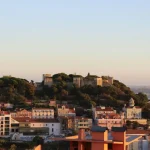
Walk fifteen minutes north from Portas do Sol and you reach Graça, which many locals consider the best overall panorama in Alfama. The angle here gives you the castle to your right and the full sweep of the Baixa and Chiado districts ahead. At golden hour, the São Jorge castle walls glow copper and you can see all the way to the Cristo Rei statue on the south bank. There is a kiosk that opens from around 10:00 and does cold imperial beer for under €2. Locals play cards at the benches behind the terrace. This is the version of Lisbon worth waking up for.
São Pedro de Alcântara and the Bairro Alto Ridge
Cross to the western hill and the viewpoint geometry completely changes. Miradouro de São Pedro de Alcântara faces east, which means it looks directly at the castle hill — the opposite direction from the Alfama terraces. This makes it one of the best sunset viewpoints in the city because the sun sets behind you and the warm light falls full on the castle, the cathedral, and the rooftops of Mouraria below.
The terrace has two levels. The upper level has a map panel that names every landmark in view — useful for first-timers. The lower garden level is quieter and gives you a slightly lower angle that includes more foreground rooftops. The Gloria Funicular from Restauradores drops you right at the top, a 90-second ride that costs €4.10 as of 2026 with a Viva Viagem card.
The neighbourhood around São Pedro de Alcântara is Bairro Alto, which means there are dozens of small bars within a short walk for after-sunset drinks. This is a natural end-of-day sequence: arrive at 18:30, watch the light shift for an hour, then slide into the bar district behind you as dark falls.
Lisbon’s Overlooked Viewpoints the Locals Still Use
The famous terraces are famous for a reason, but they are not the only options. These spots below appear on fewer itineraries and remain genuinely quieter, even in peak summer.
Miradouro do Monte Agudo
Located above Mouraria, this small terrace is accessed via a steep lane off Rua do Marquês do Ponte de Lima. The view looks southwest across Mouraria’s dense rooftop geometry toward the Baixa. It is not the widest panorama in Lisbon, but the neighbourhood texture in the foreground — laundry lines, satellite dishes, cats on window ledges — makes it one of the most human viewpoints in the city. Almost no tour groups come here.

Parque Eduardo VII — Top End
The formal park that runs north from Marquês de Pombal ends at a wide terrace with an unobstructed north-to-south view straight down the central axis of Baixa all the way to the Tagus. It is not a traditional miradouro but it functions as one. The view is unusually symmetrical and geometric, which makes it the best spot in Lisbon to understand the Pombaline grid that rebuilt the downtown after the 1755 earthquake. The park is free, open all day, and the terrace at the top sees a fraction of the visitors that Alfama gets.
Calçada do Lavra Viewpoint
At the top of the Lavra Elevador — Lisbon’s oldest funicular, running since 1884 — there is an informal viewpoint on the Calçada do Lavra street that looks across toward the Intendente neighbourhood and the hills of Graça beyond. It is rarely listed in travel guides. The Lavra Elevador ride costs €4.10 with a Viva Viagem card and the funicular itself is worth riding for the experience alone.
Rooftop Bars and Terraces Worth Paying For
Several of Lisbon’s rooftop bars offer panoramic views that no public terrace can match, primarily because they sit on top of hotels that tower above the historic building height limit. These are paid experiences, but they are worth budgeting for at least once.
TOPO Chiado
On the roof of the Armazéns do Chiado shopping building, TOPO faces east toward the castle and south toward the river. There is no cover charge — you simply order a drink. A beer or glass of house wine runs €7–10. The terrace wraps around two sides and the castle view from here, with Alfama tumbling below it, is one of the best in the city. It fills quickly after 19:00, so arrive closer to opening at 12:00 or 13:00 if you want an uncrowded experience.
Park Bar, Bairro Alto
This rooftop is accessible via a car park elevator in Bairro Alto — the inside of the building gives no indication that a bar exists above it. Once you emerge on the sixth floor, the terrace opens onto a wide view of the Tagus and the 25 de Abril bridge. The bar programmes regular DJ sets from Thursday to Saturday evenings. Drinks start around €8. It has a younger crowd and a less tourist-heavy atmosphere than many hotel rooftops.
Bairro Alto Hotel Terrace
For the most polished rooftop experience in Lisbon, the Bairro Alto Hotel terrace is hard to match. Hotel guests have priority but non-guests can book terrace access. Cocktails run €16–22. The view spans the Chiado, the Tagus, and on clear days you can see across to the Serra de Sintra hills. The terrace is heated in cooler months, which extends usable season well into November and through March.
Cristo Rei and the View From the South Bank
Almost every visitor to Lisbon photographs the Cristo Rei statue from the city — but almost none cross the river to stand at its base and look back. This reversal of perspective gives you something no miradouro on the Lisbon hill can: the full width of the city’s northern waterfront, from Belém in the west to the red arches of the old Gare do Oriente area in the east, all spread across the opposite bank.
The Cristo Rei lift platform (accessible for €8 in 2026) sits at roughly 113 metres above the river. On a clear day the visual range is extraordinary — the Serra de Sintra to the northwest, the Arrábida peninsula to the south, and the full Lisbon panorama across the water. The ferry crossing from Cais do Sodré to Cacilhas takes 15 minutes and costs €1.45 each way with a Navegante card. From Cacilhas, a dedicated bus to Cristo Rei runs several times per hour. The whole trip from central Lisbon takes under 45 minutes.
Viewpoints by Time of Day: A Practical Sequence
The light in Lisbon moves fast and the direction you face matters more than most visitors realise. Here is a working schedule for getting the best from each terrace at the right moment.
- Sunrise (06:30–08:00): Parque Eduardo VII top and Miradouro da Graça both face approximately south and west, so they catch early morning light well. At this hour, both are essentially empty. The air is cool, the city is quiet, and the Tagus reflects the pink pre-sun sky.
- Mid-morning (09:00–11:00): Portas do Sol and Santa Luzia face southeast and receive strong morning light on the river. This is also when tour groups start arriving, so keep it brief.
- Afternoon (14:00–17:00): This is the worst time for most terraces — harsh overhead light and peak crowds. Use this slot for the south bank Cristo Rei crossing, which faces north and benefits from clear afternoon visibility across the Tagus.
- Golden hour (18:00–20:00 in summer, 17:00–18:30 in winter): São Pedro de Alcântara is the non-negotiable choice. The castle glows, the shadows lengthen across Mouraria, and the city turns briefly bronze before the light drops away.
- Night (21:00 onwards): TOPO Chiado and Park Bar both carry this slot. The Tagus reflects the bridge lights and the castle is illuminated in warm yellow against the dark sky.
Getting to Lisbon’s Hilltops Without the Climb
Lisbon’s hills are not a reason to avoid the viewpoints — the city built a whole network of funiculars and elevators specifically to solve this problem. In 2026, all four of the city’s historic elevadores are operational after a maintenance programme completed in late 2025.
- Elevador da Glória: Restauradores to São Pedro de Alcântara. €4.10 one way with Viva Viagem.
- Elevador da Bica: Rua de São Paulo up to Calçada do Combro, serving the west Bairro Alto. €4.10 one way.
- Elevador do Lavra: Calçada do Lavra — Lisbon’s oldest, least-visited, and most charming. €4.10 one way.
- Elevador de Santa Justa: This is the big one — a cast-iron neo-Gothic lift that connects Baixa directly to Chiado. The platform at the top also functions as a viewpoint over the Baixa rooftops. €5.80 return for tourists (the upper walkway to Chiado is free with a transport card).
For Alfama viewpoints, Tuk-tuks are everywhere and charge €10–20 for a hilltop circuit. They are convenient but not necessary — the 28E (currently partial route) and 734 bus serve most of the area. Taxi apps including Bolt and Uber work well for direct drop-offs at Graça if your legs disagree with the hills.
Photography Tips for Lisbon’s Skyline
Lisbon photographs beautifully but also punishingly — the white facades reflect so much light in the afternoon that most cameras blow highlights entirely. A few adjustments make a real difference.
For Phone Shooters
Use the manual exposure control (available in most 2026 flagship phone cameras) and expose for the sky rather than the foreground. Let the buildings go slightly dark — you can lift shadows in editing but you cannot recover a blown-out white sky. The HDR mode on most phones actually performs poorly on Lisbon’s high-contrast midday scenes, so disable it and shoot RAW if your phone allows it.
For Camera Users
A polarising filter removes haze over the Tagus and dramatically improves river colours, especially between 10:00–14:00 when the water reflects overhead sky. A 24–70mm equivalent range covers most panoramic compositions without going so wide that the foreground distorts. At Graça and São Pedro de Alcântara, a short telephoto (85–135mm equivalent) isolates the castle against the city in a way that wide-angle cannot.
Framing Advice
Lisbon’s tiled rooftops are as interesting as its skyline. Resist the urge to always shoot wide. At Santa Luzia, turn your camera downward and shoot the tiles, the bougainvillea, and the alley below — that image often carries more character than another wide-angle panorama with the river at the horizon.
Budget Breakdown for Viewpoint-Hopping
The good news: most of Lisbon’s best viewpoints are completely free. The costs come from transport and the optional paid upgrades.
- Free viewpoints: Miradouro da Graça, Miradouro das Portas do Sol, Miradouro de Santa Luzia, Miradouro do Monte Agudo, Parque Eduardo VII top, Calçada do Lavra informal terrace — all €0 to access.
- Elevadores (per ride, 2026): €4.10 one way with Viva Viagem card. A day riding all four funiculars costs around €16–20 depending on how many trips you make.
- Santa Justa Lift return ticket: €5.80.
- Cristo Rei lift platform: €8 per adult.
- Ferry to Cacilhas (return): €2.90 with Navegante card.
- Rooftop bar minimum spend: €7–10 at TOPO or Park Bar; €16–22 for cocktails at Bairro Alto Hotel terrace.
- Coffee at miradouro kiosks: €1.00–1.50 for espresso, €1.80–2.20 for a galão.
A full day visiting five or six viewpoints with transport and one rooftop bar drink comes to roughly €25–40 per person depending on your choices. If you stick to free terraces and walk or use standard buses, a complete viewpoint day can cost under €10.
Frequently Asked Questions
What is the best viewpoint in Lisbon overall?
Miradouro da Graça is the most consistently rewarding for first-time visitors — it offers a wide panorama that includes the castle, the Baixa, and the Tagus in a single frame. Arrive at golden hour in summer for the strongest light. São Pedro de Alcântara is the best option if you specifically want to photograph the castle with the warm light falling directly on it.
Are Lisbon’s viewpoints free to enter?
The vast majority are completely free. Public miradouros including Graça, Portas do Sol, Santa Luzia, and São Pedro de Alcântara cost nothing. You pay for transport to reach them (elevadores cost €4.10 per ride), and paid experiences like the Santa Justa lift (€5.80) or Cristo Rei platform (€8) are optional extras.
When should I visit Lisbon’s miradouros to avoid crowds?
Before 09:00 in the morning or after 20:00 in summer. The midday window from 11:00–16:00 sees the densest visitor numbers at Portas do Sol and Graça. Sunrise visits are genuinely quiet at all terraces. If you visit in November through February, crowds are noticeably thinner at any hour.
Can I reach Lisbon’s viewpoints without climbing steep hills?
Yes. The city’s four historic funiculars (elevadores) and the Santa Justa lift handle most of the elevation change for €4.10–5.80 per ride. Bolt and Uber both serve the hilltop drop-off points directly. Tuk-tuks offer circuits of the Alfama viewpoints for €10–20. For Graça specifically, the 734 bus from Martim Moniz climbs the hill and stops close to the terrace.
What is the best viewpoint in Lisbon for sunset?
São Pedro de Alcântara faces directly east toward the castle, which means it catches the full warm glow of late afternoon and sunset light falling on the castle and Alfama hillside. Arrive around 18:00–18:30 in summer. Park Bar in Bairro Alto and TOPO Chiado both offer excellent sunset views over the Tagus if you want to combine the moment with a drink.
📷 Featured image by Brad Weaver on Unsplash.