On this page
- Why Coimbra Rewards the Walker
- Before You Set Out
- Starting Point: Largo da Portagem and the Lower Town
- Climbing to the Old Cathedral and the Romanesque Quarter
- The University Hill: Alta de Coimbra
- Hidden Lanes and Forgotten Viewpoints
- The Monastery of Santa Cruz and Praça 8 de Maio
- Where to Eat and Drink Along the Route
- 2026 Entry Fees and Budget Reality
- Practical Tips for the Walk
- Frequently Asked Questions
💰 Click here to see Portugal Budget Breakdown
💰 Prices updated: September, 2026. Budget figures are estimates — always verify before travel.
Exchange Rate: $1 USD = €0.88
Daily Budget (per person)
Shoestring: €40.00 – €70.00 ($45.45 – $79.55)
Mid-range: €150.00 – €300.00 ($170.45 – $340.91)
Comfortable: €400.00 – €1,000.00 ($454.55 – $1,136.36)
Accommodation (per night)
Hostel/guesthouse: €15.00 – €50.00 ($17.05 – $56.82)
Mid-range hotel: €70.00 – €150.00 ($79.55 – $170.45)
Food (per meal)
Budget meal: €10.00 ($11.36)
Mid-range meal: €25.00 ($28.41)
Upscale meal: €60.00 ($68.18)
Transport
Single metro/bus trip: €1.90 ($2.16)
Monthly transport pass: €40.00 ($45.45)
Why Coimbra Rewards the Walker
In 2026, over-tourism is reshaping how people plan trips to Portugal. Lisbon’s most iconic viewpoints now require timed-entry queues, and Porto’s Livraria Lello has become a ticketed attraction that books out days in advance. Coimbra sits in a different category entirely — a genuine university city of 130,000 people where students outnumber tour buses and the architecture has been standing long enough to stop caring about your camera. A self-guided walk through its historic center is one of the most rewarding half-days you can spend in Portugal, and almost nobody leaves disappointed.
The city climbs steeply from the Mondego River up to one of Europe’s oldest universities, and that gradient is the whole point. Every street switchbacks into a different century. Romanesque stone gives way to Manueline doorways, then Baroque staircases, then tiled faculty buildings draped with black academic capes left by students completing their degrees. The walk described here covers roughly 3.5 kilometres of actual walking distance, but with the elevation changes and stops, allow a full four hours minimum — five if you eat lunch on the route.
Before You Set Out
Footwear matters more in Coimbra than almost anywhere else in Portugal. The cobblestones in the Alta (upper town) are steep, irregular, and genuinely treacherous when wet. Rubber-soled shoes or proper walking trainers are non-negotiable. Sandals and fashion sneakers belong at the café table, not on the hill.
Download the Maps.me offline map for Coimbra before you go — Google Maps performs poorly in the Alta’s narrowest lanes where the signal drops. Carry at least 750ml of water. The climb from the river to the university gate takes around 20 minutes at a moderate pace and there are no reliable public water fountains on the upper section. If you’re visiting June through September, start no later than 9:00 to beat the worst of the afternoon heat on exposed stone streets that can feel 6–8 degrees warmer than the official temperature.
Starting Point: Largo da Portagem and the Lower Town
Begin at Largo da Portagem, the broad riverside square at the foot of the Ponte de Santa Clara. You’ll recognise it immediately — it’s where the buses stop, where the taxis idle, and where the smell of the Mondego river mixes with coffee from the cafés facing the water. The square has a distinct unhurried quality in the morning; locals read newspapers on the benches and students cross the bridge on bicycles heading to early lectures.
From Largo da Portagem, walk north along Rua Ferreira Borges — a pedestrianised commercial street lined with tile-faced buildings that leads directly into the heart of the Baixa (lower town). This street connects you to Praça 8 de Maio and the Monastery of Santa Cruz in about seven minutes of flat walking. The Baixa is where Coimbra lives its daily life: pharmacies, bakeries, a fruit market at Mercado Municipal Dom Pedro V just off to the east, and the kind of shoe shops and stationery stores that have been serving university students since before anyone alive can remember.
The lower town is not where the dramatic architecture is, but it’s where you calibrate your sense of the city before the climb. Spend 15–20 minutes here. Notice how the streets are built on a grid that was partially influenced by Pombaline reconstruction after the 18th century — broader and more rational than the lanes above, which predate planning entirely.
Climbing to the Old Cathedral and the Romanesque Quarter
From Praça 8 de Maio, head up Rua Visconde da Luz, then cut left up any of the steep lanes heading toward the Sé Velha — the Old Cathedral. The climb takes about 12 minutes and the streets get quieter, narrower, and older with every block. By the time you arrive at the Sé Velha’s façade, you’re standing in front of one of the best-preserved Romanesque cathedrals in the Iberian Peninsula, built in the 12th century when Coimbra was briefly the capital of the nascent Kingdom of Portugal.
The exterior is blunt and fortress-like — no soaring Gothic lightness here. The stone is the colour of old honey, and in morning light the whole façade glows in a way that makes even the most photograph-fatigued traveller stop and look properly. Step inside to find a calm, dim interior: thick columns, carved capitals, and a gilded Gothic altarpiece that seems almost out of place in such a severe Romanesque shell. The acoustics are remarkable — even quiet footsteps carry.
The streets immediately surrounding the Sé Velha are worth wandering. Rua do Corpo de Deus and Rua Sobre-Ripas run close to the cathedral and contain some of the oldest domestic architecture in the city — including the Torre de Anto, a medieval tower that was home to the 20th-century poet António Nobre and is now a small cultural centre. The neighbourhood feels genuinely lived in: laundry hangs from windows, cats sleep on doorsteps, and the only tourists are the ones walking this exact route.
The University Hill: Alta de Coimbra
Continue uphill from the cathedral along Rua do Borges Carneiro or the parallel stepped lane Escadas de Quebra-Costas (literally “backbone-breaking stairs” — the name tells you everything you need to know about the gradient). Both routes deliver you to the Porta Férrea, the 17th-century iron gate that marks the entrance to the Paço das Escolas — the university’s historic core.
Inside, the courtyard opens onto one of the most theatrical academic spaces in Europe. The Royal Palace, repurposed as the university’s main building, faces an open square with a balustrade overlooking the city and the Mondego River far below. Students in black academic capes — traje académico — cross the courtyard between lectures. It’s not a performance for tourists; they actually dress like this. The tradition has been continuous since the 19th century and shows no signs of stopping in 2026.
The Joanina Library is reached through a staircase inside the main palace building. Its interior is one of the most astonishing rooms in Portugal: three floors of gilded baroque bookshelves packed with 300,000 volumes, trompe-l’œil ceilings painted to look like even more shelves receding into infinity, and a faint smell of old leather and wood that you notice the moment you walk in. Visits are strictly 30 minutes per group. No bags inside — there are lockers at the entrance. Photography is permitted without flash.
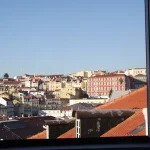
The University Tower (Torre da Universidade) is booked separately and offers a 360-degree view across the city, the river, and on clear days, the Serra da Lousã hills to the south. The climb is 180 steps up a narrow spiral staircase — not suitable for anyone with a serious fear of heights or tight spaces. At the top, the wind can be strong even in summer, and the view of the terracotta rooftops tumbling down to the river is the best vantage point you’ll find in Coimbra without a drone.
Hidden Lanes and Forgotten Viewpoints
Most walking tours end at the university and send people back down the main road. This is a mistake. The Alta has a network of lanes west of the Paço das Escolas that most visitors never walk, and they contain the city’s best kept architectural secrets.
From the university gate, walk west along Rua de São João and then drop down the stepped lane of Escadas do Castelo toward the Jardim de Manga — a 16th-century Renaissance garden tucked behind the monastery complex, easily missed because there’s almost no signage. The circular stone fountain pavilion in its centre is a genuinely peculiar piece of Manueline-Renaissance hybrid architecture that looks like something from a dream sequence.
The Miradouro do Jardim da Sereia, slightly further north in the Penedo da Saudade park area, is known to locals but rarely appears on tourist maps. From its benches you look directly over the Mondego bend with no railing, no café selling mediocre coffee, and no crowds. In spring, the surrounding garden is thick with wisteria. In autumn, it smells of damp stone and fallen pine needles. Either season, it’s the best place on the route to sit still for ten minutes and let the city make sense.
The Monastery of Santa Cruz and Praça 8 de Maio
Descend back to the lower town — the fastest route is down Rua Sota or via the university’s own stepped paths toward Rua Larga — and make your way to the Monastery of Santa Cruz on Praça 8 de Maio. This is a logical end-point for the walk, and the monastery earns its place as a final stop rather than an afterthought.
Founded in 1131, Santa Cruz is the burial place of Portugal’s first two kings: Afonso Henriques and Sancho I. The tombs are in the main church, elevated on marble pedestals in front of the chancel. The stone carving on the pulpit and the Manueline cloister (the Claustro do Silêncio) is among the finest decorative stonework outside of Lisbon’s Jerónimos Monastery. The azulejo panels along the church walls depict scenes from the life of São Agostinho in vivid 18th-century blue and white.
Praça 8 de Maio outside the monastery doors is one of Portugal’s better urban squares — wide enough to breathe but surrounded by facades that give it a contained, human scale. The famous Café Santa Cruz occupies a converted Gothic chapel on the monastery’s side wing. The ceiling vaults still visible inside are original 16th-century architecture. This is a legitimate place to sit, not just a tourist trap.
Where to Eat and Drink Along the Route
The walk passes through three distinct eating zones, and timing your stops correctly means you eat well without breaking the itinerary’s rhythm.
- Early morning (Largo da Portagem area): Café Nicola on Rua Ferreira Borges does espresso and a warm croissant for under €2.50. The pastelaria a block west on Rua da Sota has fresh pastéis de nata from 8:30 onward — the custard tart here has a properly caramelised top, slightly bitter at the edge, with a shell that shatters when you bite it.
- Mid-morning break (near Sé Velha): There’s a small café on Rua Sobre-Ripas with outdoor tables directly facing the medieval tower. It serves simple toasts and coffee and has no English menu — point and it will work fine.
- Lunch (back in the Baixa, after the monastery): Zé Manel dos Ossos on Beco do Forno is a famously cramped tasca with paper tablecloths and handwritten menus. Arrive before 12:30 or expect a wait. Avoid the tourist-facing restaurants directly on Praça 8 de Maio — they charge 30% more for the same quality.
- Post-walk drink: Bar Quebra Costas at the foot of the staircase of the same name serves cold beer and local wine. Students have been drinking here since the 1980s and the prices reflect that loyalty.
2026 Entry Fees and Budget Reality
Coimbra’s main attractions are priced reasonably by Portuguese standards, but the university complex charges separately for several components. Here’s what you’ll pay in 2026:
- Joanina Library: €15 per adult (includes university chapel and academic prison). Under-12: free. Combined ticket with tower: €20.
- University Tower only: €7 per adult.
- Sé Velha (Old Cathedral): €2.50 general entry. Cloisters included.
- Monastery of Santa Cruz: €2 for the church. Cloister: €2.50 additional.
- Jardim de Manga: Free.
Budget tier total (attractions only): under €15 per person if you skip the tower and choose one of the two main entries.
Mid-range (library + cathedral + monastery): approximately €20–22 per person.
Comfortable (all sites, combined tickets, plus the guided university tour at €12): approximately €35–40 per person.
Food and drink along the route adds €10–15 for a budget walker (coffee, pastry, simple lunch), €20–30 for a mid-range experience with a proper sit-down meal, and €40+ if you choose one of the better restaurants near the university for lunch.
Practical Tips for the Walk
Accessibility: This walk is not suitable for wheelchair users or anyone with significant mobility limitations. The Baixa section is flat and manageable, but the route to the university involves sustained steep gradients and uneven cobblestones. Elevador do Mercado (a public lift near the market) can assist part of the climb but does not solve the upper-town access problem. Coimbra’s municipality has plans to improve this by 2027, but in 2026 the situation is unchanged.
Photography inside the Joanina Library: Allowed without flash. Tripods are not permitted. The light inside is low by design — those baroque bookshelves are not optimised for Instagram. A phone camera in Portrait mode works better than a DSLR with a large lens in the tight space.
Safety: Coimbra is a very safe city by any standard. Petty theft from bags is the only realistic concern, mostly near the busy bus stops at Largo da Portagem. The upper town alleys feel deserted but are safe at any hour. Keep your bag in front in crowded areas and you will have zero issues.
Versus a guided tour: Guided walking tours of Coimbra’s historic centre run around €18–25 per person in 2026 and typically last two hours. They’re good for context but don’t give you the Joanina Library access, which requires separate timed booking regardless. If you value depth over speed, self-guided with good preparation beats a guided tour for this particular city.
Language: English is widely spoken at university-area attractions and hotels. In the Baixa cafés and tascas, basic Portuguese phrases help — um café, por favor and a conta, por favor will get you through almost every food stop on this route.
Frequently Asked Questions
How long does this self-guided walk take?
Allow a minimum of four hours for the core route covering Largo da Portagem, the Sé Velha, the university complex, and Santa Cruz Monastery. Add another hour if you include the hidden viewpoints and garden detours. A full day including a sit-down lunch and the university tower gives you the most complete experience without feeling rushed.
Do I need to book the Joanina Library in advance?
In 2026, advance booking is strongly recommended, especially on weekends and during summer. Walk-in slots are limited to around 20 people per session and can run out before 10:30 on busy days. Book on the official Universidade de Coimbra ticketing portal at least two days ahead. Entry is timed in 30-minute windows.
Is the walk suitable for children?
Children who are comfortable walking uphill on uneven cobblestones for 20–25 minutes will manage fine. The Joanina Library is genuinely fascinating for older children — the baroque interior tends to produce an actual gasp on entry. Under-12s enter the university complex free. The route has no specific hazards beyond the steep gradient, and the university courtyard has space for children to move around freely.
What’s the best time of year to do this walk?
March through May and September through November offer the best combination of weather and crowds. Summer (June–August) is hot on the exposed upper-town streets and the university’s academic year has ended, so the city feels slightly quieter and less atmospheric without students. May is ideal — the Queima das Fitas academic festival transforms the entire city for a week and the streets fill with music, torchlit processions, and students in full regalia.
Can I do this walk without entering any paid attractions?
Yes, and it’s still worthwhile. The Paço das Escolas courtyard is free to enter and the view from the balustrade over the Mondego is outstanding at no cost. The exterior of the Sé Velha and Santa Cruz Monastery are fully accessible without paying. The hidden viewpoints and Jardim de Manga are free. A zero-cost version of this walk loses the library interior — which would be a genuine shame — but it remains a rewarding half-day itinerary purely on architecture and atmosphere.
📷 Featured image by Evgeniy Beloshytskiy on Unsplash.