On this page
- The Old Town (Zona Velha): Atmosphere at Every Corner
- The Hotel Zone (Lido Strip): Pools, Promenades, and Easy Comfort
- Downtown Funchal (City Centre): Practical Base for First-Timers
- Monte: Above the City, Away from the Crowd
- Jardins and São Martinho: Local Life Without the Tourist Layer
- Caniço and Caniço de Baixo: East of Funchal, Better Value
- 2026 Budget Reality: What to Expect Across Neighbourhoods
- Matching Neighbourhood to Traveller Type
- Getting Between Neighbourhoods: Transport in 2026
- Frequently Asked Questions
💰 Click here to see Portugal Budget Breakdown
💰 Prices updated: August, 2026. Budget figures are estimates — always verify before travel.
Exchange Rate: $1 USD = €0.86
Daily Budget (per person)
Shoestring: €40.00 – €90.00 ($46.51 – $104.65)
Mid-range: €130.00 – €200.00 ($151.16 – $232.56)
Comfortable: €250.00 – €500.00 ($290.70 – $581.40)
Accommodation (per night)
Hostel/guesthouse: €15.00 – €45.00 ($17.44 – $52.33)
Mid-range hotel: €100.00 – €190.00 ($116.28 – $220.93)
Food (per meal)
Budget meal: €10.00 ($11.63)
Mid-range meal: €35.00 ($40.70)
Upscale meal: €100.00 ($116.28)
Transport
Single metro/bus trip: €2.00 ($2.33)
Monthly transport pass: €40.00 ($46.51)
Funchal is not a city where you can just pick any central hotel and assume you’ve made the right call. In 2026, short-term rental regulations introduced across Madeira have tightened the supply of budget apartments in the most popular zones, pushing prices up in the Old Town and Lido Strip. At the same time, new direct routes from London Gatwick, Warsaw, and several Nordic cities have added a fresh wave of first-time visitors who don’t yet know the difference between staying near the marina and staying up a steep hill with no bus in sight. Picking the right neighbourhood before you book makes a bigger difference in Funchal than almost anywhere else in Portugal — the terrain alone guarantees it.
The Old Town (Zona Velha): Atmosphere at Every Corner
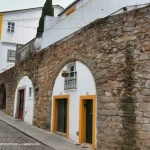
Zona Velha sits at the eastern edge of Funchal’s seafront, and it earns its reputation fast. The streets are narrow, the walls are covered in hand-painted doors as part of the long-running Arte de Portas Abertas project, and the smell of grilled espada fish drifts out of almost every kitchen from late afternoon onwards. This is the part of Funchal that feels genuinely lived-in rather than staged for tourists.
The neighbourhood runs along Rua de Santa Maria and spills into the side streets climbing toward the old fortress, Forte de São Tiago. At night, the bars fill up quickly — wine bars serving Madeira wine by the glass, craft beer spots, and a few fado-adjacent music venues that lean toward Portuguese folk rather than the polished performances you get in Lisbon. The cobblestones are uneven and the hills are real, so sensible shoes are not optional here.
Zona Velha suits travellers who want to be inside the action rather than near it. It’s walkable to the marina, to the Mercado dos Lavradores, and to the cable car station at Largo do Pelourinho. Accommodation skews toward boutique guesthouses and smaller hotels rather than large resort complexes. Since the 2025 rental restrictions, the number of available Airbnb-style apartments has dropped noticeably, so boutique hotel rooms here book out fast in spring and summer.
Best for: Solo travellers, couples, anyone who prioritises nightlife, food, and walking everywhere.
The Hotel Zone (Lido Strip): Pools, Promenades, and Easy Comfort
Walk west along Funchal’s seafront promenade and the city gradually shifts from urban to resort. The Lido Strip — centred around the Lido complex itself and stretching toward the Molhe waterfront area — is where Funchal’s large international hotels have clustered for decades. The Pestana group alone has multiple properties here. If you’ve seen a postcard of Funchal with a gleaming pool overlooking a blue Atlantic, it was almost certainly taken somewhere in this strip.
The promenade connecting the Lido zone to downtown Funchal is one of the city’s genuine pleasures — wide, flat, and lined with dragon trees. Walking it at sunrise before the heat builds, with the volcanic rock coastline on one side and the hotels on the other, is a quietly memorable start to any morning in Madeira. The saltwater Lido pool complex is a short walk from most hotels here, offering a practical alternative to the rocky shoreline for swimmers.
Families with young children tend to gravitate toward this area because the hotels offer the full infrastructure — kids’ clubs, pools, restaurants on-site — and the promenade is safe and flat enough for strollers and younger legs. The trade-off is that it feels less authentically Madeiran. The restaurants directly attached to the big hotels are convenient but expensive for what they deliver, and you’ll need to walk twenty minutes or take a taxi to reach the parts of Funchal with genuine local character.

Best for: Families, resort holiday seekers, travellers with limited mobility who need flat terrain and on-site facilities.
Downtown Funchal (City Centre): Practical Base for First-Timers
The city centre stretches from the marina inland toward the cathedral, Sé de Funchal, and the surrounding commercial streets. It’s the most practical base in the city for someone visiting Madeira for the first time and still figuring out how everything fits together. Every bus route eventually passes through or near the centre. The cable car to Monte departs from nearby Almirante Reis. The Mercado dos Lavradores — Funchal’s famous covered market, packed with tropical fruits, fish, and flower stalls — is a five-minute walk.
The streets around Avenida Arriaga and Rua do Aljube have a more formal, civic character than either the Old Town or the Lido Strip. Banks, pharmacies, shops selling everyday items, and a range of mid-range hotels sit alongside each other. It lacks the romance of Zona Velha and the poolside comfort of the Lido, but it makes logistical sense: you can get anywhere in Funchal from here without much effort.
The central market is worth visiting early on your first or second morning — not to stock up on supplies necessarily, but because the vendors selling bolo de mel (Madeiran molasses cake), local cheeses, and poncha spirits give you a quick education in what Madeira actually tastes like. The fish stalls downstairs, tiled and cool, are an experience unto themselves. The smell of fresh Atlantic catch and sea salt hits you before you reach the bottom step.

Best for: First-time visitors, business travellers, anyone who values convenience and transport links over atmosphere.
Monte: Above the City, Away from the Crowd
Monte is technically a separate parish, sitting roughly 550 metres above sea level in the hills behind Funchal. The cable car from the city centre climbs here in twelve minutes, sliding over terraced gardens and eucalyptus forest, and arriving at a quiet hilltop village built around a church, a tropical garden, and the famous toboggan run back down.
Staying in Monte is unusual — most visitors make it a half-day trip rather than a base. But for travellers who want cool nights, genuinely green surroundings, and a sense of being removed from the tourist circuit, it has a quiet appeal. The air temperature in Monte typically runs 5 to 7 degrees cooler than the seafront, which becomes significant during summer. The Monte Palace Tropical Garden is on the doorstep, and walking paths lead into the levada network without needing a car or taxi.
Accommodation options in Monte itself are limited — a handful of quintas (traditional manor houses) and small guesthouses. It’s not where you’d stay for nightlife or restaurant variety. But if the plan is hiking in the morning, a long lunch, and quiet evenings on a terrace surrounded by hydrangeas and fern forest, Monte delivers that with very little competition.
Best for: Hikers, couples seeking a quiet retreat, travellers who prioritise nature over city energy.
Jardins and São Martinho: Local Life Without the Tourist Layer
The residential neighbourhoods spreading west of the Lido Strip — broadly grouped under São Martinho and sometimes called the Jardins area — are where a significant portion of Funchal’s actual population lives. The streets here are steeper, the apartment buildings more functional, and the cafés are the kind that serve small espressos and bifanas (pork rolls) to construction workers at 8 am rather than açaí bowls at 11 am.

This zone has started attracting longer-stay visitors — people spending two weeks or more in Madeira who want to live a bit more like a local, shop at a neighbourhood supermarket, and not pay hotel prices for breakfast. The availability of mid-range long-stay apartments (those that fall outside the tightest restrictions) makes it a practical choice for digital workers and people combining remote work with a holiday.
The tradeoff is infrastructure. There are fewer restaurants of the type tourists usually seek, public transport connections require more planning, and walking into central Funchal is not a realistic option for most — the hills are steep enough to be genuinely challenging. But those who settle in here often say it gives them a more honest read of what Madeiran daily life looks like, which is not something the Old Town or the Lido Strip can offer.
Best for: Longer stays, self-catering visitors, remote workers, travellers who’ve already seen the tourist circuit and want something different.
Caniço and Caniço de Baixo: East of Funchal, Better Value
About 10 kilometres east of central Funchal along the southern coast road, Caniço and its lower coastal section, Caniço de Baixo, offer a genuinely different proposition. The terrain flattens slightly compared to Funchal’s steep bowl, the accommodation skews heavily toward apartment complexes and smaller hotels, and the prices across the board are lower than the city centre.
Caniço de Baixo is the main draw for the ocean access — the coastline here is rocky volcanic lava, and the protected marine reserve means snorkelling and diving are excellent by Atlantic standards. The natural lava pools at Ponta do Garajau give swimmers a calm, sheltered option that doesn’t require navigating down steep steps in flip-flops. The water is clear and the marine life dense enough that a snorkel mask bought at a local shop becomes one of the best purchases of the trip.

The main limitation is distance. Without a hire car, Caniço requires relying on bus connections that are infrequent outside of morning and evening peaks. Getting into Funchal for the day is doable but needs planning. In 2026, several bus route frequencies on the eastern corridor were upgraded as part of Madeira’s regional transport improvement plan, but the last buses back from central Funchal still run earlier than most people expect.
Best for: Travellers renting a car, divers and snorkellers, budget-conscious visitors, those who prefer quieter coastal surroundings over city energy.
2026 Budget Reality: What to Expect Across Neighbourhoods
Prices across Funchal’s accommodation landscape shifted notably between 2024 and 2026. The short-term rental restrictions introduced by the Madeira regional government in late 2024 reduced Airbnb supply in the most central zones, and this has pushed mid-range hotel prices upward. Here’s a realistic picture of what to expect per night in peak season (May through September) in 2026:
- Budget (under €80/night): Very limited in Zona Velha or the Lido Strip. Realistically available in Caniço, São Martinho residential areas, or hostel dorms near the city centre. Expect older facilities, fewer amenities.
- Mid-range (€80–€160/night): The practical sweet spot. Boutique guesthouses in Zona Velha, smaller hotels in the city centre, and apartment complexes in Caniço fall here. Quality varies significantly — read recent reviews carefully.
- Comfortable (€160–€300/night): Large resort hotels on the Lido Strip, well-maintained boutique hotels in the Old Town, and the better quintas in Monte. This tier generally includes breakfast and reliable facilities.
- Premium (€300+/night): The top-end Pestana and Belmond properties on the Lido Strip, or the Reid’s Palace, which sits at its own level of Madeiran hospitality history. These prices reflect location, heritage, and pool access as much as the rooms themselves.

Outside of peak season — particularly November through February, excluding Christmas week — prices across all tiers drop by roughly 25 to 40 percent, and availability opens up considerably. Madeira’s climate in winter remains mild enough that this is genuinely one of Europe’s better off-season destinations, and the flowering season for some levada walks actually peaks in spring, not summer.
Matching Neighbourhood to Traveller Type
The question most people should ask before booking is not “which neighbourhood is best” but “which neighbourhood suits how I actually travel.” Here’s a direct breakdown:
- You want to eat and drink well, walk everywhere, and don’t need a pool: Zona Velha or city centre.
- You’re travelling with children under 12 and need on-site facilities: Lido Strip, without question.
- You’re planning four or more hiking days and value cool temperatures: Monte or a guesthouse near the Ribeiro Frio area, with a hire car.
- You’re staying ten days or more and want to live like a local: São Martinho or Caniço, with a car for flexibility.
- You want the best ocean swimming and snorkelling access: Caniço de Baixo.
- It’s your first time in Madeira and you want easy access to everything: City centre or the western edge of Zona Velha.
Getting Between Neighbourhoods: Transport in 2026
Funchal’s terrain makes transport a more significant consideration than in most European cities. The hills that make the views so dramatic also mean that walking between some neighbourhoods is not practical — or at least not pleasant in the midday heat.

City buses (Horários do Funchal): The most affordable option at around €1.95 per single journey with a contactless card. Coverage is reasonable within central Funchal and the Lido corridor, but routes to outer areas like Caniço require the regional SAM bus network. In 2026, the Funchal municipal bus app was updated with real-time tracking — download it before you arrive.
Cable cars: Two lines are relevant for visitors. The Teleférico do Funchal connects the seafront area (Almirante Reis) to Monte (€13 one way, €16.50 return in 2026). The separate Teleférico do Jardim Botânico links Monte to the Botanical Garden below. Neither line accepts bus passes.
Tuk-tuks: Concentrated around the marina and Old Town, tuk-tuks are useful for short hop transport within the city but not for reaching outer neighbourhoods. Negotiate the price before you get in — they do not use meters.
Taxis and Uber: Uber operates in Funchal and is generally cheaper than metered taxis for journeys under 10 kilometres. From the city centre to Caniço, expect to pay €12–€18 depending on traffic and time of day. To the airport, budget around €20–€25 from central Funchal.
Hire cars: If you’re based in Caniço, São Martinho, or Monte and plan to explore beyond Funchal, a hire car makes a significant difference to your flexibility. Madeira’s roads outside the expressway system are narrow and winding — an automatic transmission is worth the small premium if you’re not comfortable on mountain roads.
Frequently Asked Questions
Which neighbourhood in Funchal is best for first-time visitors?
The city centre and the western edge of Zona Velha are the strongest options for first-timers. Both put you within walking distance of the main market, the cable car to Monte, the marina, and a wide range of restaurants. Transport connections from the centre are the best in the city, which matters when you’re still figuring out the layout of Funchal.

Is it worth staying in Caniço instead of central Funchal?
Yes, if you have a hire car and prioritise value, ocean access, or quieter surroundings. Caniço de Baixo offers excellent snorkelling in a marine reserve and noticeably lower accommodation prices than the city. Without a car, the bus connections require planning and can limit spontaneous evenings in central Funchal.
How far is the Lido Strip from Zona Velha?
About 2.5 kilometres along the seafront promenade — roughly 30 minutes on foot along a flat, scenic route. It’s one of Funchal’s better walks, especially in the morning or late afternoon. Taxis and Uber cover the distance in under ten minutes and cost €5–€8 depending on the time of day.
Are there family-friendly neighbourhoods in Funchal with good beach access?
Funchal has very little sandy beach — the coastline is volcanic rock and pebble. The Lido Strip gives families access to the municipal saltwater pool complex, which is the practical substitute. For actual natural swimming areas, Caniço de Baixo’s lava pools are the closest good option to Funchal, about 15 minutes by car.
Has Funchal become too crowded for a comfortable visit in 2026?
Peak season — June through August — is noticeably busier than five years ago, and accommodation prices reflect that. Funchal is not yet overwhelmed the way some Algarve resorts can feel in August, but Zona Velha and the cable car queue at Monte get genuinely congested. Visiting in April, May, October, or November gives you better availability, lower prices, and a more relaxed experience.
Explore more
Funchal Nightlife: The Best Bars, Clubs & After Dark Fun in Madeira
Madeira Travel Tips: Your Essential Guide to Getting Around, Budget & Best Time to Visit
Where to Stay in Madeira: Choosing Your Perfect Base (Funchal, Calheta & More)
📷 Featured image by Sofia Vila Flor on Unsplash.