On this page
- Why Évora Feels Different After Dark
- Best Neighborhoods for Evening Life
- Top Attractions After Dark
- Food and Drink Scene: Where to Eat Before and After the Bars
- Nightlife and Entertainment: Bars, Music and Late Nights
- Getting Around at Night
- Day Trips: Sunsets, Stars and Stone Circles
- Shopping: Evening Browsing and Bottles to Take Home
- Accommodation Areas by Budget
- Best Time to Visit for Nightlife
- Practical Tips for Evening Visits
- 2026 Budget Breakdown
- Frequently Asked Questions
💰 Click here to see Portugal Budget Breakdown
💰 Prices updated: November, 2026. Budget figures are estimates — always verify before travel.
Exchange Rate: $1 USD = €0.89
Daily Budget (per person)
Shoestring: €50.00 – €85.00 ($55.96 – $95.13)
Mid-range: €130.00 – €340.00 ($145.50 – $380.53)
Comfortable: €350.00 – €1,020.00 ($391.72 – $1,141.58)
Accommodation (per night)
Hostel/guesthouse: €15.00 – €45.00 ($16.79 – $50.36)
Mid-range hotel: €100.00 – €190.00 ($111.92 – $212.65)
Food (per meal)
Budget meal: €12.00 ($13.43)
Mid-range meal: €28.00 ($31.34)
Upscale meal: €110.00 ($123.11)
Transport
Single metro/bus trip: €1.90 ($2.13)
Monthly transport pass: €40.00 ($44.77)
Most visitors treat Évora as a quick stop from Lisbon. They arrive at noon, see the Roman temple and the cathedral, and catch a bus back before dinner. That means they miss the best part. In 2026 the town still empties of day-trippers by 18:00, and what is left is a walled UNESCO city of about 55,000 people, with a university, warm stone streets and a surprisingly lively evening scene. This guide covers where to drink, what to do after dark, how to get home safely, and what a night out actually costs.
Why Évora Feels Different After Dark
Évora is the capital of the Alentejo, Portugal’s big, dry, cork-and-wheat interior. It is not a party city like Lisbon or Porto, and it does not try to be. Its nightlife is built around wine, long dinners and a student population from the University of Évora, which gives the old centre real energy from autumn to early summer.
The mood changes as the sun drops. The whitewashed walls turn amber, the Roman temple is lit gold, and terraces on Praça do Giraldo fill with people ordering a glass of Alentejo red. Late on a summer night you may hear a group of men singing cante alentejano, the slow, harmonised choral singing of the region, drifting out of a tavern door. The scene is compact, walkable and relaxed. You can cross the whole centre on foot in 15 minutes, so bar-hopping needs no planning.
Best Neighborhoods for Evening Life
The historic centre sits inside medieval walls, and almost everything worth doing at night lies within a few hundred metres of the main square. Each zone has its own character.
Praça do Giraldo and Rua 5 de Outubro
This is the social heart of Évora. The arcaded square has cafés and terraces that stay busy until late, and Rua 5 de Outubro runs uphill towards the cathedral with wine bars, souvenir shops and restaurants. It suits first-time visitors, couples and anyone who wants a drink with a view of people-watching. Prices are slightly higher here, but the atmosphere is hard to beat.
Rua da República and the Student Streets
Walk down Rua da República and the streets around Rua de Burgos and Rua Cândido dos Reis, and the crowd gets younger. Small bars, pubs and cafés play indie, rock and Portuguese pop, and drinks are noticeably cheaper. This area suits budget travellers and anyone who wants to mix with locals. It is liveliest Wednesday to Saturday during term time.

Around the Cathedral and Largo das Portas de Moura
The streets near the Sé and the Renaissance fountain at Largo das Portas de Moura are quieter and more atmospheric. You will find small wine rooms, a few intimate restaurants and plenty of space to talk. It suits couples and people who prefer a calm last drink to a loud one.
Rua do Raimundo and the Western Lanes
The lanes west of the main square hold traditional taverns and petiscos spots where locals eat late. These are the places to try if you want the Alentejo as residents know it, with paper tablecloths, jugs of house wine and little English on the menu.
Top Attractions After Dark
Many of Évora’s headline sights close in the late afternoon, but the city’s best views do not need a ticket.
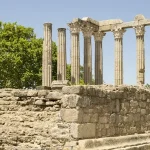
- The Roman Temple (Templo Romano): Often called the Temple of Diana, it dates from the 1st century AD and is lit after sunset. The granite columns glow against a dark sky. The site is outdoors, free and open at all hours, so a late stroll here costs nothing.
- Praça do Giraldo: Sit under the arcades with a drink and watch the square slowly fill. In summer, street musicians and impromptu gatherings are common.
- The Água de Prata Aqueduct: This 16th-century aqueduct has small houses and shops built into its arches. Walking along Rua do Cano at night, with the stone arches overhead and the lanes quiet, is one of the most atmospheric short walks in town.
- The City Walls and Jardim Público: The public garden, with its romantic pavilion and ruins, is pleasant in the early evening. Stay on well-lit paths later at night.
- Teatro Garcia de Resende: This 19th-century theatre hosts concerts, dance and plays. Check the programme before you arrive, as one evening here can replace a night in the bars.
Most churches and the cathedral close by 17:00. If you want to go inside, do it before dinner and save the dark hours for walking.
Food and Drink Scene: Where to Eat Before and After the Bars
Évora’s evening runs on dinner first, drinks second. Kitchens usually start serving around 19:30 and many stop taking orders by 22:00, so eat early and drink later, not the other way round.

Tavern Streets for Petiscos
The lanes around Rua do Raimundo and Rua da Mouraria are the best hunting ground for small plates. Botequim da Mouraria is a tiny, much-loved restaurant with only a handful of tables, so reserve ahead. Taberna Típica Quarta-Feira has built its name on traditional Alentejo cooking in a rustic setting. Both fill quickly on weekends.
Around Praça do Giraldo
The square and the streets running off it have the widest choice, from simple grills to modern kitchens. Expect to pay a small premium for a terrace seat, but the setting is worth it on a warm evening. Walk two minutes in any direction and prices drop.
Late Bites
For a late snack, look to cafés and pastelarias around Rua de Burgos and the student zone, where toasted sandwiches, pastries and coffee are served well into the night during term time. Remember that the Mercado Municipal on Praça 1º de Maio is a daytime place, so it is useful for lunch and picnic supplies, not for dinner.
When you sit down in a local tavern, order the house wine in a jug or a glass of regional red. Some places pour vinho de talha, made in clay amphorae in the old Roman way, and it tastes earthy and slightly cool against the warm smell of wood-fired grills.
Nightlife and Entertainment: Bars, Music and Late Nights
Évora’s nightlife is small but varied. You will not find huge clubs, but you will find good wine, friendly bartenders and a steady choice of music if you know where to look.
Wine Bars
The Alentejo is one of Portugal’s best wine regions, and Évora is the easiest place to taste it. Several wine bars along Rua 5 de Outubro and near the cathedral offer tasting flights and by-the-glass lists. Ask for local producers, such as Cartuxa, which is from Évora itself, or look for bottles from Reguengos de Monsaraz. A glass usually costs €3 to €6, and most places serve cheese, cured meats and olives alongside.

Student and Pub Scene
During term time, from roughly September to June, the streets around Rua da República fill with students. Small pubs and bars serve beer, sangria and simple cocktails, and many have a cheap special on Wednesday and Thursday evenings. Late nights here run until about 02:00, sometimes later at weekends. The crowd is friendly and often happy to practise English.
Live Music and Cante Alentejano
Live music in Évora is usually small-scale. You may find acoustic sets, jazz, fado nights or Portuguese pop in bars and cultural venues. Cante alentejano, recognised by UNESCO as intangible heritage, is harder to find on demand. It is performed by groups at festivals, cultural events and some taverns, so ask your host or check local event listings. Hearing a dozen voices in unison, slow and low, inside a stone room is something you will remember.
Theatre, Cinema and Cultural Events
For a quieter evening, check the programme at Teatro Garcia de Resende and the cultural spaces around town. Classical concerts in churches and convents are common in spring and autumn, often as part of regional music festivals.
Cocktails and Late Drinks
A few bars around Praça do Giraldo and the upper town mix proper cocktails, usually for €6 to €9. Évora has no major rooftop-bar culture, but some hotel terraces open to non-guests for sunset drinks. Call ahead to confirm access.
A Simple Night Plan
- 18:30: sunset drink on a terrace at Praça do Giraldo.
- 19:45: a slow walk to the Roman Temple and along Rua do Cano.
- 20:30: dinner in a tavern on Rua do Raimundo or Rua da Mouraria.
- 22:30: a wine bar near the cathedral.
- 00:00: a last beer in the student streets, then walk back.
Getting Around at Night
Évora has no metro and no tram. The historic centre is compact, and everything in this guide is on foot.
Getting There
Buses from Lisbon’s Sete Rios terminal take about 1 hour 30 minutes to 1 hour 45 minutes, and several companies operate the route. Trains from Lisbon also run to Évora, though journey times and frequency change by timetable, so check CP before you travel. Wherever you stay, check the last departure back to Lisbon before you plan a night out. Late evening services are limited, which is the main reason to stay overnight.
From the Airport
From Lisbon Humberto Delgado Airport, the simplest route is metro or taxi to Sete Rios, then a bus to Évora. Direct private transfers are available but cost much more, typically €120 to €170 each way depending on the provider. Renting a car is useful for day trips but unnecessary for the town itself.

Moving Around After Dark
- Walking: The cobbled streets are uneven and can be slippery after rain. Wear flat, grippy shoes, not heels.
- Taxis: Taxis wait at ranks near Praça do Giraldo and can be called by phone. A short ride inside town costs about €5 to €8.
- Ride-hailing apps: Availability is patchy in smaller cities, so do not rely on them late at night.
- City buses: Services thin out in the evening and are mostly for locals, so they are not a dependable way home.
Day Trips: Sunsets, Stars and Stone Circles
Évora is a good base for the surrounding Alentejo, and some of the best excursions end after dark.
- Cromeleque dos Almendres (about 20 minutes by car): A Neolithic stone circle older than Stonehenge. Go in late afternoon and stay for the sunset. You need a car or a taxi, since public transport does not reach it. Allow 2 to 3 hours.
- Monsaraz and Alqueva (about 50 minutes by car): This hilltop medieval village overlooks the Alqueva reservoir, in an area certified for its dark skies. Stargazing tours run from nearby operators, and the Milky Way is clear on moonless nights. Allow a full evening and book ahead.
- Arraiolos (about 25 minutes): A small town famous for hand-stitched wool carpets. It works as a half-day trip with lunch.
- Estremoz and Vila Viçosa (about 45 to 55 minutes): Marble towns with castles, markets and palaces. Estremoz’s Saturday market is the main draw. Allow a full day for both together.
- Elvas (about 1 hour 15 minutes): A fortified border town with a UNESCO-listed fortification system. Allow a full day.
If you plan an evening trip, arrange a designated driver or a taxi. Rural roads are unlit and the drive back after wine tasting is not a place to take risks.
Shopping: Evening Browsing and Bottles to Take Home
Évora is not a shopping destination in the big-city sense, but its small shops reward slow wandering, and the main streets stay open later than in many Portuguese towns.
- Rua 5 de Outubro: This is the main tourist street, with cork products, ceramics, Arraiolos rugs and regional food. Many shops stay open until 19:00 or 20:00 in high season.
- Rua da República and the streets around Praça do Giraldo: Mixed local shops, bookstores and clothing boutiques.
- Wine shops: Specialist stores sell bottles from Évora and Reguengos. They are a better source of gifts than souvenir stalls. Ask staff to recommend a bottle that travels well.
- Cork goods: Cork bags, wallets and homeware are a regional speciality and are often made by small producers. Look for the maker’s name on the item.
- Mercado Municipal: Fresh produce, cheese and cured meats in the morning. Many stalls shut by early afternoon.

Small shops outside the tourist streets often close for lunch between 13:00 and 15:00, then reopen until about 19:00. Plan any serious shopping for late morning or late afternoon.
Accommodation Areas by Budget
Staying inside the walls means you can walk home from any bar. That matters more than the star rating if you plan to enjoy the wine.
Budget (about €40 to €75 per night)
Guesthouses and hostels on and around Rua da República and the student streets offer simple rooms at a good price. Check noise levels in reviews, because rooms on bar streets can be loud on weekends. Ask for a back-facing room.
Mid-Range (about €80 to €150 per night)
Small hotels and boutique guesthouses near Praça do Giraldo and the cathedral are the sweet spot. You get character, a short walk to everything and often a good breakfast. This is the best choice for most visitors.
Luxury (about €170 and up per night)
Historic convent hotels, including the Pousada Convento de Évora near the Roman Temple, offer cloisters, pools and fine dining. Larger resorts outside the walls, such as Convento do Espinheiro, are quieter and better with a car. If nightlife is the goal, the central convent properties win.
Best Time to Visit for Nightlife
- Spring (March to May): Pleasant evenings of 10 to 20°C, green countryside, and a full student calendar. Classical music series run in churches and convents. This is one of the best seasons.
- Summer (June to August): Daytime temperatures often pass 35°C, and nights are warm. Life moves late and outdoors. Many students leave in July and August, so the bar scene is quieter, but the terraces are lively. The Feira de São João in late June brings concerts, food stalls and fairground energy.
- Autumn (September to November): Term starts and the student streets fill again. The wine harvest brings tastings and events, and temperatures are comfortable. This is another top season.
- Winter (December to February): Nights drop to around 3 to 6°C, and fog and rain are possible. Cosy taverns, wood-fired grills and fewer tourists make this a good time for food and wine lovers who dress warmly.

Weekday evenings from Wednesday to Saturday are the liveliest. Sundays and Mondays are very quiet, and several venues close entirely.
Practical Tips for Evening Visits
- Safety: Évora is one of Portugal’s safer cities. Normal precautions apply: keep your phone and wallet secure in crowded bars, and avoid dark, empty lanes late at night.
- Tipping: Tipping is not required. Rounding up or leaving 5 to 10% for good service in restaurants is appreciated. In bars, leaving small change is normal.
- Language: Portuguese is the main language. English is common in hotels, restaurants and among younger people. A simple “boa noite” (good evening) and “obrigado/obrigada” (thank you) go a long way.
- SIM cards and eSIMs: Prepaid SIMs from Vodafone, MEO or NOS cost around €10 to €25 for tourist data packages. An eSIM is simpler if your phone supports it. Signal is good in town but patchy in rural areas.
- Water: Tap water is safe to drink. Ask for “água da torneira” in restaurants if you do not want bottled.
- Drinking age: You must be 18 to buy alcohol in Portugal. Public drunkenness is frowned upon and drinking in the street is tolerated only in moderation.
- Driving: Do not drive after drinking. Portugal’s legal blood alcohol limit is low and enforced.
2026 Budget Breakdown
Évora is cheaper than Lisbon, Porto or the Algarve. Here is a realistic daily guide for one person, excluding transport to Évora.
Budget: about €55 to €80 per day
- Guesthouse or hostel room: €40 to €60 (shared costs lower the figure)
- Lunch: €8 to €12 (dish of the day)
- Dinner: €12 to €18
- Drinks: 2 to 3 beers or glasses of wine at €1.50 to €3 each
Mid-Range: about €120 to €190 per day
- Hotel room: €80 to €130
- Lunch: €12 to €18
- Dinner with wine: €25 to €40
- Cocktails or wine tasting: €15 to €25
- Taxi and a ticketed event: €10 to €25
Comfortable: about €260 and up per day
- Convent or boutique hotel: €170 to €250
- Tasting menu with wine pairing: €50 to €90
- Private stargazing tour or driver: €60 to €120
- Cocktails and a late taxi: €20 to €35
Typical drink prices: small draught beer (imperial) €1.20 to €2, glass of local wine €2.50 to €5, cocktail €6 to €9, and a shared petiscos plate €5 to €10.

Frequently Asked Questions
Is Évora worth visiting at night?
Yes. Crowds thin after 18:00, the Roman Temple and old streets are lit, and terraces and wine bars come alive. Staying overnight lets you enjoy a slower, more local side of the city that day-trippers rarely see, and dinner and drinks cost less than in Lisbon.
What time do bars close in Évora?
Most bars close between 01:00 and 02:00, with some student venues staying open later on weekends. Restaurant kitchens usually stop serving around 22:00. Sundays and Mondays are much quieter, and some venues close for the whole day, so check ahead.
Is Évora safe to walk around at night?
Yes, it is considered very safe. The centre is small, well lit and used by locals late into the evening. Watch your footing on uneven cobbles, keep valuables out of sight in crowded places, and avoid empty side streets very late at night.
Can I do Évora as a day trip from Lisbon and still enjoy the nightlife?
It is difficult. Late buses and trains back to Lisbon are limited, so you may need to leave before the evening starts. For a proper night out, stay at least one night inside the historic centre so you can walk back to your room.
Where can I try Alentejo wine in Évora?
Wine bars on Rua 5 de Outubro and near the cathedral serve local wines by the glass, often with cheese and cured meats. Taverns around Rua do Raimundo pour house wines cheaply. For vineyard visits, book a winery tour in nearby Reguengos de Monsaraz.
📷 Featured image by Filipe Nobre on Unsplash.