On this page
- Why Cascais Still Surprises First-Time Visitors
- Morning — Start at the Old Town and Fish Market
- The Beaches of Cascais: Which One Is Actually Right for You
- Cycling the Coastal Path to Estoril and Beyond
- Afternoon — Citadel, Museums, and the Casa das Histórias
- Where to Eat in Cascais in 2026
- Sunset at Boca do Inferno
- Day Trip or Overnight? Making the Call
- Getting to Cascais and Getting Around
- 2026 Budget Reality for a Day in Cascais
- Frequently Asked Questions
💰 Click here to see Portugal Budget Breakdown
💰 Prices updated: August, 2026. Budget figures are estimates — always verify before travel.
Exchange Rate: $1 USD = €0.86
Daily Budget (per person)
Shoestring: €40.00 – €90.00 ($46.51 – $104.65)
Mid-range: €130.00 – €200.00 ($151.16 – $232.56)
Comfortable: €250.00 – €500.00 ($290.70 – $581.40)
Accommodation (per night)
Hostel/guesthouse: €15.00 – €45.00 ($17.44 – $52.33)
Mid-range hotel: €100.00 – €190.00 ($116.28 – $220.93)
Food (per meal)
Budget meal: €10.00 ($11.63)
Mid-range meal: €35.00 ($40.70)
Upscale meal: €100.00 ($116.28)
Transport
Single metro/bus trip: €2.00 ($2.33)
Monthly transport pass: €40.00 ($46.51)
Cascais has a crowd problem — but not the one you’re thinking of. The town itself handles visitors well. The issue in 2026 is that everyone arrives on the same train at the same time, usually between 10:30 and 11:30 on a Saturday morning, then leaves by 5pm. If that’s your plan, you’ll spend your day queuing for coffee behind tour groups and fighting for towel space on Praia da Rainha. A small shift in timing — starting earlier, staying later, or structuring your day differently — completely changes the experience. This guide gives you a realistic, hour-by-hour framework for a day in Cascais that feels like your own.
Why Cascais Still Surprises First-Time Visitors
Most people expect a beach resort. What they find is a genuinely layered town with a working fishing tradition, a serious museum scene, dramatic Atlantic coastline, and an old centre that has resisted the worst impulses of coastal overdevelopment. The Portuguese royal family used Cascais as their summer retreat from the 1870s onward, and that history left behind wide boulevards, handsome villas, and a civic pride that’s still visible in how the town takes care of itself.
In 2026, Cascais has also benefited from the westward spread of Lisbon’s commuter population. That sounds like a negative, but it means the town has a real year-round residential energy. There are good bakeries, proper grocery shops, local restaurants that aren’t performing for tourists, and a marina that remains functional rather than purely decorative. The wealthy weekenders from Lisbon still come — you’ll see the cars parked near the Citadel on Saturdays — but they haven’t hollowed the place out.
One more thing worth saying upfront: Cascais is not Sintra. It doesn’t have the same castle-on-a-hill drama. What it has is subtler — a low-built, white-and-terracotta town sitting right against the Atlantic, where you can walk from a 14th-century fortress to a fish market to a contemporary art museum in under twenty minutes.
Morning — Start at the Old Town and Fish Market
Aim to arrive before 9:30am. The first train from Cais do Sodré in Lisbon departs around 5:30am and runs frequently; the journey takes about 40 minutes. Get there before the main wave.
Start at Largo Luís de Camões, the main square at the heart of the old town. On weekday mornings and early weekend mornings, this is a functioning neighbourhood square — old men with coffee at outdoor tables, a few delivery bikes weaving past the tiled fountains, pigeons doing their usual work. The azulejo-covered buildings around the square are genuinely beautiful and far less photographed at this hour.
Walk two minutes northeast to the Mercado da Vila, the covered market on Rua Afonso Sanches. The fish market section operates early — from around 7am — and this is where you understand what Cascais actually is. The smell of fresh sardines and bream hits you before you reach the door. Fishmongers in rubber aprons shout prices across the hall, ice glistens under fluorescent lights, and the catch from the night before is laid out in careful rows. If you speak any Portuguese at all, try asking what came in that morning. If you don’t, pointing works fine. This is a working market, not a tourist attraction, and it operates accordingly.
Grab breakfast nearby at one of the pastelarias on Rua Frederico Arouca. A bifana (pork sandwich) or a pastel de nata with a galão coffee will cost you under €4 and sets the tone for the day far better than anything in the hotel zone.

The Beaches of Cascais: Which One Is Actually Right for You
There are three main beaches within easy walking distance of the town centre, and they suit very different types of visitors.
Praia da Rainha
The smallest and most central — literally a few steps from the fish market. This is the postcard beach: calm water, fine sand, pastel buildings rising behind it. It fills up fast in summer. If you want it without the crowds, go before 10am or after 5pm. The water here is sheltered and usually calmer than the other beaches, which makes it good for children or anyone who doesn’t want a fight with Atlantic waves.
Praia da Ribeira
Just west of Praia da Rainha, separated by a small rocky point. Slightly larger and with a more local feel on weekdays. The beach bar here has better food than most — fresh grilled fish rather than sad sandwiches. On summer evenings, people bring their own wine and sit on the sea wall above the beach. This is the one to aim for if you’re staying into the evening.
Praia de Cascais (Grande)
Further west, a long open stretch that gets proper Atlantic swell. Much less sheltered, which means it’s popular with bodyboarders and anyone who actually wants to swim with some energy in the water. The wind picks up here in the afternoon — Cascais sits at the point where the sheltered Tagus estuary meets the open ocean, and you feel that transition physically. If you’re going to this beach, go in the morning when the wind is lighter.
All three beaches have free access. Sunbed and umbrella rental runs around €10–€15 per set in 2026. Water temperatures peak at around 20°C in August — refreshing but never warm by Mediterranean standards. This is the Atlantic, and it behaves like it.
Cycling the Coastal Path to Estoril and Beyond
One of the best decisions you can make in Cascais is to rent a bike and use the coastal cycling path — the Ciclovia Marginal — which runs from Cascais east toward Estoril and ultimately connects all the way to Oeiras and beyond. The dedicated path is completely separated from traffic for most of its length, flat, and follows the waterfront closely enough that you’re cycling alongside rock pools and small coves the whole way.
Bike rental in Cascais runs from about €10 for two hours to €20 for a full day (basic hybrid bikes; e-bikes cost more, around €25–€35 per day). Several rental shops cluster near the Marina. The town also has a bike-share scheme — Cascais Bikes — with docking stations around the centre.
The ride to Estoril takes about 20 minutes at a relaxed pace. Estoril itself is worth a brief stop: the famous Casino (the largest in Europe when it was built, and the setting that inspired Ian Fleming’s Casino Royale) is right on the seafront, and the gardens in front of it are underrated — well-maintained, with fountains and shade. You don’t need to go inside the Casino.
Continuing east from Estoril, the path goes through several quieter residential beaches — Praia de São João do Estoril, Praia de Poça — that receive a fraction of the foot traffic of Cascais itself. These are the spots where you’ll find families with local knowledge rather than tour groups. The water quality along this whole stretch is consistently good; the coast holds Blue Flag status most years.
Afternoon — Citadel, Museums, and the Casa das Histórias
After lunch, when the beach is at peak crowd and the midday sun is overhead, the afternoon is best spent in shade and culture. Cascais has more to offer here than its beach-town reputation suggests.
The Citadel of Cascais
The Cidadela de Cascais is a 16th-century fortress that was later converted into a royal palace. Today it houses the Museu-Biblioteca dos Condes de Castro Guimarães in its grounds — a genuinely eccentric Manueline-meets-Gothic mansion that was donated to the municipality in the early 20th century. Inside you’ll find azulejo panels, a medieval manuscript illuminated in gold, ivory pieces, and furniture that gives you an unusually specific window into the life of the Portuguese aristocracy. Entry costs around €4 in 2026. It’s rarely crowded.
The Citadel grounds are also home to a small boutique hotel and some artist studios. The fortification walls themselves are walkable and give you a good view over the fishing harbour and the mouth of the bay.
Casa das Histórias Paula Rego
This is one of the best small art museums in Portugal and it’s consistently overlooked by day-trippers. The building — designed by Eduardo Souto de Moura, who won the Pritzker Prize — is an architectural landmark in its own right: two dark red conical towers rising above a low ochre building, immediately distinctive. Inside, the permanent collection traces the work of Paula Rego, the Portuguese-British artist whose narrative paintings and pastels are disturbing, funny, politically charged, and technically exceptional.
Entry costs €6 for adults in 2026, free on the first Sunday of the month. The gift shop has genuinely good prints. Allow 90 minutes minimum if you’re engaged with the work; you can do it in 45 if you move quickly.
Where to Eat in Cascais in 2026
The food scene in Cascais has stratified clearly in recent years. There’s a tourist tier — overpriced seafood restaurants along the main marina promenade — and a local tier that’s much better value and more interesting. Here’s where to actually eat.
Lunch
Restaurante Dom Manolo’s on Alameda dos Combatentes da Grande Guerra has been around for decades and stays excellent. The grilled fish is priced by weight; ask what’s fresh that day. A full lunch with wine runs around €18–€25 per person. It’s always busy but the tables turn quickly.
Solar do Bitoque near the market is a more casual option for a weekday lunch — bituques (grilled beef with egg), house wine, and zero tourist theatre for around €12–€15.
Dinner or Late Afternoon
Taberna Clandestina is a newer addition that’s earned its reputation: small, focused menu, excellent petiscos (Portuguese small plates), natural wines from the Tejo and Alentejo regions. Booking ahead is essential on weekends.
For something simpler, the beach bar at Praia da Ribeira serves grilled sardines from around €9 and has outdoor seating directly above the water. In the late afternoon, with the light dropping and the fishing boats coming in below you, it’s one of the better eating experiences in the region regardless of price bracket.
Sunset at Boca do Inferno
About 1.5 kilometres west of the town centre along the coastal road (or coastal path), Boca do Inferno — the Mouth of Hell — is a natural rock arch where the Atlantic crashes into a deep cleft in the limestone cliffs. The name is theatrical but the geology earns it: on rough days, waves surge into the gap and shoot upward through a blow-hole with a sound like something underground trying to get out. On calm days, it’s more contemplative — the colour of the water, ranging from deep green to near-black in the crevice, against the pale cliff face.
Sunset here runs late in summer — after 9pm in June and July — and the western light on the cliffs in the hour before is exceptional. There’s a café at the viewpoint (slightly overpriced, but the position earns it). The path from town along the cliff top is well-maintained and flat, taking about 20 minutes on foot.
This is also where you’ll understand the wind that defines Cascais. Even on a calm summer day, the breeze off the Atlantic at Boca do Inferno is persistent and cool. Bring a layer. In winter, the spray can reach the viewing platform entirely and the sound is genuinely dramatic — worth visiting in the off-season for this reason alone.
Day Trip or Overnight? Making the Call
Cascais works well as a day trip from Lisbon — the train connection is frequent, cheap, and fast enough that there’s no argument against it logistically. Most of what the town offers can be covered in a full day if you’re organised.
That said, an overnight stay changes the experience in one specific way: you get the town after the day-trippers leave. Cascais in the evening — the restaurants filling with local families, the marina lit up, the streets quieter — is a genuinely different place from Cascais at noon in August. The hotel options range from small guesthouses in the old town to the historic Farol Hotel (a converted lighthouse keeper’s house on the cliff edge) to larger international properties near the beach.
If you’re combining Cascais with Sintra, an overnight in Cascais makes particular sense — the two towns are connected by bus (bus 403, which runs year-round) through the forested Serra de Sintra hills, a journey of about 45 minutes. You can do Sintra in the morning and Cascais in the afternoon and evening, sleeping in Cascais before the train back to Lisbon the next day.
Getting to Cascais and Getting Around
The Linha de Cascais train runs from Cais do Sodré station in central Lisbon to Cascais, stopping at Belém, Estoril, and several other coastal towns along the way. Trains run every 20 minutes through the day, every 30 minutes in the early morning and late evening. The journey takes 38–42 minutes. A single ticket costs €2.35 in 2026 (or €1.65 with a rechargeable Navegante card). This is far and away the best way to arrive.
Driving to Cascais makes little sense from Lisbon — parking is expensive and scarce in summer, and the A5 motorway, while fast, adds the stress of finding a space at the other end. If you’re coming from further afield — from the Algarve, say, or from Porto — driving and parking near the train station (there’s a larger car park there) and walking in is a reasonable compromise.
Within Cascais, the main beaches and old town are all walkable. The Citadel, Casa das Histórias, and Boca do Inferno are a short walk or short bike ride from the centre. There’s a local bus network, and taxis and Uber are available, but for a day visitor on foot or bike, you won’t need them.
2026 Budget Reality for a Day in Cascais
Here’s what a realistic day in Cascais costs in 2026, broken down by travel style:
- Budget (under €40 per person): Return train ticket from Lisbon (€4.70), market breakfast (€3–€4), a packed lunch or bifana (€5–€8), free beach access, one museum entry at the Citadel (€4), gelato or coffee in the afternoon (€3–€4), sardines at the beach bar for dinner (€9–€12), walk to Boca do Inferno (free). Total: around €30–€35.
- Mid-range (€60–€90 per person): Return train, pastelaria breakfast, bike rental for the day (€20), lunch at Dom Manolo’s with wine (€25), Casa das Histórias entry (€6), drinks at Boca do Inferno café (€8), early dinner at Taberna Clandestina (€30–€35). Total: €75–€95.
- Comfortable (€100–€150 per person): Add overnight accommodation (budget guesthouses from €70, mid-range hotels €120–€180 per room), dinner with a bottle of decent regional wine, and a morning taxi or e-bike upgrade. The Farol Hotel commands €200+ per room in peak summer but the cliff-edge position is singular.
Cascais is not cheap by Portuguese regional standards — its proximity to Lisbon and its affluent residential base push prices up — but it’s still far more affordable than equivalent coastal towns in France or Spain with similar quality of infrastructure.
Frequently Asked Questions
Is Cascais worth visiting in winter?
Yes, and in many ways it’s better. The town empties of tourists between November and February, restaurant prices drop, and the Atlantic coastline — particularly Boca do Inferno — is at its most dramatic. Temperatures stay around 12–15°C, rarely cold enough to be unpleasant for walking. The Citadel museums and Casa das Histórias are open year-round.
Which beach in Cascais is best for families with young children?
Praia da Rainha is the best choice for families — it’s the most sheltered, the waves are minimal, and it’s a very short walk from town facilities, cafés, and toilets. It gets crowded in peak summer, so arrive before 10am or return after 5pm when the day-trippers start leaving.
Can you visit both Cascais and Sintra in one day?
Technically yes, but it’s rushed. The bus 403 connects Sintra to Cascais in about 45 minutes through beautiful forested hills, making a combined visit possible. A better approach is to spend the morning in Sintra (arriving early before crowds), take the bus to Cascais after lunch, and spend the afternoon and evening there before returning to Lisbon by train.
Is parking available in Cascais in summer?
Limited and expensive. Street parking near the beaches is almost non-existent on summer weekends. The main car park near the train station is the most practical option if you must drive, but you’ll often find it full by mid-morning in July and August. The train from Lisbon is genuinely easier, faster, and cheaper for most visitors.
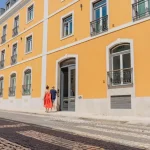
📷 Featured image by Svetlana Gumerova on Unsplash.