On this page
- How Safe Is Portugal for Tourists in 2026?
- Petty Crime: Where It Happens and How to Avoid It
- Scams Tourists Actually Fall For
- Cultural Norms That Keep You Out of Trouble
- Language as a Safety Tool: Key Phrases That Help
- 2026 Budget Reality: What Safety Costs You
- Women Travelling Alone in Portugal
- Emergency Contacts and Systems in Portugal
- Frequently Asked Questions
Portugal consistently ranks among Europe’s safest countries for tourists, and that reputation is largely deserved. But 2026 has brought new pressures — overcrowding in Lisbon and Porto, a sharp rise in rideshare scams tied to counterfeit apps, and post-peak-season confusion around beaches that lost Blue Flag status. Knowing what’s actually safe, what’s changed, and how Portuguese culture itself can protect you is worth far more than a generic “stay alert” warning.
How Safe Is Portugal for Tourists in 2026?
Portugal ranked 7th on the 2025 Global Peace Index, making it one of the safest countries in the world — not just in Europe. Violent crime against tourists is genuinely rare. The risks that do exist are almost entirely in the petty crime and opportunistic scam category, concentrated in specific urban tourist zones.
What has shifted since 2024 is the volume of people moving through Lisbon and Porto’s historic centres. Record visitor numbers in 2025 created more crowded conditions that opportunistic thieves find useful. Portuguese authorities responded by increasing plain-clothes police presence on tram lines and in Alfama, and by 2026, Lisbon’s PSP (Polícia de Segurança Pública) has dedicated tourist liaison officers stationed at Santa Apolónia station and Praça do Comércio during peak hours.
Outside major cities, Portugal feels remarkably calm. The Alentejo, Minho, and interior Beiras regions see almost zero tourist-targeted crime. Even the Algarve — busy and sun-baked in July and August — is safer than comparable beach destinations in Spain or Greece by most measures.
Petty Crime: Where It Happens and How to Avoid It
The risk is concentrated and predictable. If you know the three main zones, you can adjust your habits accordingly.
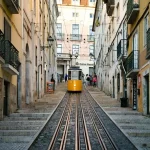
- Tram 28 in Lisbon — This historic yellow tram runs through Alfama, Graça, and Estrela. It’s extremely crowded, moves slowly uphill, and is the single most consistent location for pickpocketing in Portugal. Bags get unzipped while passengers are pressed together. If you ride it, keep valuables in a front pocket or leave them at your accommodation.
- Rossio and Baixa-Chiado areas — The main pedestrian streets of central Lisbon attract bag snatchers working in pairs, one to distract, one to lift.
- Algarve beaches — Leaving bags unattended on the beach while swimming is the primary theft method here. There are no sophisticated tricks involved — bags simply disappear. Most beaches now have coin-operated lockers near the access points.
- Porto’s Ribeira district — Busy waterfront areas near the Dom Luís bridge see phone theft, usually a grab-and-run from restaurant tables near the street edge.
A crossbody bag worn across the chest, not hanging at the side, removes most of the risk in all of these locations. Money belts are effective but not necessary — practical positioning of your bag is usually enough.
Scams Tourists Actually Fall For
Portugal has a handful of scams that cycle through every tourist season. They’re not elaborate — they rely on distraction and social pressure.
- The fake monk or charity collector — A person in robes or carrying a clipboard approaches with a “donation book” already filled with large amounts. They’re not affiliated with any real organisation. Saying “Não, obrigado” (No, thank you) firmly and walking away is all that’s needed.
- Unlicensed taxi overcharging — This happens near the airport and main train stations. Licensed taxis in Lisbon are beige with a green stripe; in Porto they’re cream-coloured. All meters must run by law. If a driver quotes a fixed fare before starting the meter, it will almost always be higher than the metered rate. In 2026, Uber and Bolt remain the safest and most transparent options — always confirm the driver’s plate before getting in.
- The “helpful” unofficial parking guide — Men who approach your car in Lisbon’s Bairro Alto or Belém and wave you into a parking space, then demand payment. They are not authorised. You don’t owe them anything, though confrontation is rarely worth it — a polite wave-off and driving away works fine.
- Counterfeit rideshare apps — A 2025–2026 trend specific to Lisbon and Porto involves cloned-looking apps that mimic Uber’s interface but route payments to fraudulent accounts. Download rideshare apps only from the official App Store or Google Play and confirm the driver’s registration number against what appears in the app.
Cultural Norms That Keep You Out of Trouble
Most tourist friction in Portugal isn’t crime — it’s cultural misreading. Understanding a few key norms prevents awkward situations and occasional genuine hostility from locals who feel their space is being disrespected.
Dress in churches and religious sites: Portugal is a predominantly Catholic country. Churches are active places of worship, not just monuments. Shoulders and knees should be covered when entering. This applies to everyone, regardless of gender. The Sé Catedral in Lisbon and Porto, the Monastery of Batalha, and the Shrine of Fátima all enforce this. Fátima especially — on pilgrimage days (particularly 12–13 May and 12–13 October), the atmosphere is deeply serious. Loud conversation, phone calls, and photography during prayer services are genuinely offensive to those present.

Meal timing: Portuguese restaurants typically serve lunch between 12:30 and 14:00, and dinner rarely before 20:00. Arriving at a restaurant at 18:00 expecting dinner service is a common tourist mistake — many kitchens simply aren’t open yet. Cafés will serve you, but the main meal experience requires timing.
Noise in residential neighbourhoods: Lisbon and Porto’s historic neighbourhoods — Mouraria, Intendente, Bonfim — are also where people actually live. Street noise after 22:00 creates genuine conflict with residents. This has become a political issue in 2026, with fines issued to tour groups in some areas. Keep it down after that hour.
Café etiquette: Sitting at a table rather than standing at the counter costs more — legally, prices are different, and menus must display both rates. This isn’t a scam. Knowing this prevents the confusion of a higher bill than expected.
Language as a Safety Tool: Key Phrases That Help
European Portuguese sounds quite different from Brazilian Portuguese — more closed vowels, swallowed syllables, and a faster rhythm. But a handful of phrases spoken with effort and goodwill will open doors immediately. Portuguese people genuinely appreciate any attempt, however imperfect.
For safety and practical situations, these are the most useful:
- Preciso de ajuda — “I need help.” Pronunciation: preh-SEE-zoo djeh ah-ZHOO-dah.
- Pode chamar a polícia? — “Can you call the police?” Pronunciation: POD shah-MAR ah poh-LEE-see-ah.
- Roubaram-me a carteira — “My wallet was stolen.” Pronunciation: roh-BAH-rum meh ah kar-TAY-rah.
- Onde fica o hospital mais próximo? — “Where is the nearest hospital?” Pronunciation: ON-djeh FEE-kah oh oh-spee-TAL my-sh PROH-zhee-moo.
- Não percebo — “I don’t understand.” Pronunciation: now pair-SEH-boo. Useful for stopping a conversation that’s moving too fast or feels pressured.
- Por favor, fale mais devagar — “Please speak more slowly.” Pronunciation: poor fah-VOR, FAH-leh my-sh deh-vah-GAR.
Knowing how to read key warning signs also matters. Perigo means danger. Proibido means prohibited. Saída is exit. Emergência is emergency. These appear on beaches, trails, and public buildings.
2026 Budget Reality: What Safety Costs You
Being safe in Portugal doesn’t require expensive gear or premium hotels, but some costs are worth factoring into your planning.

- Travel insurance: Budget tier — around €30–€50 for a two-week single-trip policy from a major European insurer. Mid-range policies with medical evacuation coverage run €70–€120. If you’re an EU citizen using a European Health Insurance Card (EHIC), basic SNS (public health) access is covered, but waiting times at public hospitals can be long in summer. Private emergency clinic visits in Lisbon start at around €80–€120 for a consultation.
- Beach lockers: Coin-operated lockers at Algarve beaches typically cost €2–€3 per session. Worth every cent if you’re swimming.
- Licensed transport from Lisbon Airport: Uber/Bolt to central Lisbon runs approximately €12–€20 depending on time of day. The Aerobus to Marquês de Pombal costs €4 in 2026. Licensed taxis typically charge €15–€25 metered. Anything significantly above this for the same journey is overcharging.
- Secure accommodation lockers: Most hostels include locker use. Budget hotels rarely do — a small padlock (€5–€8 at any hardware shop or Primark) gives you peace of mind for valuables in shared spaces.
Women Travelling Alone in Portugal
Portugal is consistently rated one of the top countries in Europe for solo female travel. Unsolicited harassment on the street is far less common here than in many southern European destinations. That said, a few practical notes are worth knowing.
Late-night transport in Lisbon and Porto is generally safe, but the gap between what feels fine at midnight in Bairro Alto and what feels uncomfortable in Intendente or Mouraria at 02:00 on a Saturday is real. These areas are not dangerous, but streets empty quickly once the clubs close and the feeling changes. Sharing a rideshare with the app’s tracking function active is a sensible default.
Beaches are relaxed in terms of dress — topless sunbathing is socially accepted at most beaches and entirely unremarkable. No one will approach you about it.
On regional buses and trains, especially in rural areas, older Portuguese men may attempt extended conversation that can feel persistent. This is almost always genuine curiosity and friendliness, not a threat. A warm but firm “Desculpe, estou a ler” (Sorry, I’m reading) ends it politely without offense.
Emergency Contacts and Systems in Portugal
Portugal’s emergency infrastructure is straightforward and works well in 2026.
- 112 — The single emergency number for police, ambulance, and fire. Operators speak English. This number works from any phone, including without a SIM card or credit.
- PSP Tourist Support Line — In Lisbon, the tourist police branch (Esquadra de Turismo) is located on Praça dos Restauradores. In Porto, there’s a tourist police post near the Ribeira. These offices handle theft reports specifically oriented to tourists and have English-speaking staff.
- SNS 24 — Dial 808 24 24 24 for non-emergency health advice in Portuguese. This is the public health advice line. It will connect you with a nurse for triage. In 2026, SNS introduced an English-language option (press 2 at the menu).
- Your country’s embassy or consulate — For serious situations — lost passports, arrest, hospitalisation — contact your country’s embassy in Lisbon. The UK embassy is on Rua de São Bernardo; the US Embassy is on Avenida das Forças Armadas. Both have 24-hour emergency lines listed on their official websites.
Frequently Asked Questions
Is Portugal safe for solo travellers?
Yes, consistently. Portugal ranks among Europe’s safest destinations and violent crime against tourists is extremely rare. Solo travellers — including women — generally move through cities and rural areas without incident. The main risks are pickpocketing in specific urban zones, particularly tram 28 in Lisbon and busy waterfront areas in Porto.
What areas of Lisbon should tourists be cautious in?
Exercise standard urban awareness in Martim Moniz, Intendente, and parts of Mouraria late at night — not because they are dangerous, but because they’re busy mixed-use areas where bag snatching occasionally occurs. Alfama and Baixa-Chiado require awareness during the day due to high tourist density and active pickpockets.
Is it safe to drink tap water in Portugal?
Yes. Tap water in Portugal is treated to EU drinking water standards and is safe to drink throughout the country. Some travellers notice a slightly stronger chlorine taste in Lisbon compared to Porto or the Algarve, but it’s perfectly safe. Buying bottled water is an unnecessary expense and generates plastic waste.
Do I need travel insurance for Portugal?
It’s strongly recommended. EU citizens with a valid EHIC card can access SNS public health services, but summer demand creates long waits. Non-EU visitors have no reciprocal healthcare agreement and face full costs without insurance. A basic single-trip policy starts around €30–€50 and covers most scenarios adequately.
What should I do if my wallet or passport is stolen in Portugal?
Report it immediately at a local PSP police station or use Lisbon’s online crime reporting system (participacaoonline.mai.gov.pt) for a legally valid report. Contact your embassy for passport replacement. For cards, call your bank’s international line immediately. Most travel insurers require a police report number to process a claim.