On this page
- What Makes Leiria Different From Other Central Portugal Towns
- Leiria Castle — What to Expect on a Visit in 2026
- The Old Town Below the Castle — Streets, Squares, and the River
- Where to Eat in Leiria — Local Dishes and Honest Restaurants
- Day Trips From Leiria — Batalha, Alcobaça, Fátima, and the Pinhal
- Getting to Leiria and Getting Around
- Day Trip or Overnight? How to Decide
- 2026 Budget Reality — What Things Cost in Leiria
- Practical Tips Before You Go
- Frequently Asked Questions
💰 Click here to see Portugal Budget Breakdown
💰 Prices updated: August, 2026. Budget figures are estimates — always verify before travel.
Exchange Rate: $1 USD = €0.86
Daily Budget (per person)
Shoestring: €40.00 – €90.00 ($46.51 – $104.65)
Mid-range: €130.00 – €200.00 ($151.16 – $232.56)
Comfortable: €250.00 – €500.00 ($290.70 – $581.40)
Accommodation (per night)
Hostel/guesthouse: €15.00 – €45.00 ($17.44 – $52.33)
Mid-range hotel: €100.00 – €190.00 ($116.28 – $220.93)
Food (per meal)
Budget meal: €10.00 ($11.63)
Mid-range meal: €35.00 ($40.70)
Upscale meal: €100.00 ($116.28)
Transport
Single metro/bus trip: €2.00 ($2.33)
Monthly transport pass: €40.00 ($46.51)
By 2026, the crowds that once only filled Lisbon and Porto have pushed outward — Óbidos is heaving on weekends, Sintra requires timed entry tickets, and even smaller Alentejo towns now appear on every influencer’s feed. Leiria, the capital of its own district in central Portugal, has somehow stayed off that circuit. Not because it lacks things to do, but because it asks something of you: a willingness to slow down and look up, literally, at one of the most dramatically positioned castles in the country. If you’re after an authentic Portuguese city that functions as a real place — with local commuters, a covered market, a university crowd, and a riverside to stroll — Leiria delivers without the performance.
What Makes Leiria Different From Other Central Portugal Towns
Leiria is a working city, not a museum. Around 50,000 people live here, and the city has a young energy driven by the Polytechnic University of Leiria, which draws students from across Portugal and increasingly from Brazil, Angola, and Cape Verde. That population mix means the food scene is more adventurous than you’d expect, the coffee is taken seriously, and the streets feel lived-in rather than staged for tourism.
Geographically, Leiria sits in a sweet spot. The Lis River runs through the centre, the Serra de Aire e Candeeiros limestone hills rise to the east, and the vast Pinhal de Leiria — one of Europe’s oldest planted forests, originally established by King Afonso III and expanded by King Dinis in the 13th century — stretches west toward the Atlantic coast. Within 30 to 40 kilometres in almost any direction, you hit something worth stopping for: UNESCO World Heritage monasteries, medieval villages, wild beaches, and cave systems.
What Leiria itself offers is a sense of proportion. The historic centre is compact enough to walk in an afternoon. The castle is genuinely spectacular. And the city hasn’t restructured itself around tourism yet, which means prices stay reasonable and locals don’t treat you as an obstacle.

Leiria Castle — What to Expect on a Visit in 2026
The castle is the reason most visitors come, and it earns the detour. Perched on a volcanic basalt hill directly above the city centre, Castelo de Leiria is visible from almost everywhere in town — a constant presence that changes character depending on the light. At dusk, when the stone turns a warm amber and the swallows start circling the towers, it’s genuinely hard to look away.
The structure you visit today is largely the result of 14th-century expansion under King Dinis and Queen Isabel, who used it as a royal residence. The Royal Palace ruins inside the walls — roofless but still standing, open to the sky — are the most atmospheric part of the visit. The Gothic windows frame views of the Lis valley in a way that feels almost theatrical.
In 2026, the castle is open Tuesday to Sunday. Entry costs around €4 for adults, €2 for students and seniors, and free for children under 12. There have been improvements to the walkway around the ramparts following restoration work that completed in late 2025, making the full circuit more accessible than it was previously. The path to the castle from the city centre takes about 10 to 15 minutes on foot — it’s steep in places, particularly the final approach up the stone ramp, but there are shaded rest points along the way.
The views from the towers extend over the city’s red-tiled rooftops, the green band of the Pinhal forest in the distance, and on clear days, a faint blue line at the horizon that is the Atlantic coast some 25 kilometres away. Bring water. The castle has no café inside, and the exposed ramparts get hot in summer.
The Old Town Below the Castle — Streets, Squares, and the River
Coming back down from the castle, the old town unfolds naturally. The Praça Rodrigues Lobo is the main square — a long, rectangular space lined with arcaded buildings where locals actually sit and drink coffee rather than pose for photos. The square is named after the Baroque poet born here in the late 16th century, and there’s a statue of him at the centre that most people walk past without registering.
The cathedral, the Sé de Leiria, faces one end of the square. It’s a 16th-century Renaissance structure, rebuilt and modified over centuries, and relatively modest inside compared to Portugal’s major cathedrals. But the cloister is quiet and cool, and the tile panels in the nave are worth a careful look — the shade of blue shifts between panels in ways that suggest different workshop hands at work.
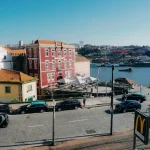
From the square, narrow streets run down toward the Lis River and the pedestrian promenade that follows both banks. This riverfront walk, the Alameda dos Reis, is where Leiria shows its best everyday face. In the mornings, people walk dogs and buy fish from the market nearby. In the evenings, students sit on the low walls and families stroll the tree-lined path. The river here is calm and narrow, reflecting the lamplight at night in a way that makes even the most ordinary stretch feel cinematic.

The Mercado Municipal Sant’Ana is a short walk from the river and is worth visiting before noon. The covered market sells vegetables, cheese, smoked meats, fresh bread, and seafood. It has none of the tourist-facing polish of Lisbon’s Mercado da Ribeira — this is where Leiria residents actually shop, and the vendors will give you samples and opinions without any expectation that you’ll overpay.
Where to Eat in Leiria — Local Dishes and Honest Restaurants
Leiria’s food identity centres on a few specific things: roasted kid goat (cabrito assado), migas (a dense bread-and-pork side dish), and bacalhau preparations that lean toward hearty rather than refined. The city also sits close enough to the coast that fresh fish appears on menus regularly — caldeirada (fish stew) and grilled sea bass are common, and the seafood is priced fairly here compared to any coastal resort town.
Restaurante Casinha da Praça, near Praça Rodrigues Lobo, is a reliable choice for traditional cooking — small portions of traditional pork and game dishes without the tourist markup. It fills quickly at lunch. Tasca da Mouraria, tucked into one of the older streets between the square and the castle approach, does an excellent arroz de tamboril (monkfish rice) that changes texture as it cools in the clay pot — earthy and oceanic at the same time, with a faint bitterness from the saffron that you taste several seconds after each spoonful.
For something lighter, the pastelarias around Praça Paulo VI do good coffee and the local pastry specialty is the Pastel de Leiria — a folded pastry made with cinnamon and egg, slightly drier than a pastel de nata but with a clean, spiced finish. You’ll find them in most bakeries in the centre for under €1.50 each.
The riverside has a few more contemporary spots that serve natural wines and petiscos (small plates), catering to the university crowd and younger residents. These aren’t tourist-facing — expect handwritten menus and limited English, but genuine hospitality. Largo das Festas area near the river is the loosest cluster of these informal spots and is especially lively Thursday through Saturday evenings.

Day Trips From Leiria — Batalha, Alcobaça, Fátima, and the Pinhal
Leiria’s central position makes it one of the best overnight bases in Portugal for day-tripping into UNESCO-listed heritage and underrated nature. These four directions cover very different types of experience.
Batalha (12 km south)
The Mosteiro de Santa Maria da Vitória in Batalha is one of the most complex and beautiful Gothic structures in Europe, commissioned by King João I to commemorate the 1385 Battle of Aljubarrota. The Unfinished Chapels — roofless, with elaborate stone tracery rising into open sky — are among the most photographed spaces in Portugal. Batalha sees day visitors from Lisbon too, but arrival before 9:30 AM gives you the cloister in near-silence. Entry is €8 for adults in 2026.
Alcobaça (27 km north)
The Cistercian monastery at Alcobaça is larger, quieter, and somehow less visited than Batalha despite being equally significant. The tombs of King Pedro I and Inês de Castro — placed foot-to-foot so that on Judgement Day they would be the first thing each other saw — are the emotional heart of the visit. The church nave is extraordinary for its proportions: tall, pale, almost stripped of decoration. The town itself has a good pastry tradition and a weekly market worth catching.
Fátima (24 km east)
Fátima operates on a completely different register to any tourist site in Portugal. This is an active pilgrimage destination, and the scale of the modern basilica complex — built to accommodate hundreds of thousands of worshippers — is genuinely staggering. Whether you’re religious or not, the atmosphere on major feast days (especially May 13 and October 13) is unlike anything else in the country. On ordinary days it’s much calmer, and the original 1917 apparition chapel is compact and worth seeing.

Pinhal de Leiria (20–25 km west)
The Pinhal Nacional, also called the Pinhal do Rei, is the oldest cultivated forest in Europe, planted to stabilise coastal dunes and supply timber for the Portuguese Age of Discovery fleet. Walking or cycling through the stone pine and maritime pine groves is deeply restorative — the resin smell is intense in summer heat, and the forest floor is soft underfoot. The nearby beach at Pedrógão or São Pedro de Moel (both within 30 km of Leiria) combines coastal swimming with forest walks in a way you won’t find in more manicured resort areas.
Getting to Leiria and Getting Around
Leiria is served by Comboios de Portugal (CP) on the Beira Baixa line, with connections from Lisbon’s Oriente station. Journey time is approximately 1 hour 40 minutes on the faster intercity services, with trains running several times daily. In 2026, CP’s updated timetables have improved frequency on this corridor — check cp.pt for current schedules, as these tend to shift seasonally.
Rede Expressos buses connect Leiria to Lisbon (roughly 1 hour 45 minutes depending on traffic), Porto (around 2 hours), and Coimbra (under 1 hour). The bus station is centrally located and walkable from most accommodation. Buses are often more frequent and slightly faster than trains on the Lisbon route, and tickets are comparably priced.
By car from Lisbon, take the A1 north to the A17 junction — the drive is around 140 km and takes roughly 1 hour 30 minutes outside peak hours. Parking in the city centre is available in the underground car park near Praça Paulo VI; street parking in the older streets is limited.

Within Leiria, the compact historic centre is best explored on foot. The city operates local buses, but for reaching Batalha and Alcobaça without your own transport, local bus routes run by Rodoviária do Tejo cover both, though frequency is limited and timings require planning. A rental car or taxi gives significantly more flexibility for the surrounding region.
Day Trip or Overnight? How to Decide
Leiria works as a day trip from Lisbon or Coimbra if your focus is the castle and the city centre alone. The train or bus journey is short enough that you can arrive mid-morning, visit the castle, have lunch, explore the old town, and be back in Lisbon by early evening.
However, Leiria is a much better proposition as a two-night base if your real goal is the surrounding region. Batalha, Alcobaça, Fátima, and the Pinhal coast together require at least a full day each to do properly. Trying to compress all four into a single day trip from Lisbon means you end up sprinting through UNESCO sites rather than absorbing them.
The city also changes character after dark. The riverside fills up, the university crowd spreads across the bars and pastelarias, and the castle is lit against the night sky in a way that the midday visit doesn’t prepare you for. If you’ve been on a relentless pace through Portugal, two nights in Leiria functions as a genuine reset — a place where you’re not managing a list so much as simply being somewhere that has its own rhythm.
2026 Budget Reality — What Things Cost in Leiria
Leiria remains one of the more affordable cities for visitors in central Portugal, with prices noticeably lower than Lisbon, Porto, or Algarve resort towns.

- Budget accommodation (hostel dorm or basic guesthouse): €18–€35 per person per night
- Mid-range accommodation (3-star hotel, double room): €65–€95 per night
- Comfortable accommodation (boutique hotel or well-positioned 4-star): €100–€145 per night
- Budget meal (prato do dia lunch with drink): €9–€12
- Mid-range restaurant dinner (two courses, house wine, two people): €35–€55
- Comfortable dinner (à la carte, full experience, two people): €60–€90
- Castle entry: €4 adult, €2 concession
- Batalha monastery: €8 adult
- Alcobaça monastery: €8 adult
- Espresso (café): €0.90–€1.20
- Local bus ticket: €1.50–€2.00
- Lisbon to Leiria by Rede Expressos bus: €12–€16 one way (book in advance for lower fares)
Compared to 2024, accommodation prices have risen around 8–12% across central Portugal, following wider Portuguese inflation trends. Leiria’s lack of significant tourist infrastructure means it hasn’t seen the sharper increases visible in more promoted destinations.
Practical Tips Before You Go
The castle is closed on Mondays — plan around this. The pilgrim site at Fátima becomes extremely crowded and accommodation in the entire region fills fast around May 13 and October 13 each year. Book ahead if your dates fall near either of those.
Summer (June to September) is hot and dry, with temperatures regularly reaching 32–35°C in July and August. The Pinhal coast beaches are excellent and not overcrowded compared to Algarve. Spring (March to May) is arguably the best time — mild temperatures, green hillsides, and far fewer visitors.
Leiria’s historic centre is hilly and much of the castle access involves uneven stone surfaces. Comfortable shoes with grip are genuinely necessary, not just recommended.
Portuguese is the working language here, with limited English in traditional restaurants and the market. A translation app handles most situations, and Leiria residents are generally patient and helpful. Attempting even basic Portuguese — obrigado/obrigada, um café, por favor — is noticed and appreciated.

Frequently Asked Questions
Is Leiria worth visiting, or is it just a base for Batalha and Alcobaça?
Leiria is worth visiting in its own right. The castle is genuinely impressive, the riverside old town is pleasant, and the city has an authentic everyday character that staged tourist destinations lack. Most visitors who come purely to use it as a base end up spending more time in the city than they planned. Two nights here serves both purposes well.
How long do you need at Leiria Castle?
Allow 1.5 to 2 hours for a thorough visit — this includes the walk up, the rampart circuit, time in the Royal Palace ruins, and the views from the main tower. A rushed visit can be done in under an hour, but the castle rewards a slower pace. The walk back down takes 10 to 15 minutes and is easier than the ascent.
Can you visit Batalha and Alcobaça in the same day from Leiria?
Yes, and it’s a common combination. Both monasteries are within 30 km of Leiria, in different directions. With a car, doing both comfortably in one day is achievable — allow at least two hours at each site. By public bus, the logistics are tighter but possible if you check schedules in advance and prioritise one over the other.
What is the best time of year to visit Leiria?
March through May offers the best combination of mild weather, green landscape, and low visitor numbers. October is also excellent. Summer is hot but manageable if you visit the castle early and spend afternoons at the Pinhal coast beaches nearby. The area around Fátima fills dramatically in mid-May and mid-October due to pilgrimages.
Is Leiria a good destination for families with children?
The castle appeals strongly to children, particularly the towers and ramparts. The Pinhal forest and Atlantic beaches within 30 km add outdoor options. The city itself is safe and walkable. The main challenge is the steep access path to the castle, which requires care with very young children. There are no major theme parks or large-scale family attractions, but the natural and historical experiences work well for curious families.
📷 Featured image by Louis Droege on Unsplash.