On this page
- Which Visa Gets You Legal: D7, Digital Nomad, and the 2026 Options Compared
- AIMA and the Residence Permit Process: What Actually Happens After You Arrive
- The NHR Tax Regime in 2026: What Changed and What You Still Get
- Getting Your NIF: The Tax Number You Need Before Almost Everything Else
- Health Coverage as a Foreign Resident: SNS, Private Insurance, and the Gap Between Them
- What It Actually Costs to Live in Portugal in 2026
- Banking, Money Transfers, and the Practical Financial Setup
- Frequently Asked Questions
Which Visa Gets You Legal: D7, Digital Nomad, and the 2026 Options Compared
Portugal‘s popularity with remote workers has not faded — if anything, 2026 brings more competition for the same entry pathways. Processing backlogs, updated income thresholds, and the quiet evolution of the digital nomad visa have made the question “which visa do I actually need?” harder to answer than it was two years ago. This guide cuts through that confusion with current figures and honest timelines.
Two visas dominate the conversation for people planning to live and work remotely from Portugal for more than 90 days.
The D7 Passive Income Visa
The D7 was designed for retirees and people with passive income — rental income, dividends, pensions — but it has long been used by remote workers whose foreign employer pays them a regular salary. In 2026, the minimum monthly income requirement sits at approximately €1,020 per month for a single applicant (tied to the Portuguese minimum wage, which was raised again in January 2026). For couples, add 50% for the second adult. For each dependent child, add 30%.
You apply for the D7 at a Portuguese consulate in your home country before you travel. The process involves proving your income with three to six months of bank statements, a clean criminal record, proof of accommodation in Portugal (a rental contract or property deed), and private health insurance valid in Portugal. After approval, you enter Portugal on a D7 entry visa, then schedule an appointment with AIMA (the immigration authority that replaced SEF in 2023) to convert it into a two-year residence permit.
The Digital Nomad Visa (Tech Visa / Remote Work Visa)
Portugal launched the official digital nomad visa in October 2022. By 2026 it has matured into a more predictable process, though the income threshold has risen. Applicants must prove a monthly income of at least €3,480 — that is four times the Portuguese minimum wage. This is the main filter. If you clear it, the visa suits you well: it explicitly covers remote workers employed by foreign companies or freelancers with foreign clients.

Like the D7, you apply from your home country at a Portuguese consulate. You will need employment contracts or client agreements showing the income, recent pay slips or bank statements, health insurance, and proof of accommodation. Once in Portugal, you follow the same AIMA residence permit path as D7 holders. The digital nomad visa essentially removed the ambiguity that remote workers faced when using the D7 — it is the cleaner legal fit if your income qualifies.
Which One Is Right for You?
- Income under €3,480/month: The D7 is your route, provided you meet the lower threshold. Be aware that some consulates still scrutinise employment income differently from passive income under D7 — a letter from your employer confirming remote work status helps.
- Income over €3,480/month from remote work: The digital nomad visa is the more transparent option and faces less consular pushback.
- Freelancers and contractors: Either visa can work. The digital nomad visa is easier to document if your contracts are clearly with non-Portuguese clients.
AIMA and the Residence Permit Process: What Actually Happens After You Arrive
SEF — the Serviço de Estrangeiros e Fronteiras — was dissolved in late 2023 and replaced by AIMA (Agência para a Integração, Migrações e Asilo). The transition was rocky. In 2024 and into 2025, appointment backlogs stretched to six months or more in Lisbon and Porto. By mid-2026, AIMA has improved its online scheduling system and added processing capacity, but delays of eight to twelve weeks for a residence permit appointment remain common in the major cities.

Here is the sequence you should expect after arriving in Portugal on your entry visa:
- Get your NIF immediately — you cannot open a bank account, sign a rental contract, or register for health care without it. More on this below.
- Open a Portuguese bank account — some residence permit applications require proof of a Portuguese account.
- Schedule your AIMA appointment online via the official AIMA portal. Do this within the first two weeks of arrival. Appointment slots disappear fast.
- Attend your AIMA appointment with your full document pack: passport, entry visa, proof of accommodation, proof of income, health insurance certificate, NIF, criminal record certificate (apostilled), and passport photos.
- Receive your residence card — this is typically mailed to your registered address in Portugal within four to eight weeks of a successful appointment.
One practical reality: your entry visa is valid for four months. If your AIMA appointment falls after this period — which is possible given current wait times — you are in a legal grey zone. AIMA officially acknowledges this and has issued guidance stating that applicants with a scheduled appointment are not considered to be in breach. Keep your appointment confirmation on you at all times during this period.
After two years, your residence permit is renewable for another three years. After five years total, you can apply for permanent residency or Portuguese citizenship, subject to language test requirements (A2 level Portuguese).
The NHR Tax Regime in 2026: What Changed and What You Still Get
The Non-Habitual Resident (NHR) tax regime was one of the main financial draws to Portugal for foreign workers and retirees. In 2024, the Portuguese government closed the original NHR scheme to new applicants and introduced NHR 2.0 — officially called IFICI (Incentivo Fiscal à Captação de Investimento). In 2026, this is the regime available to newcomers.
The original NHR offered a flat 20% tax rate on Portuguese-source income from qualifying professions, and 10% on foreign pension income, for ten years. The new IFICI regime is more targeted. Key points for 2026:
- Who qualifies: Researchers, highly qualified professionals in specific sectors (technology, finance, manufacturing, agriculture, and several others listed in the government’s qualifying activities schedule), and workers hired or transferred by companies investing in Portugal.
- The rate: A flat 20% IRS rate on Portuguese-source employment and self-employment income from qualifying activities, for ten years.
- Foreign income: Under IFICI, foreign-source income may still be exempt from Portuguese tax in certain categories, depending on the type of income and the existence of double-taxation treaties. This is complex — an independent Portuguese tax accountant is not optional, it is essential.
- First-year registration: You must register as NHR / IFICI with the Portuguese Tax Authority (AT) within the deadline set in the year you first establish tax residency. Missing this window means waiting another year or losing eligibility.
If you were already registered under the original NHR before the 2024 cutoff, your existing status is grandfathered for the remainder of your ten-year period. Many people who moved to Portugal in 2022 and 2023 specifically to lock in the original NHR are still benefiting from it through the late 2020s and early 2030s.
For new arrivals in 2026, IFICI is narrower than the original NHR but still valuable for those who qualify. The 20% flat rate compares very favourably to standard Portuguese IRS rates, which reach 48% at higher income brackets.
Getting Your NIF: The Tax Number You Need Before Almost Everything Else
The NIF (Número de Identificação Fiscal) is Portugal’s tax identification number. Without it, you cannot rent an apartment, open a bank account, buy a car, get a phone contract, or access health services as a resident. It is the first thing you need, and it is easier to get than most foreigners expect.
EU and EEA citizens can walk into any Finanças office (the Portuguese tax authority) with a passport and get a NIF on the spot. The process takes about 20 minutes and there is no charge.
Non-EU citizens — including British, American, Canadian, Australian, and Brazilian nationals — must be slightly more organised. You will need to appoint a Portuguese fiscal representative before or during the NIF application. This is a person or company (typically a lawyer or accountant) with a Portuguese address who formally acts as your tax representative while you are not yet a resident. Fiscal representative services cost between €100 and €250 per year. Once you become a tax resident in Portugal, you can remove the fiscal representative requirement.
Several online services now handle NIF registration remotely for non-EU applicants, processing applications before you even travel. This is worth doing: arriving in Portugal with a NIF already in hand means you can sign a rental contract and open a bank account in your first week.
Health Coverage as a Foreign Resident: SNS, Private Insurance, and the Gap Between Them
Portugal’s national health service is called the SNS (Serviço Nacional de Saúde). Access to SNS care is available to legal residents, not just citizens. Once you have your residence permit, you can register at your local health centre (Centro de Saúde) and receive a SNS user number. From that point, you can use GP services, specialist referrals, and public hospital care at Portuguese resident rates — which are low to zero for most primary care.

The practical reality in 2026 is that SNS waiting times for non-emergency specialist care remain long in urban areas. A GP appointment at an SNS health centre can take two to four weeks. Specialist referrals from a GP can take months. For dental care, SNS coverage is minimal — adults pay essentially full private rates.
Most foreign residents carry both SNS registration and a private health insurance policy. Private insurance in Portugal in 2026 costs approximately €50–€120 per month for a healthy adult under 45, depending on the insurer and coverage level. Major Portuguese insurers include Médis, Fidelidade, and Multicare. For your visa application, you need private health insurance before you arrive — SNS access only comes after residency is established.
The combination that works for most working-age foreign residents: a mid-tier private plan covering GP visits, specialists, diagnostics, and hospital, plus SNS registration as a backstop for emergency care. Do not rely on SNS alone in your first year while you navigate the system.
What It Actually Costs to Live in Portugal in 2026
Portugal remains more affordable than most of Western Europe, but the gap has narrowed. Lisbon and the Algarve coast in particular have seen sustained rent inflation since 2021. Here are honest 2026 figures by location and lifestyle tier.
Monthly Rent (unfurnished, long-term lease)
- Lisbon city centre, 1-bedroom: €1,400–€2,000
- Lisbon suburbs (Almada, Setúbal, Amadora): €900–€1,300
- Porto city centre, 1-bedroom: €1,100–€1,600
- Porto suburbs (Matosinhos, Maia, Vila Nova de Gaia): €750–€1,100
- Algarve (Faro, Tavira, Lagos), 1-bedroom: €900–€1,500 (seasonal variation applies)
- Madeira (Funchal), 1-bedroom: €800–€1,300
- Interior towns (Coimbra, Évora, Braga): €550–€900
Monthly Living Costs by Tier (excluding rent)
- Budget: €700–€900 — cooking at home, local markets, public transport, minimal dining out
- Mid-range: €1,100–€1,500 — mix of cooking and restaurants, occasional travel within Portugal, gym, streaming services
- Comfortable: €1,800–€2,500 — regular restaurant meals, private health insurance, car or frequent taxis, international travel
A single person in Lisbon at mid-range, including a suburban one-bedroom apartment, should budget around €2,500–€3,000 per month total. In Porto or Madeira, the same lifestyle runs closer to €2,000–€2,500. In an interior city like Évora or Coimbra, you can live comfortably for €1,500–€2,000.
Groceries at a Portuguese supermarket (Continente, Pingo Doce, Lidl) are noticeably cheaper than in the UK, Germany, or Scandinavia. A proper sit-down lunch at a local restaurant — the prato do dia, a set menu of soup, main course, and coffee — costs €8–€12 in most parts of the country.
Banking, Money Transfers, and the Practical Financial Setup
Opening a Portuguese bank account as a new resident is possible but requires patience. The main Portuguese retail banks — Millennium BCP, Caixa Geral de Depósitos, Novo Banco, and Santander Portugal — all have English-language service available in major cities. You will need your NIF, passport, proof of address in Portugal (a rental contract works), and proof of income. Some branches now accept an appointment booking online.
Many foreign residents use a combination approach: a Portuguese bank account for rent payments and local direct debits, and a Wise or Revolut account for receiving international income and managing currency conversion. Wise in particular remains the most cost-effective way to convert and transfer money between currencies in 2026, with transparent fees and real mid-market exchange rates. This is not a minor point — if you are earning in USD, GBP, or another currency and paying Portuguese expenses in euros, the exchange rate spread at a traditional bank will cost you meaningfully over a year.
For freelancers and self-employed residents, registering as a recibo verde (green receipt) worker with the Portuguese tax authority is the standard structure. You invoice clients, issue official receipts through the AT portal, and pay IRS and social security contributions quarterly. Social security contributions for self-employed workers in Portugal run at 21.4% of declared income, though there are simplified regime rules that cap the contribution base in the early years. An accountant (contabilista) who handles recibo verde clients costs around €50–€100 per month and is worth every cent for keeping you compliant.

Frequently Asked Questions
Can I work for a foreign employer while living in Portugal on a D7 visa?
Yes, but it exists in a legal grey area under the D7. The digital nomad visa is the cleaner option for remote workers employed abroad. In practice, many D7 holders work remotely without issue, but your employment contract should clearly state the work is performed remotely from anywhere. If your income is truly passive — dividends, rental income — the D7 is unambiguous.
How long does it take to get permanent residency in Portugal?
Five years of legal residence, with no gap longer than six consecutive months or ten months total in any five-year period. You also need to pass an A2 level Portuguese language test. Permanent residency gives you the right to live and work in Portugal indefinitely without renewing a permit, but it does not automatically grant EU citizenship.
Is Portugal still affordable for digital nomads in 2026?
Compared to London, Amsterdam, or Berlin, yes — meaningfully so. Compared to 2019 Portugal, rents in Lisbon and Porto have roughly doubled. The country remains excellent value in smaller cities, interior towns, and Madeira.
Do I need to speak Portuguese to live there as a foreigner?
For day-to-day life in cities and the Algarve, English is widely spoken, especially among working-age Portuguese people and in any professional or administrative context. However, some AIMA appointments, SNS health centre registrations, and local government interactions still require Portuguese. A basic working level — or a local helper — smooths the process considerably.
What happened to the original NHR tax regime — can I still apply?
The original NHR closed to new applicants at the end of 2024. The replacement is IFICI (NHR 2.0), available from 2025 onwards. It targets specific qualified professions and investors, offering the same 20% flat IRS rate on Portuguese-source qualifying income for ten years. If you registered under the original NHR before the cutoff, your status is protected for your full ten-year period.
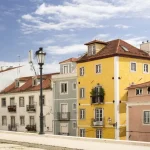
📷 Featured image by Ricardo Resende on Unsplash.