On this page
- The Coast in September: Where to Go and Why It’s the Best Month
- City Life Without the Crowds: Lisbon and Porto in September
- The Alentejo and Interior: September’s Hidden Timing Advantage
- September Festivals and Local Events Worth Planning Around
- 2026 Budget Reality: What Everything Actually Costs This Month
- Getting Around Portugal in September: Practical Transport Notes
- What to Pack and Expect: Weather, Crowds, and Daily Rhythms
- Frequently Asked Questions
September 2026 is shaping up to be one of the most popular months Portugal has seen in years, which means two things: the country is at its most beautiful, and competition for the good stuff — beach spots, accommodation, restaurant tables — is real. August crowds thin out after the first week, sea temperatures stay warm through the whole month, and the light turns golden in a way that makes even ordinary streets look like postcards. If you plan right, September rewards you. If you assume it’s a quiet shoulder month and book nothing in advance, you’ll pay for that mistake.
The Coast in September: Where to Go and Why It’s the Best Month
The Atlantic along Portugal’s southwest coast holds its summer warmth well into September. Water temperatures along the Algarve typically sit between 22°C and 24°C during this month — warm enough to swim comfortably without a wetsuit, unlike much of northern Europe’s coastlines at the same time of year. The air temperature hovers around 28°C to 32°C during the day, dropping pleasantly at night.
What changes dramatically from August is the crowd level on the beaches themselves. Families with school-age children largely leave after the first week of September, particularly European visitors. What remains are a mix of Portuguese holidaymakers, couples, and independent travellers who know exactly what they’re doing booking this window.
Along the Algarve, beaches like Praia da Marinha and Praia de Benagil remain popular but feel genuinely breathable again. The sea caves near Benagil are best visited by kayak or small boat — operators run tours through the morning hours, and the light inside the cave is extraordinary around mid-morning when sun pours through the ceiling opening. Further west, the Sagres peninsula and its exposed Atlantic-facing beaches like Praia do Beliche pick up consistent swell and attract surfers, while the sheltered southern-facing beaches calm down nicely.
On the west coast, the Silver Coast (Costa de Prata) north of Lisbon — towns like Peniche, Baleal, and São Martinho do Porto — offers a quieter alternative to the Algarve. The water is cooler here, around 18°C to 20°C, but the scenery is dramatic and the prices noticeably lower. São Martinho do Porto’s almost circular lagoon bay is one of the safest swimming spots in Portugal, ideal for families.
City Life Without the Crowds: Lisbon and Porto in September
Lisbon in August is hot, loud, and packed. Lisbon in September is still warm — expect 27°C to 30°C through most of the month — but the city exhales. Queues for the Jerónimos Monastery in Belém are shorter. Tables appear at Alfama restaurants that had two-week waits in July. The 28 tram still fills up, but you can actually get on one without planning your morning around it.
The neighbourhoods worth your time in September are the ones that reward slow walking. In Mouraria, the warren of streets behind the Intendente square smells of grilling fish and jasmine in the evening. In LX Factory on Sundays, the indoor market draws a mix of locals and visitors, and the food stalls are genuine rather than tourist-oriented. Príncipe Real, with its antique shops and garden square, is the kind of place you wander into thinking you’ll spend twenty minutes and leave ninety minutes later.
Porto in September has a different energy — more lived-in, less polished than Lisbon, and all the better for it. The Ribeira waterfront is still busy, but the backstreets of Bonfim and Cedofeita are where locals actually eat and drink. Wine bars along Rua Cândido dos Reis in the Galerias de Paris area stay open late and serve decent house wines for €3 to €4 a glass. The Douro river views from the Dom Luís I Bridge upper deck are genuinely one of the great free experiences in European travel — and in September, the light at sunset makes the terracotta rooftops glow.
The Alentejo and Interior: September’s Hidden Timing Advantage
Most visitors to Portugal in summer ignore the Alentejo entirely — it’s too hot in July and August, with temperatures regularly hitting 38°C to 42°C inland. September changes the equation significantly. Temperatures drop to a more manageable 30°C to 33°C, evenings cool down to 18°C, and the harvest season begins across the region’s vineyards and cork oak forests.
Évora, the region’s main city and a UNESCO World Heritage site, is worth at minimum two days. The Roman Temple standing in the middle of the city centre still stops people cold — it’s the kind of ancient structure that photographs cannot prepare you for. The bones chapel at the Igreja de São Francisco (Capela dos Ossos) is genuinely unsettling in the best way: walls and columns lined with the bones of thousands of monks, with an inscription above the door that translates roughly as “We bones that are here await yours.”

The Alentejo wine route through villages like Reguengos de Monsaraz and Monsaraz itself offers September visitors a front-row seat to the vindima — the grape harvest. Small quintas often welcome visitors to watch the process, and the wines produced here, particularly the reds made from Trincadeira and Aragonez grapes, are some of the most underrated in Portugal.
September Festivals and Local Events Worth Planning Around
Portugal’s festival calendar in September has a different character from the big June saints’ days. These are more regional, more rooted in agricultural and religious tradition, and significantly less crowded with foreign tourists.
The Festa de Nossa Senhora da Nazaré in Nazaré, a fishing town on the west coast, typically runs in the second week of September and is one of the most authentic popular festivals in the country. Bullfighting events (corridas), traditional costumes worn by local women, and street processions make this a genuine cultural event rather than a performance for visitors. The town’s clifftop viewpoint, Sítio, is spectacular at any time, but during the festa the atmosphere below is electric.
In Lamego, in the Douro Valley, the Festas de Nossa Senhora dos Remédios run through early September and involve a famous baroque staircase decorated with intricate azulejo tile panels. Pilgrims climb the stairs on their knees — a tradition that has continued for centuries. The surrounding Douro Valley in September also offers wine harvest experiences through numerous quintas that open to visitors.
In Lisbon, the Lisbon Architecture Triennale and various cultural programmes typically run in autumn, with some events beginning in September. Check the programme for 2026 closer to the date, as specific schedules are announced in the months before.
2026 Budget Reality: What Everything Actually Costs This Month
Portugal is no longer a bargain destination by southern European standards, but September offers better value than July or August at most price points.
- Budget accommodation: Hostel dorm beds in Lisbon and Porto run €25–€40 per night. Private rooms in guesthouses start around €70–€90.
- Mid-range accommodation: A decent three-star hotel in Lisbon or Porto in September costs €110–€160 per night. In the Algarve, expect €130–€180 for a good coastal property.
- Comfortable/boutique: Boutique hotels with pool in the Alentejo or Algarve range from €200–€350 per night in September — often €80–€100 cheaper than August rates for the same property.
- Meals: A full lunch menú do dia (two courses, drink, coffee) at a local restaurant costs €12–€16. Dinner at a mid-range restaurant runs €25–€40 per person with wine. Fine dining in Lisbon or Porto starts around €75–€90 per person.
- Transport: Long-distance coach tickets between Lisbon and the Algarve cost €18–€25 each way. Train tickets on the same route vary but are comparable. Car rental in September runs €35–€60 per day for a small car, depending on booking lead time.
- Attractions: Most major museums charge €6–€15 entry. The Jerónimos Monastery costs €10. Many smaller municipal museums are free or €2–€5.

Getting Around Portugal in September: Practical Transport Notes
The domestic coach network (Rede Expressos is the main operator) is the most reliable way to get between cities if you don’t have a car. Routes connect Lisbon to the Algarve, Porto, Évora, and most major towns, with comfortable air-conditioned coaches and reasonable frequency throughout September.
The national rail network (CP — Comboios de Portugal) connects Lisbon, Porto, Coimbra, and Faro with reasonable frequency. Trains on the main intercity routes are comfortable and punctual, though the network doesn’t reach many smaller towns or coastal villages. Book intercity tickets in advance online through the CP website — September seats on popular routes sell out on weekends.
For the Algarve, a rental car gives you access to beaches and villages that public transport simply doesn’t reach. Roads are well-maintained and signposted. Parking at popular beach access points can be tight on weekends even in September, so arriving before 10:00 makes a real difference.
Within Lisbon, the metro covers the main tourist areas well. A rechargeable Viva Viagem card covers metro, bus, and tram, and costs €0.50 for the card itself plus whatever credit you load. Single metro rides cost €1.61. The famous 28 tram is scenic but slow — use it for the experience, not for getting somewhere efficiently.
What to Pack and Expect: Weather, Crowds, and Daily Rhythms
September in Portugal means warm days and genuinely pleasant evenings — a combination that allows light evening dining outdoors right through the month. Pack light layers for evenings, particularly if you’re heading to Porto or the north, where September nights can drop to 15°C. In Lisbon and the Algarve, evenings are warmer, sitting around 20°C to 22°C.
Sun protection remains non-negotiable. The UV index in southern Portugal in September is still high, often reaching 7 to 8 on the UV scale — sunburn happens faster than people expect, especially near water or white-walled villages that reflect light. High-SPF sunscreen and a hat are practical, not optional.

Portuguese daily rhythms suit September travellers well. Lunch runs from 12:30 to 15:00, dinner from 19:30 to 22:30. Arriving at a restaurant at 13:00 for lunch puts you in the thick of local eating hours. The afternoon between 14:00 and 17:00 is the quiet period — beach time, museum visits, or simply sitting in a shaded square with an espresso (called a bica in Lisbon, a cimbalino in Porto) that costs €0.90 to €1.20 at any local café.
The crowds in September follow a clear pattern: weekdays are significantly quieter than weekends at all the main attractions and beaches. If you have flexibility, structure your itinerary to hit popular spots on Tuesday, Wednesday, or Thursday.
Frequently Asked Questions
Is September a good month to visit Portugal?
September is widely considered one of the best months to visit Portugal. Summer heat softens, sea temperatures remain warm for swimming, and August crowds have thinned. Accommodation prices drop compared to peak summer, and locals return to their regular rhythms, making city life more authentic and less tourist-driven.
How warm is Portugal in September 2026?
In the Algarve and Lisbon, daytime temperatures typically range from 27°C to 32°C in September. Porto and the north are slightly cooler, around 23°C to 26°C. Evenings cool to 18°C to 22°C in the south, and 14°C to 17°C in the north. Sea temperatures in the Algarve average 22°C to 24°C.
Do I need to book accommodation far in advance for September?
Yes, particularly for the Algarve and Lisbon. Good properties at mid-range prices fill up six to eight weeks ahead, especially for weekend stays. September is not the quiet month many assume. Budget accommodation and last-minute options exist but involve compromise on location or quality.
What are the best beaches in Portugal for September?
In the Algarve, Praia da Marinha, Meia Praia near Lagos, and the beaches around Tavira are excellent choices. On the west coast, São Martinho do Porto suits families, while Peniche and Baleal attract surfers. September’s reduced crowds make normally busy beaches genuinely enjoyable again throughout the month.
Is Portugal expensive to visit in September 2026?
Portugal costs more than it did five years ago but remains affordable by western European standards. Budget travellers can manage on €80–€100 per day including accommodation, meals, and transport. Mid-range travellers spending €150–€200 per day will eat and stay well. September prices are noticeably lower than July and August across most categories.
Explore more
Portugal in September 2026: Embracing the Grape Harvest Season
Portugal in September 2026: Where Summer Lingers and Autumn Begins
Portugal in September 2026: Golden Light and Vineyard Visits
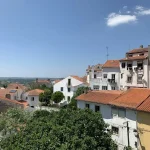
📷 Featured image by Daniele Franchi on Unsplash.