On this page
- Meal Times and the Unwritten Rules of Eating in Portugal
- Café Culture: Standing at the Counter vs. Sitting Down
- Greetings, Personal Space, and How Portuguese People Actually Socialise
- Fado, Saudade, and Why Portuguese Emotional Life Runs Deep
- Church Etiquette and the Role of Catholicism in Daily Life
- The Portuguese Pace: Slow Service Is Not Bad Service
- 2026 Budget Reality: What Things Actually Cost Day-to-Day
- Frequently Asked Questions
Portugal tourism hit a new peak in 2025, and 2026 is tracking even higher. More visitors means more crowded attractions — but also more first-timers arriving with assumptions shaped by other European destinations. Spain, Italy, France: none of them quite prepare you for how Portugal actually works. The rhythm is different, the social rules are specific, and if you walk in expecting things to run the way they do back home, you will spend your first few days mildly confused and occasionally frustrated. This guide cuts through the generic advice and tells you exactly what to expect.
Meal Times and the Unwritten Rules of Eating in Portugal
Portugal runs on a meal schedule that is non-negotiable. Lunch happens between 12:30 and 14:00 — that window is serious. Dinner rarely starts before 20:00, and most Portuguese families sit down closer to 21:00. Show up at a restaurant at 19:00 and you may find the kitchen technically open but the staff visibly baffled by your enthusiasm.
Breakfast is light: a bica (the local word for a short espresso) and a torrada — thick-cut toast with butter — or a pastel de nata, the warm custard tart with its blistered, flaky shell and custardy centre that smells faintly of cinnamon and vanilla when you bite into it. That is a complete breakfast in Portugal. Do not wait for eggs, bacon, or a full spread unless your hotel specifically offers one.
When you sit at a restaurant, small items will appear on your table without you ordering them: bread, olives, butter, perhaps a small dish of tuna or cheese. These are called couvert, and they are not free. You will be charged for whatever you eat. If you do not want them, say so immediately — “Pode levar, obrigado” (You can take these, thank you). No one will be offended. It is a normal request.
The main meal of the day is lunch, not dinner. The prato do dia (dish of the day) at lunch is usually the best value you will find anywhere — a full plate with soup, a main, and sometimes a drink, for €9–13. Many locals eat this way every working day.
Café Culture: Standing at the Counter vs. Sitting Down
This is one of the most practical things to understand, and almost no travel guide explains it clearly. In a Portuguese café, there are two different price structures depending on where you sit. At the counter (ao balcão), you pay less. Sitting at a table inside costs more. Sitting at an outdoor terrace table costs the most.

The difference is not enormous — maybe €0.30–€0.70 per coffee — but the culture around it is real. Standing at the counter and drinking your bica quickly is what most Portuguese people do, especially in the morning. It is faster, cheaper, and sociable in its own way. The barista will know the regulars by name and by order. If you are a tourist lingering over your phone at the counter, you are slightly in the way. That is fine — you will figure out the rhythm.
Also: asking for a “coffee” will get you a blank look. Be specific. A bica is an espresso. A galão is a tall milky coffee in a glass. A meia de leite is a coffee with milk in a cup. A café com leite is espresso with a small amount of hot milk. Ordering “um café, por favor” will usually get you a bica, which is fine — just be aware that is what you are getting.
Greetings, Personal Space, and How Portuguese People Actually Socialise
First meeting someone? A handshake, eye contact, and a simple “Olá” or “Bom dia” is correct. Between women, or between a man and a woman who are being introduced socially, two kisses on the cheek — right cheek first — is standard. Between men meeting socially, a handshake is the norm unless they are close friends.
Portuguese people are not cold, but they are not immediately effusive either. There is a warmth that builds over time rather than arriving all at once. Do not mistake initial reserve for unfriendliness. A shopkeeper who gives you a neutral look when you enter and a full smile when you leave is not being difficult — that is just how it goes.
Conversation topics that work: football (obviously), the weather, local food, regional pride. The Portuguese are extremely proud of their regions. Someone from the Alentejo will politely but firmly distinguish themselves from someone from Porto. Someone from the Azores is from the Azores — not from “mainland Portugal” — and appreciates you knowing the difference.

Avoid launching into comparisons with Spain. It is not that the Portuguese are hostile about it — it is just a comparison they have heard approximately ten thousand times. If you have spent time in Portugal specifically, say so. That lands very differently.
Fado, Saudade, and Why Portuguese Emotional Life Runs Deep
You cannot understand Portuguese culture without understanding saudade. There is no direct English translation, and that is not an accident. It describes a longing — for something lost, something distant, or something that may never have existed at all. It is not quite melancholy, not quite nostalgia. It is its own feeling, and it is central to the Portuguese sense of self.
Fado is the musical expression of saudade. When you hear it performed — the voice pulling long, heavy notes over the Portuguese guitar’s shimmer and the bass guitar’s low pulse — the feeling is physical. Even if you do not speak a word of Portuguese, something in a good fado performance gets through. Fado was added to UNESCO’s Intangible Cultural Heritage list in 2011, and its cultural status in Portugal is comparable to flamenco in Andalusia or blues in the American south. It is not a tourist gimmick. It is something real.
If you attend a fado performance, the room goes quiet when the singer performs. Talking, clinking glasses loudly, or checking your phone during a song is considered genuinely disrespectful — not just mildly impolite. The silence is part of the experience.
Church Etiquette and the Role of Catholicism in Daily Life
Portugal is historically and culturally Catholic, and while religious practice has declined among younger generations, it remains present in the texture of everyday life — in festivals, in local patron saint celebrations, in the names of streets and towns, and in the churches that anchor every historic centre.
When entering a church, even as a tourist visiting for the architecture: cover your shoulders and knees. This applies to everyone, regardless of gender. Some churches in 2026 now keep paper capes or wraps at the entrance for visitors who arrive unprepared — but do not rely on that. If Mass is in progress, move quietly, stay near the back, and do not take photographs without checking first. The flash of a camera phone during a service is considered deeply disrespectful.
Major religious festivals — particularly Santos Populares in June, which includes the Festa de Santo António in Lisbon on 12–13 June and the Festa de São João in Porto on 23–24 June — are as much civic celebrations as religious ones. Streets fill with grilled sardines, cheap wine, paper decorations, and dancing. Participation is welcome and expected. You do not need to be Catholic to join in.

The Portuguese Pace: Slow Service Is Not Bad Service
This catches a lot of visitors off guard, especially those arriving from northern Europe or North America. In Portugal, a meal is an event, not a transaction. Your waiter will not hover. They will not offer to take your plate the second you put your fork down. They will not bring the bill until you ask for it — and asking for the bill before you are truly ready to leave would, in the Portuguese reading of things, be slightly rude on their part.
When you want the bill, catch your waiter’s eye and say “A conta, por favor” or simply make a small writing gesture. It will come. Be patient — this is not being ignored, it is being left in peace to finish your meal and your conversation.
This same pace applies to bureaucracy, shops, and general daily life. The concept of time is more elastic here. An appointment at 10:00 may begin at 10:15. A friend who says they will arrive “soon” may mean thirty minutes. Adapting to this — rather than fighting it — is the fastest way to enjoy Portugal properly.
2026 Budget Reality: What Things Actually Cost Day-to-Day
Portugal remains one of Western Europe’s more affordable destinations, but prices have risen significantly since 2023. Here is an honest look at what to expect in 2026:
- Coffee (bica at counter): €0.80–€1.20 in smaller cities; €1.20–€1.60 in Lisbon and Porto tourist areas
- Pastel de nata: €1.20–€1.80 depending on location
- Prato do dia (lunch special): €9–€13 including soup, main, and drink
- Dinner for two (mid-range, no tourist markup): €35–€60 with a bottle of house wine
- Glass of local wine in a tasca: €2–€3.50
- Metro/bus fare in Lisbon (single trip): €1.80–€2.10 depending on zone
- Museum entry (Lisbon national museums): €5–€10; free on Sundays before 14:00 for EU residents
Budget tier: Travelling lean — hostels, counter coffee, lunch specials, picnic dinners — you can manage comfortably on €55–€75 per day.
Mid-range: A guesthouse or 3-star hotel, sit-down meals, occasional wine: €120–€180 per day for two people.
Comfortable: Boutique hotels, full restaurant dinners, day trips: €250–€400 per day for two.

Frequently Asked Questions
Is tipping expected in Portuguese restaurants?
Tipping is appreciated but not mandatory. Most Portuguese people leave a small amount — rounding up the bill or leaving €1–€2 for a meal. Leaving 10–15% is perfectly fine and will be genuinely appreciated. Never feel pressured; it is a gesture, not a social obligation in the way it is in the United States.
Do Portuguese people speak English?
In Lisbon, Porto, and most tourist areas, English is widely spoken, especially among people under 50. In rural areas and smaller towns, English is less common. Making the effort to say even a few words in Portuguese — bom dia, obrigado, por favor — opens doors noticeably and is always appreciated.
Is Portugal safe for solo travellers?
Portugal consistently ranks among the safest countries in Europe. The 2026 Global Peace Index places it in the top ten worldwide. Standard urban caution applies — pickpocketing exists in crowded tourist areas like Lisbon’s Alfama trams and Porto’s Ribeira — but violent crime is rare, and solo travellers of all genders generally report feeling very comfortable.
How different is European Portuguese from Brazilian Portuguese?
Very different in pronunciation — European Portuguese swallows vowels and speaks quickly; Brazilian Portuguese is more open and melodic. A phrase like obrigado sounds almost like “obree-GAH-doo” in Brazil and closer to “oh-bree-GOD” in Portugal. Vocabulary is mostly shared, but some words differ. Brazilians and Portuguese understand each other, but with effort.
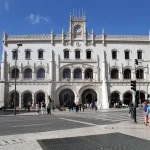
📷 Featured image by Barbara Maier on Unsplash.