On this page
- Why Setúbal and Arrábida Are Harder to Reach in 2026 — and Worth It Anyway
- What Makes Setúbal and Arrábida Different
- The Arrábida Natural Park: What to Actually Do There
- Setúbal’s Food Scene: Choco Frito, Wine, and the Fish Market
- Getting There from Lisbon in 2026
- Day Trip or Overnight? Honest Advice
- 2026 Budget Reality: What It Costs
- Practical Tips Before You Go
- Frequently Asked Questions
💰 Click here to see Portugal Budget Breakdown
💰 Prices updated: August, 2026. Budget figures are estimates — always verify before travel.
Exchange Rate: $1 USD = €0.86
Daily Budget (per person)
Shoestring: €40.00 – €90.00 ($46.51 – $104.65)
Mid-range: €130.00 – €200.00 ($151.16 – $232.56)
Comfortable: €250.00 – €500.00 ($290.70 – $581.40)
Accommodation (per night)
Hostel/guesthouse: €15.00 – €45.00 ($17.44 – $52.33)
Mid-range hotel: €100.00 – €190.00 ($116.28 – $220.93)
Food (per meal)
Budget meal: €10.00 ($11.63)
Mid-range meal: €35.00 ($40.70)
Upscale meal: €100.00 ($116.28)
Transport
Single metro/bus trip: €2.00 ($2.33)
Monthly transport pass: €40.00 ($46.51)
Why Setúbal and Arrábida Are Harder to Reach in 2026 — and Worth It Anyway
The ongoing surge in Lisbon tourism has pushed visitors further along the Setúbal Peninsula, and that’s both good news and bad news. Good news: the crowds that hit Sintra and Cascais have not yet swallowed Arrábida whole. Bad news: summer weekends in 2026 are noticeably busier than even two years ago, and the access restrictions to the Natural Park have tightened further. If you’re planning a visit, knowing what changed matters. This guide cuts through the vague stuff and tells you exactly what you’re dealing with.
What Makes Setúbal and Arrábida Different
Setúbal is a working city of around 125,000 people sitting at the mouth of the Sado Estuary. It doesn’t perform for tourists. The fish market runs on its own schedule, the tascas fill up with locals at lunchtime, and the streets smell like salt and diesel from the small fishing fleet still operating in the harbour. That authenticity is its main appeal.
The Arrábida Natural Park stretches along the coast just south and west of the city — a 10,800-hectare protected area where the Serra da Arrábida ridge drops almost straight into the Atlantic. The result is something you don’t expect in Portugal: sea water that runs turquoise and clear like the Mediterranean, against a backdrop of dense green scrubland and white limestone cliffs. The beaches here — Portinho da Arrábida, Galapinhos, Galapos — consistently rank among the best in mainland Portugal, and they’ve earned it.
Together, the city and the park offer a combination that’s hard to find within 50 kilometres of Lisbon: genuinely good seafood, proper wild swimming, dolphin watching in the estuary, and hiking trails that actually feel remote.
The Arrábida Natural Park: What to Actually Do There
The park is not just beaches. Most visitors drive straight to Portinho da Arrábida and stop there, which means the rest of the park stays surprisingly quiet even in July.
Swimming and Beaches
Portinho da Arrábida is the most accessible and the most popular. The water is calm, the colour is extraordinary — a deep turquoise that looks filtered but isn’t — and there are a handful of snack bars behind the beach. Galapinhos beach, a short walk further west, is smaller and requires a steeper path down from the road, which keeps the numbers manageable. It was awarded the European Diploma of Protected Areas and has no commercial facilities at all, so bring your own food and water.
Hiking
The ridge trail that runs along the top of the serra gives you views down to the coast on one side and across to the Sado Estuary and the plains of the Alentejo on the other. The trail from Portinho up to the Convento da Arrábida takes about 45 minutes at a steady pace. The Convento itself is a 16th-century monastery built into the cliffside — partly private, partly visitable — and the terrace view from above it is one of the best in the region. Wear proper shoes. The limestone is uneven and gets slippery when morning dew sits on it.
Dolphin Watching and Kayaking
The Sado Estuary holds one of the only resident bottlenose dolphin populations in Portugal — around 30 individuals that don’t migrate. Several operators in Setúbal run boat trips into the estuary year-round, with morning departures giving the best sightings. Kayak tours from Portinho into the sea caves along the base of the cliffs are also genuinely worth doing — the water clarity inside those caves is something you won’t replicate on a beach towel.
Setúbal’s Food Scene: Choco Frito, Wine, and the Fish Market
Setúbal has a dish that belongs to it almost exclusively: choco frito. Cuttlefish, sliced, battered lightly and fried until the outside goes crisp and golden while the inside stays tender and faintly sweet. It arrives at your table with lemon wedges and a small mountain of thin fried chips. The first bite has that slightly briny, oceanic hit that you only get from fish cooked within a few kilometres of where it was caught. Locals eat it with cold Moscatel de Setúbal or a simple house white from the Palmela wine region just north of the city.
For choco frito, the neighbourhood around Avenida Luísa Todi and the streets running down toward the waterfront is where you want to be. Tasca do Dinis and O Beco are two long-running options that serve it without any tourist framing — plastic tablecloths, bread and butter that arrives without being asked for, bill written on a scrap of paper.
The Mercado do Livramento is worth a visit on its own terms. It’s one of the largest covered markets in Portugal, housed in a 19th-century building tiled with azulejo panels depicting local fishing scenes. The fish stalls open early and wind down by noon. Buy percebes (barnacles), amêijoas (clams), or whatever the vendors are pushing that morning. There’s a small counter inside that sells wine by the glass.
On the wine side, the Moscatel de Setúbal deserves more attention than it gets internationally. It’s a sweet fortified wine made from Muscat grapes grown on the slopes of the Serra da Arrábida and the Palmela plateau. Casa Ermelinda Freitas and José Maria da Fonseca (in nearby Azeitão) both have visitor facilities and tastings. The José Maria da Fonseca winery is the oldest in the region and runs structured tours through its historic cellars — a half-day addition that pairs well with lunch in Azeitão’s village square.
Getting There from Lisbon in 2026
By Train
The most reliable option. Fertagus trains run from Lisbon’s Roma-Areeiro or Entrecampos stations across the 25 de Abril Bridge to Setúbal. Journey time is around 50–55 minutes. Trains run frequently throughout the day and the fare is around €3.50–€4.00 each way with a Navegante card, or slightly more with a single ticket. In 2026, CP and Fertagus integrated ticketing now allows a single purchase for the full journey through the Navegante app, which simplifies things considerably.
By Bus
TST bus services run from Lisbon’s Praça de Espanha terminal to Setúbal. Journey time is longer (around 75–90 minutes depending on traffic) and less predictable, but the buses are comfortable. From Setúbal bus station, local TST services run to Azeitão and toward the park entrance points, though frequency drops off outside peak season.
By Car
Driving from Lisbon takes 45–60 minutes via the A2 and A12. Having a car gives you flexibility to reach trailheads and smaller beaches, but remember the vehicle access restrictions inside the park in summer. You can park in Setúbal and use the shuttle from there.
Day Trip or Overnight? Honest Advice
Setúbal and Arrábida can be done as a day trip from Lisbon, and many people do exactly that. If your priority is a beach day at Portinho da Arrábida and choco frito for lunch, a day trip works well — leave Lisbon early, arrive by 9:00 a.m., leave the park before the midday crowds peak.
But if you want to hike the ridge, take a dolphin watching trip in the morning, visit the Livramento market, do a winery tour in Azeitão, and eat a proper dinner at a waterfront tasca — you need two days minimum. Setúbal has a handful of solid accommodation options, including the Albergaria Solaris near the waterfront and several newer guesthouses that opened in 2024–2025 as the city started attracting slightly more overnight visitors.
2026 Budget Reality: What It Costs
- Budget (under €70/day per person): Train from Lisbon return (€8), choco frito lunch at a tasca (€10–€13), beach day at Galapinhos (free), hostel bed or shared room (€25–€35). Bring your own snacks and water for the park.
- Mid-range (€70–€150/day per person): Private guesthouse room (€60–€90), restaurant dinner with wine (€25–€35), kayak tour (€35–€45), winery visit with tasting (€10–€15).
- Comfortable (€150+/day per person): Boutique hotel near the waterfront or in Azeitão (€100–€160), guided hiking or dolphin watching tours (€50–€70), full tasting menus at higher-end regional restaurants.
Parking fees inside the park zone in summer 2026 run to €2–€4 per hour at authorised lots. The shuttle from Setúbal to the park costs around €5 return per person.
Practical Tips Before You Go
- Park access in summer: The vehicle cap on EN379-1 is enforced daily from June through September. Do not assume you can drive in on a Saturday morning without checking first.
- Swimming safety: The sea at Arrábida is generally calm but there are no lifeguards at the smaller beaches like Galapinhos. Check sea conditions if you’re swimming with children.
- Water: There is no reliable fresh water at most park beaches. Bring more than you think you need, especially in summer when temperatures regularly hit 32–35°C.
- Best months: May, June, and September offer the best balance of warm water, manageable crowds, and open facilities. July and August are peak season — doable but busy. October is underrated: the water is still warm from summer, the park is quiet, and the light on the limestone is exceptional.
- Portuguese to know: Choco frito (fried cuttlefish), amêijoas à bulhão pato (clams in garlic and coriander), Moscatel (the local fortified wine). Knowing what you’re ordering saves time in places where menus are handwritten in Portuguese only.
Frequently Asked Questions
Is Arrábida beach better than the Algarve?
For water clarity and a wilder setting, many people find Arrábida beaches more impressive than the central Algarve. The sea colour is comparable to the best spots near Sagres or Lagos. The difference is scale — Arrábida beaches are smaller, facilities are minimal, and access is controlled. It suits people who want nature over resort infrastructure.
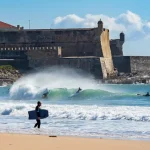
📷 Featured image by Ivan Rohovchenko on Unsplash.