On this page
- What Makes Óbidos Different From Other Walled Towns
- Walking the Medieval Walls: What to Expect
- The Best Things to Do Inside the Castelo
- Where to Eat and Drink in Óbidos
- Day Trip or Overnight? How to Decide
- Getting to Óbidos From Lisbon and Porto
- 2026 Budget Reality: What Everything Costs
- Practical Tips Before You Go
- Frequently Asked Questions
💰 Click here to see Portugal Budget Breakdown
💰 Prices updated: September, 2026. Budget figures are estimates — always verify before travel.
Exchange Rate: $1 USD = €0.88
Daily Budget (per person)
Shoestring: €40.00 – €70.00 ($45.45 – $79.55)
Mid-range: €150.00 – €300.00 ($170.45 – $340.91)
Comfortable: €400.00 – €1,000.00 ($454.55 – $1,136.36)
Accommodation (per night)
Hostel/guesthouse: €15.00 – €50.00 ($17.05 – $56.82)
Mid-range hotel: €70.00 – €150.00 ($79.55 – $170.45)
Food (per meal)
Budget meal: €10.00 ($11.36)
Mid-range meal: €25.00 ($28.41)
Upscale meal: €60.00 ($68.18)
Transport
Single metro/bus trip: €1.90 ($2.16)
Monthly transport pass: €40.00 ($45.45)
What Makes Óbidos Different From Other Walled Towns
Portugal has no shortage of hilltop villages with old stones and good views. The problem in 2026 is that most of them have been smoothed over — gift shops where bakeries used to be, boutique hotels where families lived. Óbidos somehow resists most of that. The town inside the walls is still genuinely inhabited, with narrow cobblestone lanes spilling over with bougainvillea, cats sleeping on whitewashed doorsteps, and the faint smell of woodsmoke on cool mornings. It is small enough to walk in its entirety in under an hour, yet dense enough with history and character that a rushed visit feels like a mistake.
The town dates to at least the 12th century, when Dom Afonso Henriques — Portugal’s first king — took it from the Moors. For centuries after, it was gifted by kings to their queens as a wedding present, a tradition that earned it the nickname Vila das Rainhas, the Town of Queens. That royal connection left a physical mark: the castle, the churches, the gates all carry a weight that a replica medieval village simply cannot fake.
Walking the Medieval Walls: What to Expect
The defining experience of Óbidos is walking the full circuit of the town walls. The path runs for roughly 1.5 kilometres along the top of the battlements and takes about 30 to 40 minutes at a relaxed pace. There are no guardrails on significant stretches, and the drop on the outer side can be several metres. This is not a place to walk while looking at your phone. Children need to be watched carefully.
The views are the reward. From the top, you see the silver strip of the Lagoa de Óbidos in the distance, the patchwork of wheat fields and vineyards below, and the terracotta rooftops of the town packed tightly inside the walls. In the early morning, a thin mist sometimes sits in the valley, and the light on the castle tower turns the stone the colour of pale honey.
Access to the walls is free and there is no official start point, but most people begin near the main gate, the Porta da Vila, at the southern entrance. Wear shoes with grip — the stone is worn smooth and uneven in places. The walk is linear in sections, not a fully connected loop, so you will need to backtrack or descend and re-ascend at different points.
The Best Things to Do Inside the Castelo
The castle itself — the large square structure at the northern end of the walls — is now a pousada, a luxury heritage hotel. Non-guests cannot wander freely through the interior, but the exterior is open and worth circling slowly. The tower at the northwestern corner is the oldest surviving part of the structure and dates to the Moorish period before the 12th century.
Inside the town walls, the Igreja de Santa Maria is the essential stop. This is the church where the young King Afonso V married his cousin Isabel in 1444 — she was eight years old at the time, he was ten, in a dynastic arrangement typical of the era. The interior is lined completely with 17th-century blue-and-white azulejo tiles from floor to ceiling, and the effect is striking in a way that photographs do not fully capture. Entry is free and the church keeps short hours, typically 09:30 to 12:30 and 14:30 to 18:00.
The small Museu Municipal de Óbidos is worth 45 minutes of your time. It holds a modest but well-curated collection of religious paintings, Roman artifacts from the surrounding area, and pieces connected to the town’s royal history. Entry costs around €2 in 2026. The building itself — a former granary — is part of the appeal.
Where to Eat and Drink in Óbidos
Óbidos is famous across Portugal for ginjinha — a sour cherry liqueur served in small chocolate cups that you eat after drinking. Virtually every shop near the main gate sells it. The ritual is the same everywhere: pay around €1.50, receive a small dark chocolate cup filled with the cold, ruby-red liqueur, drink it in one go, eat the cup. The chocolate absorbs the sweetness of the ginja and then melts on your tongue. It is worth doing once, maybe twice.
For a proper meal, avoid the restaurants immediately flanking the main street (Rua Direita) as they cater almost entirely to tourists and price accordingly. Instead, walk toward the northern end of town near the castle steps, where a handful of smaller tascas serve local food at reasonable prices. Tasca do Simas has been a reliable choice for years — grilled fish, honest wine, and no-fuss service. Expect to spend €15 to €20 per person for a full meal with a glass of regional wine from the Óbidos appellation, which produces some underrated white wines from the Arinto grape.

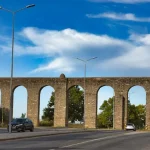
For coffee and pastries, the small café inside the old aqueduct arch near the southern walls tends to have better coffee than the tourist-facing spots on the main drag.
Day Trip or Overnight? How to Decide
Most visitors come to Óbidos as a day trip from Lisbon, which is about 80 kilometres to the south. That works perfectly well — the town is compact, and three to four hours is enough to walk the walls, visit the church, eat lunch, and browse the lanes without rushing.
Staying overnight changes the experience entirely. After the day visitors leave — usually by 17:00 — the town quietens to something close to what it must have felt like a hundred years ago. Dinner at a near-empty restaurant, a walk along the lit battlements at night, and a morning when you have the lanes to yourself before 09:00 are genuine pleasures that day-trippers never get.
Staying overnight makes most sense if you are combining Óbidos with nearby destinations: the coast at Foz do Arelho (20 minutes by car), the Lagoa de Óbidos for kayaking or cycling, or the larger town of Caldas da Rainha for its famous ceramics market and cultural scene. As a standalone destination from Lisbon, a day trip is honest value. As part of a Silver Coast itinerary, an overnight stay makes logistical sense.
Getting to Óbidos From Lisbon and Porto
The easiest connection from Lisbon is by bus. Rede Expressos and Rodoviária do Oeste both operate services from Lisbon’s Campo Grande bus terminal to Óbidos, with journey times of approximately 1 hour 15 minutes to 1 hour 30 minutes. In 2026, buses run several times daily and tickets cost roughly €7 to €9 each way. The bus drops you just outside the southern gate of the walls, which is the ideal entry point.
Train travel from Lisbon to Óbidos is technically possible but involves a change at Caldas da Rainha and a slower regional service. Unless you have a rail pass and enjoy the journey for its own sake, the bus is more practical.
From Porto, the journey by road is about 2 hours 30 minutes. There is no direct bus service; most travellers drive or take a bus to Lisbon first and continue from there. Óbidos is not a logical day trip from Porto given the distances — it fits better as a stop within a broader itinerary moving southward.

By car, Óbidos sits just off the A8 motorway. Parking is available outside the walls at no charge. Cars are not permitted inside the walled town.
2026 Budget Reality: What Everything Costs
- Budget: A day trip with bus transport, ginjinha, a light lunch, and church entry comes in at €20 to €30 per person.
- Mid-range: Add a sit-down lunch with wine, a museum entry, and a coffee stop — expect €45 to €60 per person for the day including transport.
- Comfortable overnight: Guesthouses (alojamento local) inside or just outside the walls run €80 to €130 per night for a double room. The Pousada Castelo de Óbidos, inside the castle, charges €250 to €380 per night depending on season — it is a memorable experience but not necessary for a great visit.
- Meals: A full lunch at a mid-range restaurant costs €14 to €22 per person including wine. Tourist-facing spots on the main street can charge €25 or more for equivalent food.
- Ginjinha: €1.20 to €2.00 per chocolate cup depending on the vendor.
Practical Tips Before You Go
Óbidos hosts the annual Mercado Medieval each July, a two-week festival that fills the town with costumed performers, craft stalls, and period food and drink. It is genuinely entertaining, but accommodation within 30 kilometres books out months in advance, and the town becomes extremely crowded. If you want the quieter version of Óbidos, avoid this window.
The Óbidos Vila Natal Christmas market runs through December and draws large crowds in its own right, transforming the town into an elaborate Christmas village. Again, beautiful but busy.
Pack layers if you are visiting between October and March. The hilltop position means wind moves through the lanes freely, and temperatures can feel several degrees colder than Lisbon on the same day. Summer visits (June to August) are warm and bright but see peak tourist numbers.
There is a small supermarket just outside the southern walls where you can pick up water, snacks, and supplies before entering the town. Prices inside the walls at tourist shops are noticeably higher.
Frequently Asked Questions
Is Óbidos worth visiting in 2026?
Yes, genuinely. Unlike many heritage towns that have traded character for commerce, Óbidos retains a lived-in feeling inside its walls. The combination of free wall-walking, an intact medieval streetscape, and proximity to Lisbon makes it one of the most rewarding short trips in central Portugal, provided you time your visit to avoid peak crowds.
How long do you need in Óbidos?
Three to four hours is enough for a focused day trip — walls, church, lunch, and a wander. If you want to visit the museum, explore nearby beaches at Foz do Arelho, or simply take your time, plan for a full day or a one-night stay.
Can you drive inside the walls of Óbidos?
No. Private vehicles are not permitted inside the walled town. Free parking is available in designated areas just outside the main gate. The town is entirely walkable once you are inside, and the compact size means the walk from the car park to any point in the old town takes no more than ten minutes.
What is the best time of year to visit Óbidos?
Late September through November and March through May offer the best balance of mild weather and manageable crowds. July and August are busy and hot. December brings the Christmas market, which is atmospheric but crowded.
Is Óbidos suitable for children?
Mostly yes, with one caution: the wall walk has no guardrails on several sections, requiring close supervision of young children. The town is flat enough inside the walls to be manageable for most ages, and the ginjinha chocolate cups tend to be popular with older kids. The medieval market in July is particularly engaging for families.
📷 Featured image by Natanael Vieira on Unsplash.