On this page
- What Fado Actually Is — Beyond the Tourist Cliché
- Saudade: The Untranslatable Feeling at Fado’s Core
- The Two Cities, Two Souls — Lisbon Fado vs Coimbra Fado
- The Instruments and the Silence — What You Hear in a Fado Performance
- Fado’s Origins and the People Who Made It
- How to Behave at a Fado Performance — Real Etiquette for Visitors
- Fado in Daily Portuguese Life — Beyond the Concert Hall
- 2026 Budget Reality — What a Fado Experience Costs Today
- Frequently Asked Questions
If you have been researching Portugal travel in 2026, you have almost certainly seen fado marketed as a must-do experience — a dinner show, a YouTube clip, a hotel lobby soundtrack. That commercial noise has made it genuinely harder for first-time visitors to understand what fado actually is, why it matters deeply to the Portuguese, and how to experience it without feeling like you wandered into a tourist trap. This article cuts through that.
What Fado Actually Is — Beyond the Tourist Cliché
Fado is a Portuguese musical genre built around three elements: a human voice, stringed instruments, and an emotional intensity that can make a room go completely quiet. The word fado comes from the Latin fatum, meaning fate or destiny. That etymology is not decorative — it tells you everything about the music’s worldview. Fado songs deal in loss, longing, the sea, poverty, love that ends badly, and the particular beauty of things that cannot last.
It is not flamenco. It is not opera. It is not folk music in the way most tourists imagine folk music. Fado has its own UNESCO recognition — it was added to the Intangible Cultural Heritage list in 2011 — and it has a formal structure, a living tradition of new composers and singers, and a deeply serious audience inside Portugal that has nothing to do with tourism.
The singer in a fado performance is called the fadista. The performance is called a fado, which is both the genre and the individual song. When a fadista sings, the expectation in the room is not applause between lines or audience participation. The expectation is presence — that everyone in the room brings their full attention to the moment and holds still inside it.
Saudade: The Untranslatable Feeling at Fado’s Core
You cannot understand fado without first sitting with the Portuguese concept of saudade. This word has no direct English translation, and Portuguese people will tell you that is the point. Saudade describes a deep emotional state — a longing for something or someone that may be gone, may be far away, or may never have existed in the first place. It carries love and grief simultaneously. It is not quite nostalgia. It is not quite melancholy. It is its own thing.

Saudade shows up in Portuguese literature going back to the 13th century. The poet Luís de Camões wrote about it in the 1500s. Fernando Pessoa, Portugal’s most celebrated 20th-century poet, built an entire philosophical framework around it. In fado, saudade is not a theme among many — it is the emotional engine of the whole genre.
When a fadista sings about a sailor who never came home from the sea, or a neighbourhood that no longer exists, or a person whose face is starting to blur in memory — that is saudade being performed in real time. The Portuguese audience is not listening to a story about someone else’s loss. They are recognising their own.
For visitors, understanding saudade changes the experience completely. You stop waiting for an uplifting chorus. You stop expecting resolution. You let the feeling land, even without understanding the words, because the emotional content is specific enough to be universal.
The Two Cities, Two Souls — Lisbon Fado vs Coimbra Fado
Most international visitors encounter Lisbon fado, but there is a second, equally serious tradition rooted in the city of Coimbra. These are not two versions of the same thing — they are genuinely different in character, history, and social meaning.
Lisbon Fado
Lisbon fado emerged from the working-class neighbourhoods of Alfama, Mouraria, and Mouraria’s surrounding streets — areas historically associated with sailors, immigrants from former Portuguese colonies, and the urban poor. Its emotional register is rawer. The themes are street-level: hard lives, doomed love, the indifference of fate. Both men and women sing Lisbon fado, and the tradition is closely tied to the bairro — the neighbourhood — as a social and emotional unit. When you hear a woman in a black shawl singing in a Lisbon venue, that shawl is a direct reference to this working-class tradition. It is not a costume.

Coimbra Fado
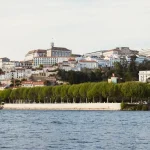
Coimbra fado is exclusively sung by men — specifically, by male university students and alumni of the University of Coimbra, one of the oldest universities in Europe. The tradition is tied to academic life, and its themes are more lyrical and philosophical: idealism, the passage of youth, romantic longing in a literary sense. The performers wear black academic capes. The sound is more restrained. Coimbra fado is typically performed outdoors, often on the steps of old university buildings at night, and it carries a ceremonial weight that is different from the intimate intensity of a Lisbon house.
In 2026, Coimbra fado remains genuinely difficult for tourists to encounter in its authentic form. Most performances are tied to specific university events or private gatherings. Hearing it in the street or in a courtyard, unexpectedly, remains one of the quietly remarkable experiences Portugal offers.
The Instruments and the Silence — What You Hear in a Fado Performance
Fado uses three instruments in its classic configuration. Understanding each one changes how you listen.
The guitarra portuguesa — the Portuguese guitar — is the instrument most closely identified with fado. It looks nothing like a Spanish guitar. It is smaller, has twelve strings arranged in six pairs, and produces a bright, shimmering, slightly metallic sound. The tuning system creates overtones that seem to hang in the air after each note. When a guitarist plays a phrase on the guitarra portuguesa in a quiet room, the sound has a quality that is almost painful in its clarity.

The viola baixo — a standard acoustic guitar — provides the harmonic foundation, the bass notes and chord structure that give the guitarra something to move against. The interaction between these two instruments creates the rhythmic and harmonic frame within which the fadista sings.
Some performances include a viola baixo de fado, a larger bass guitar specific to the genre, which adds further depth. But the essential sound remains the guitarra portuguesa and the voice in conversation.
The silence is as important as the sound. Experienced fado audiences understand that talking, checking phones, and even excessive movement between songs disrupts something real. The quiet that falls when a fadista begins is not politeness — it is participation.
Fado’s Origins and the People Who Made It
The precise origins of fado are contested, which itself tells you something about how deeply it is woven into Portuguese identity — everyone has a theory and an emotional stake in it. The most credible historical account places its emergence in Lisbon in the early 19th century, in the working-class port areas of Mouraria and Alfama. It absorbed influences from African rhythms brought by enslaved people from former Portuguese colonies, from Brazilian lundum music carried back by sailors, and from older Portuguese and Moorish musical traditions.

The earliest documented fadista on record is Maria Severa Onofriana, known simply as Maria Severa, a young woman from Mouraria who lived from 1820 to 1846 and died at 26. She was a prostitute and the daughter of a prostitute. She sang fado in taverns and became the first iconic figure of the genre — celebrated and romanticised after her death in novels, plays, and eventually Portugal’s first sound film, made in 1931. The black shawl now associated with female fadistas is said to come directly from her.
In the 20th century, Amália Rodrigues transformed fado from a working-class Portuguese tradition into an internationally recognised art form. She sang from the 1940s until the 1990s, recorded extensively, and became, in the opinion of most Portuguese people, the definitive voice of fado. She died in 1999, and the Portuguese government declared three days of national mourning.
The generation that followed Amália — including Mariza, Mísia, and Ana Moura — modernised the sound without abandoning its emotional core. In 2026, fado is genuinely alive as a contemporary genre. There are young fadistas in their twenties writing new repertoire, and the annual Grammy equivalent in Portugal, the Prémios da Música Portuguesa, consistently recognises fado alongside other genres.
How to Behave at a Fado Performance — Real Etiquette for Visitors
This section matters because getting it wrong does not just affect your experience — it affects the experience of every Portuguese person in the room.
Arrive on time and stay. Fado performances in smaller houses often begin with a set by a younger or less well-known fadista before the headline singer. This is not the warm-up act in the Western sense — it is a younger musician earning respect and developing within a tradition. Talking through it, arriving late, or leaving early during a set is considered disrespectful.

Silence your phone completely. Not vibrate. Off, or in airplane mode. The guitarra portuguesa produces sounds in a frequency range that phone vibrations interrupt in a way that is immediately audible. This is not an exaggeration.
Do not sing along. Even if you know the words, even if you have heard the song a hundred times, this is not the convention. Fado is not a participatory performance in that sense. The audience’s role is to receive, not to join in.
Applause comes between songs, not during them. The melodic line in fado is unbroken within a song. Applauding at an emotional peak mid-song would be the equivalent of talking during a prayer. Wait. When the song ends, applaud warmly and genuinely.
The word “Fado!” shouted by the audience is a real thing you may hear in more traditional venues — it is a call for fado to begin, or a cry of appreciation, and it comes from the Portuguese audience organically. As a visitor, you do not need to shout it, but understanding what it is prevents confusion.
If food is being served — and in many Lisbon fado houses, a meal is included in the cover — eat quietly and stop eating when a performance begins. The cutlery noise matters.
Fado in Daily Portuguese Life — Beyond the Concert Hall
Fado is not something the Portuguese watch as an event and then forget. It lives in the culture at a level that visitors often miss entirely.
It plays from radios in small cafés in the morning — the kind of café where an older man drinks his bica at the counter and nobody speaks much. It is what grandparents put on at home. It is the genre that Portuguese emigrants living in London, Paris, or Toronto put on when they miss home in a way they cannot explain to their non-Portuguese friends. The word saudade covers that too.

Fado also has a complicated political history. During the Estado Novo dictatorship under António de Oliveira Salazar (1932–1974), fado was simultaneously promoted as a symbol of Portuguese national identity and restricted in what topics it could address. The regime used it as cultural propaganda while the genre’s most authentic voices were singing about poverty, fate, and helplessness in ways that could be read as either submission or quiet resistance. The tension of that period still sits inside the music for older Portuguese listeners.
After the Carnation Revolution of April 1974 — which ended the dictatorship — fado briefly fell out of fashion among younger Portuguese who associated it with the old regime. It took about twenty years for a new generation to reclaim it without the political baggage. That reclamation is now complete, and in 2026, fado is genuinely embraced by Portuguese people across all age groups.
The Museu do Fado in Lisbon’s Alfama neighbourhood is the most comprehensive place to understand this full history. It reopened in 2024 after significant expansion and now includes an archive of recordings, instruments, photographs, and documents that cover the entire timeline from Maria Severa to the present day. The audio listening stations alone justify the visit.
2026 Budget Reality — What a Fado Experience Costs Today
Prices for fado experiences in 2026 vary significantly depending on the type of venue and whether food is included. Here is a realistic breakdown.
Budget (€10–€25 per person)
Some smaller Alfama and Mouraria venues charge a modest cover that includes one drink, with fado performed by emerging fadistas. These are often the most authentic experiences available to visitors because the audience tends to be mixed — locals and tourists — and the atmosphere is less staged. No dinner service, minimal decoration, real music.

Mid-Range (€35–€55 per person)
This covers entry to a mid-size fado house with a more established programme, typically including dinner or a set menu. The food quality in these venues has improved considerably since 2023 — several Alfama houses have brought in proper kitchen talent, and the meal is now genuinely part of the experience rather than a distraction from it. Wine is typically priced separately at €18–€30 per bottle for a decent Portuguese red.
Comfortable (€65–€120 per person)
The top-tier fado houses charge premium prices for a full dinner, better-known fadistas, and a more controlled environment. The experience is polished. Whether that polish suits you depends on what you are looking for — some visitors find it exactly right, others find it removes the rawness that makes fado meaningful. Both responses are valid.
Free Fado
In June, during the Santos Populares street festivals in Lisbon, fado is performed outdoors in neighbourhood courtyards and on improvised stages. This is the Santos António celebration on 12–13 June, and the fado here is spontaneous, local, and completely free. If your visit coincides with this period, do not miss it. Hearing a neighbourhood fadista sing in an Alfama courtyard strung with coloured lights, the sound bouncing off centuries-old walls, the smell of sardines grilling on charcoal nearby — that is a specific, irreplaceable thing.
The Museu do Fado charges €5 for general admission in 2026 (reduced rates for students and seniors). It is one of the best-value cultural visits in Lisbon by any measure.
Frequently Asked Questions
Do I need to understand Portuguese to appreciate fado?
No. The emotional content of fado — the longing, grief, and intensity — comes through in the voice, the instruments, and the physical atmosphere of the performance. Many experienced listeners recommend reading a brief translation of the song’s theme beforehand so you have a frame, but the music works on a level that does not require language.

What should I wear to a fado performance in 2026?
There is no formal dress code at most fado houses. Smart casual is appropriate — clean, neat, nothing that signals you have come straight from a beach. At higher-end venues, slightly more formal dress fits the atmosphere better. The key is to look like you are taking the occasion seriously, because the Portuguese audience around you is.
Is fado only performed in Lisbon?
No. Lisbon has the largest concentration of fado venues, but it is performed in Porto, Coimbra (with its own distinct tradition), and throughout the country. The Alentejo region also has its own distinct vocal tradition called cante alentejano, which is separate from fado but similarly rooted in communal emotional expression.
How is fado different now compared to 20 years ago?
Contemporary fado in 2026 incorporates more varied instrumentation in some settings — occasional piano, cello, or even electronics in experimental performances — while maintaining the traditional guitarra portuguesa at its core. New fadistas write original material rather than only interpreting the classic repertoire. The genre is more internationally connected but remains distinctly Portuguese in character.
Is it rude to leave a fado performance early?
Yes, if you leave mid-set. Leaving between performers, during a natural break, is acceptable. Walking out while a fadista is singing is considered disrespectful both to the performer and to the audience around you. If you are unsure of the structure, ask the venue staff when a natural break will occur before the performance starts.
📷 Featured image by Freguesia de Estrela on Unsplash.