On this page
- Why the Templars Chose Tomar
- Inside the Charola: The Templar Heart of the Convent
- What Really Happened After 1312
- The Manueline Window and the Cloisters
- Planning Your Visit: Tickets, Timing and Route
- Getting to Tomar by Train and Bus
- Where to Eat in Tomar
- Day Trip or Overnight?
- Tomar on a Budget in 2026
- Frequently Asked Questions
💰 Click here to see Portugal Budget Breakdown
💰 Prices updated: September, 2026. Budget figures are estimates — always verify before travel.
Exchange Rate: $1 USD = €0.88
Daily Budget (per person)
Shoestring: €40.00 – €70.00 ($45.45 – $79.55)
Mid-range: €150.00 – €300.00 ($170.45 – $340.91)
Comfortable: €400.00 – €1,000.00 ($454.55 – $1,136.36)
Accommodation (per night)
Hostel/guesthouse: €15.00 – €50.00 ($17.05 – $56.82)
Mid-range hotel: €70.00 – €150.00 ($79.55 – $170.45)
Food (per meal)
Budget meal: €10.00 ($11.36)
Mid-range meal: €25.00 ($28.41)
Upscale meal: €60.00 ($68.18)
Transport
Single metro/bus trip: €1.90 ($2.16)
Monthly transport pass: €40.00 ($45.45)
Most visitors reach Convento de Cristo on a midday day trip from Lisbon. They arrive hot and rushed, walk through the main rooms in 45 minutes, and leave with photos but no sense of the story. The complex is huge, the signage is thin, and the Templar history is easy to miss. This guide explains what you are looking at and how to plan a visit that makes sense in 2026.
Why the Templars Chose Tomar
In 1160, Gualdim Pais, the Templar Master in Portugal, began building a fortress on the hill above the Nabão river. The location was strategic. Tomar sat on the frontier between Christian Portugal and Muslim-held lands to the south, and the hill was easy to defend. The Templars were also granted large territories here as a reward for their help in the Reconquista.
You can still see the castle walls and towers around the convent. Walk the ramparts and you understand the logic: wide views over the valley, with approaching armies visible for kilometres. This was a working military base before it became a place of worship.
Inside the Charola: The Templar Heart of the Convent
The Charola is the oldest and most important part of the site. It is a round church with sixteen sides on the outside and an octagon inside. The design echoes the Church of the Holy Sepulchre in Jerusalem, which the Templars knew well from their time in the Holy Land. Knights are said to have attended Mass here on horseback, though that detail is tradition rather than proven fact.
Step inside and the cool air hits you first, then the colour. The walls and the central octagon are covered with gilded wood, painted saints and carved figures added in the early 1500s under King Manuel I. The old stone and the bright decoration sit side by side. It looks nothing like a typical Portuguese church. Stand in the centre and turn slowly. The geometry feels deliberate, almost like a diagram.
What Really Happened After 1312
This is where the “mystery” begins. In 1312, Pope Clement V dissolved the Templar Order under pressure from the French crown. In France the Templars were arrested and tried. In Portugal, King Dinis took a different path. He protected the knights and the order’s properties, and Portuguese investigators found no proof of heresy.
In 1319, Dinis created a new body, the Order of Christ, with papal approval. Many Templar knights and their lands passed into it. Tomar became its headquarters in 1357. So the Templars did not vanish here. They were renamed, and their wealth and expertise stayed in the country.
Then comes the Age of Discoveries. Prince Henry the Navigator became governor of the Order of Christ in 1420, and its funds helped pay for Atlantic voyages. The red cross of the Order appeared on the sails of Portuguese ships. The popular claim of a lost Templar treasure hidden under Tomar has no documentary support. The real story is arguably better: a medieval military order was reinvented as the financial engine of maritime exploration.
The Manueline Window and the Cloisters
On the west side of the church, look up at the Chapter House window, the Janela do Capítulo. Built in the early 1500s, it is one of the best examples of Manueline style anywhere. The stone is carved with ropes, anchors, coral, seaweed and the cross of the Order, all twisting around the frame. It reads as a celebration of the sea. The best view is from the cloister level, so take your time to find the right angle.
The convent has several cloisters, built over different periods. The Main Cloister, designed in the 16th century by Diogo de Torralva, is a calm Renaissance space with clean lines and sunlit stone. Smaller cloisters, like the Washing Cloister and the Cemetery Cloister, feel more intimate. Wander through the corridors and you move through almost 500 years of architecture. In 1581, Philip II of Spain was acclaimed King of Portugal in Tomar, adding a political layer to the site.
Planning Your Visit: Tickets, Timing and Route
The convent is a UNESCO World Heritage Site and is managed by Museus e Monumentos de Portugal. Adult tickets cost around €8, and opening hours are usually from about 9:00 to 18:30 in summer, shorter in winter. Check the official page before you go, as prices and hours can change. Allow at least two and a half hours.
The walk up from the town centre takes about 15 to 20 minutes on a steady uphill road. Start at the Charola, then work outward through the cloisters, and finish on the walls for the views.
Getting to Tomar by Train and Bus
From Lisbon, trains run from Santa Apolónia to Tomar, usually in about 1 hour 45 minutes to 2 hours, sometimes with a change at Entroncamento. A one-way ticket costs roughly €10 to €13 depending on the service. Book through the CP app, and check it before you travel, since upgrade works on the Linha do Norte occasionally lead to delays or replacement buses.
Buses are an alternative. Rede Expressos and other operators run from Lisbon (Sete Rios) in a similar time, at a similar price. From Porto, the easiest route is the train to Entroncamento, then a connection to Tomar, which takes around 3 to 3.5 hours in total. Once in Tomar, everything in the old town is walkable. The station is about 10 minutes from the main square, Praça da República.
Where to Eat in Tomar
Tomar’s food is simple and local. Walk along Rua Serpa Pinto, the main pedestrian street, and you will find small pastelarias selling fatias de Tomar, a soft sweet made from egg yolks and sugar syrup, and beijinhos de Tomar, small almond sweets. The first bite of a fatia is sticky and sweet, with a hint of cinnamon. Order one with a bica (espresso) at a café near the square.
For lunch, look for traditional restaurants around Praça da República and the side streets. Taverna Antiga is a well-known option for regional dishes. Expect grilled meats, bacalhau dishes, and hearty soups. A set lunch (prato do dia) in most local places costs around €10 to €14, including soup and a drink. Eat before 14:00, as many kitchens close their lunch service soon after.
Day Trip or Overnight?
A day trip works if you start early. Take a morning train, spend the first half of the day at the convent, then explore town after lunch and return in the evening. It is tiring, but doable.
An overnight stay is better. You get the convent early, before the groups, and a quiet evening along the river with the Parque do Mouchão and its old waterwheel. You can also visit the 15th-century synagogue, which houses a small museum of Jewish history, and add a trip to Almourol Castle, a Templar fortress built in 1171 on a small island in the Tagus. Tomar is calmer after 18:00, when the day-trippers leave.
One timing note: the Festa dos Tabuleiros, Tomar’s famous festival, only happens every four years. The last was in 2023 and the next is in 2027, so it will not fall in 2026.
Tomar on a Budget in 2026
- Budget (€40 to €55 per day): Return train from Lisbon (about €20 to €26), convent ticket (about €8), set lunch (€10 to €12), pastry and coffee (€3 to €4).
- Mid-range (€110 to €160 with an overnight): Train, a double room in a central hotel or guesthouse (€60 to €95), convent ticket, a sit-down dinner with wine (€25 to €35), and a taxi to Almourol.
- Comfortable (€180 to €260): A four-star stay such as Hotel dos Templários (roughly €100 to €150 a night, depending on season), a long dinner (€40 to €60), a private driver or guide for the day.
Prices rise slightly in summer and during holiday weekends, so book rooms early.
Frequently Asked Questions
Is Convento de Cristo worth visiting?
Yes. It is a UNESCO site that combines a 12th-century Templar church, Manueline decoration, and Renaissance cloisters in one place. It shows how the Templars evolved into the Order of Christ and helped fund Portugal’s Age of Discoveries. It rewards anyone interested in history or architecture.
How long do you need at Convento de Cristo?
Plan on at least two to two and a half hours. The complex has several cloisters, the Charola, the castle walls, and long corridors. History lovers or photographers may want three hours. If you are short on time, prioritise the Charola, the Chapter House window, and the Main Cloister.
Is there really Templar treasure in Tomar?
There is no documentary or archaeological evidence for hidden Templar treasure in Tomar. The legend is popular, but the real record shows that the Portuguese Templars were not destroyed. They became the Order of Christ in 1319, and their resources were used for the kingdom and for maritime expeditions.
Can you visit Tomar as a day trip from Lisbon?
Yes. Direct and connecting trains from Lisbon take around 1 hour 45 minutes to 2 hours. A morning departure gives you enough time for the convent, lunch, and a short walk through the old town. An overnight stay is more relaxed and lets you see the convent early.
What is the best time of year to visit Tomar?
Spring (April to June) and early autumn (September to October) are best, with mild temperatures and fewer crowds than midsummer. July and August can be hot, often above 30°C, so go early. Winter is quiet and cool, with shorter opening hours at the convent.
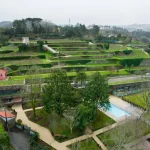
📷 Featured image by Pedro Mealha on Unsplash.