On this page
- The Classic Viewpoints Everyone Visits — and How to Make Them Work
- Hidden and Lesser-Known Miradouros Off the Tourist Trail
- Viewpoints You Earn on Foot — Levada Walks with Panoramic Payoffs
- Clifftop and Coastal Vantage Points — Where Land Meets the Atlantic
- Sunrise and Sunset Spots — Planning by the Light
- Viewpoints Reached by Cable Car
- Photography Tips for Madeira’s Viewpoints
- Getting to the Viewpoints — Transport Reality in 2026
- What Viewpoint Visits Actually Cost in 2026
- Frequently Asked Questions
💰 Click here to see Portugal Budget Breakdown
💰 Prices updated: August, 2026. Budget figures are estimates — always verify before travel.
Exchange Rate: $1 USD = €0.86
Daily Budget (per person)
Shoestring: €40.00 – €90.00 ($46.51 – $104.65)
Mid-range: €130.00 – €200.00 ($151.16 – $232.56)
Comfortable: €250.00 – €500.00 ($290.70 – $581.40)
Accommodation (per night)
Hostel/guesthouse: €15.00 – €45.00 ($17.44 – $52.33)
Mid-range hotel: €100.00 – €190.00 ($116.28 – $220.93)
Food (per meal)
Budget meal: €10.00 ($11.63)
Mid-range meal: €35.00 ($40.70)
Upscale meal: €100.00 ($116.28)
Transport
Single metro/bus trip: €2.00 ($2.33)
Monthly transport pass: €40.00 ($46.51)
Madeira‘s viewpoints have a reputation problem in 2026. Social media has turned a handful of miradouros into genuine bottlenecks, with tour buses arriving at Pico do Arieiro before dawn and parking lots at Cabo Girão filling up by 9am on summer mornings. If you show up without a plan, you’ll spend your golden hour stuck behind a selfie queue. The good news: the island has dozens of extraordinary vantage points, and most visitors never find the best ones. This guide separates the unmissable from the overrated, points you toward the viewpoints where you’ll actually have space to breathe, and tells you exactly when and how to reach each one.
The Classic Viewpoints Everyone Visits — and How to Make Them Work
Madeira’s famous miradouros earned their reputation for a reason. The views are genuinely extraordinary. The trick is not avoiding them — it’s timing them correctly.
Pico do Arieiro
At 1,818 metres, Pico do Arieiro is Madeira’s third-highest peak and one of the few places on the island where you can drive almost to the summit. On clear mornings, the volcanic ridgelines stretch in every direction, and the cloud layer sits below you like a white sea. The colours here are sharper than anywhere else on the island — bare ochre rock, dark basalt, and the occasional patch of snow in January and February. Arrive by 7:30am on weekdays to avoid the first tour bus wave. By 10am in July and August, the small car park is chaos.
Cabo Girão
At 580 metres above the Atlantic, Cabo Girão is one of Europe’s highest sea cliffs. The glass-floored viewing platform extends over the edge, and looking straight down through it to the tiny cultivated fields below produces a stomach-dropping vertigo that no photograph fully captures. The platform itself was renovated in 2024, and in 2026 access requires a timed entry ticket (€3) booked via the Câmara de Lobos municipality website — a change introduced to manage the crowds that previously made the platform feel dangerous. Book the first slot at 8:30am or the last at 5:30pm to get photographs without strangers in every frame.
Boca da Encumeada
This mountain pass connects the north and south of the island and, on the rare days when both coasts are simultaneously clear, you can see the Atlantic on both sides from a single spot. Most visitors stop here for two minutes. Spend twenty. Walk fifty metres west along the old footpath and the angle improves dramatically, cutting out the road and the café car park from your sightline entirely.
Hidden and Lesser-Known Miradouros Off the Tourist Trail
These viewpoints appear on no major tour itinerary. Some have no name signs. All of them are worth the extra effort.
Miradouro do Paredão (Caniçal area)
Drive east past Caniçal toward the Ponta de São Lourenço peninsula and look for the unmarked pull-off just before the main peninsula car park. The view west from here takes in the entire eastern coastline — layers of cliff, bright turquoise water, and on clear days the outline of Porto Santo 45 kilometres away. Almost nobody stops here because the famous peninsula walk is visible from the road and it’s where everyone is heading.
Levada do Furado Viewpoint, above Portela
The Portela miradouro is on most maps. The viewpoint you reach by walking ten minutes northeast along the Levada do Furado from the Portela pass is not. The angle opens up over a deep valley toward Porto da Cruz and the sea, with no car park, no café, and, most days, no other people. The sound up here is wind and running levada water — nothing else.
Eira do Serrado
This viewpoint above the Curral das Freiras valley is technically on tourist maps, but it appears far less crowded than Pico do Arieiro because there’s no dramatic Instagram archetype attached to it. The view is operatic: a ring of near-vertical peaks surrounding the hidden village below, which was settled by nuns fleeing pirates in the 16th century. Come in late afternoon when the shadows begin to define the valley walls and the colours deepen from green to gold to terracotta.
Pico Grande Viewpoint (unlisted)
On the PR1.2 trail section above Encumeada, there’s a rocky outcrop at roughly 1,654 metres that offers a 270-degree panorama of the central massif. It has no official name on trail maps. Hikers who push past the main viewpoint signpost by another 800 metres find it accidentally. The perspective here faces northwest, which means afternoon light hits the valleys below at an angle that professional photographers specifically chase.

Viewpoints You Earn on Foot — Levada Walks with Panoramic Payoffs
Some of Madeira’s best views require walking to reach. These are not difficult hikes by mountain standards, but they reward anyone willing to spend an hour on a trail rather than five minutes in a car park.
PR1 — Pico do Arieiro to Pico Ruivo
The island’s most celebrated trail links its two highest peaks across a knife-edge ridge. The viewpoints along this route — particularly at Pico das Torres and the final approach to Pico Ruivo at 1,862 metres — are the highest and most exposed on the island. On the summit, you stand above the clouds on most mornings between May and October, with nothing but the volcanic spine of Madeira visible in every direction. The trail is 7.5 kilometres one way. Most walkers arrange a taxi return from Achada do Teixeira on the Pico Ruivo side.
PR6 — Rabaçal to Risco Waterfall and 25 Fontes
The Risco viewpoint at the top of the 100-metre waterfall is the payoff on this popular levada walk — but the real panorama is from the ridge path above the waterfall pool, where the Paul da Serra plateau opens up behind you and the Atlantic glints far to the south. The 25 Fontes section adds another 45 minutes and ends at a grotto where 25 springs feed a single green pool. The sound of water is constant for the entire walk.
Vereda do Larano (PR8)
This north-coast trail between Machico and Porto da Cruz is almost unknown outside hiking communities. The miradouro viewpoints along the route — particularly above Larano itself — look straight down onto small fishing villages and black-sand coves that are completely inaccessible by road. The north coast light here is different: softer, greener, and frequently dramatic with incoming weather systems rolling in from the Atlantic.
Clifftop and Coastal Vantage Points — Where Land Meets the Atlantic
Madeira’s interior viewpoints get most of the attention. Its coastal perspectives are equally powerful and far less visited.
Ponta de São Lourenço
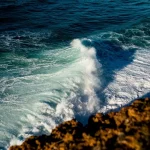
The far eastern tip of Madeira is a narrow peninsula of bare volcanic rock where the island essentially runs out. The trail (PR8 east section) ends at a miradouro where the sea attacks the cliffs on three sides simultaneously. On windy days the spray reaches the viewpoint platform. The layered geology of the cliff faces here — red, black, yellow, and cream strata stacked like geological history made visible — is unlike anything else on the island.

Ponta do Pargo Lighthouse
Madeira’s westernmost point. The lighthouse sits on a cliff edge above churning open Atlantic — no islands visible to the west, just water. The village below is tiny and almost entirely unphotographed. This is one of the few places in Madeira where you get an authentic sense of Atlantic isolation rather than tropical beauty.
Miradouro da Ponta do Rosto
Above Santana on the north coast, this small viewpoint looks west along the dramatic cliffs of Madeira’s most geologically violent coastline. The basalt columns and sea stacks below are visible at low tide, and when swell is running from the northwest, the wave action on the base of the cliffs is extraordinary to watch.
Sunrise and Sunset Spots — Planning by the Light
Light makes or breaks a viewpoint. Madeira’s east-facing and west-facing miradouros need to be visited at completely different times.
Best Sunrise Locations
- Pico do Arieiro — faces east across the Atlantic. The first light hits the volcanic peaks before it reaches anywhere else on the island. Arrive 30 minutes before official sunrise time.
- Ponta de São Lourenço (east tip) — the low angle of early light catches the coloured cliff strata and the sea simultaneously. Spectacular from March through September when the sun rises early enough to be practical.
- Portela Pass — faces northeast and catches the first warm light with Porto da Cruz and the coast below. Far less crowded than Pico do Arieiro for sunrise.
Best Sunset Locations
- Ponta do Pargo — the westernmost point with unobstructed horizon. True Atlantic sunset with nothing in the way.
- Paul da Serra plateau — pull off anywhere on the ER-110 across the plateau and face west. The plateau is at 1,400 metres and the horizon is vast. The light turns the grassland amber before disappearing.
- Cabo Girão — with the timed entry system in 2026, book the 5:30pm slot in summer and you’ll be on the glass platform as the sun drops toward the Câmara de Lobos coast. The cliff face glows orange at this hour.
Viewpoints Reached by Cable Car
Madeira has two cable car systems, and both deliver viewpoint access that would otherwise require serious hiking or driving on steep mountain roads.
Funchal Cable Car (Teleférico do Funchal)
The main cable car rises from the Funchal waterfront (Zone Velha / Old Town end) to Monte, 560 metres above sea level. The views over Funchal’s bay during the ascent — the red-roofed city sloping down to the cruise terminal, the harbour, and on clear days the outline of the Desertas islands — are among the most composed panoramas on the island. The cable car runs from 9am to 5:45pm year-round (closed Tuesdays for maintenance in winter). Return ticket: €16. Single: €12.50.

Jardim Botânico Cable Car
A shorter ride connecting Monte to the Botanical Garden below. The view from the Monte end over the garden’s terraced beds and down to Funchal is excellent for a different angle than the main cable car provides. Ticket: €5 each way.
Achadas da Cruz Cable Car (North Coast)
This is Madeira’s most dramatic cable car and its least visited. It descends a near-vertical cliff on the northwest coast to a tiny agricultural plateau inaccessible by road. The view from the top, looking down the cliff face to the narrow strip of fields and the sea beyond, is vertigo-inducing even before you step into the car. The ride costs €4 return and takes about four minutes. At the bottom, there are smallholdings, a tiny black-sand beach, and almost no tourists.
Photography Tips for Madeira’s Viewpoints
Madeira rewards photographers who understand the island’s meteorology and light patterns.
Working with Cloud, Not Against It
Madeira’s cloud layer sits between 800 and 1,400 metres for much of the year. From viewpoints above this layer, the clouds become part of the composition — a white sea with volcanic peaks breaking through. From below, a cloudy day at a summit viewpoint means zero visibility. Check the webcam at Pico do Arieiro (operated by VisitMadeira — available live on their website in 2026) before driving up. It refreshes every ten minutes and will save you a wasted journey.
The Golden Hour Problem
Madeira’s northern and western viewpoints often sit in shadow during the first and last hour of daylight because the surrounding peaks block the sun at low angles. The east-facing viewpoints catch sunrise light fully from March through September. In winter, only the coastal viewpoints below 200 metres reliably get full sunrise illumination.
Gear Considerations
Wind is the consistent challenge above 1,000 metres. A lightweight tripod works up to about 1,200 metres; above that, gusts at Pico do Arieiro and Pico Ruivo can make a light tripod unusable. A wide-angle lens (16–24mm equivalent) captures the full sweep of the volcanic ridges. For the glass platform at Cabo Girão, shoot vertically downward — that’s the image no one else is taking.

Getting to the Viewpoints — Transport Reality in 2026
Madeira’s public bus network (Horários do Funchal and Rodoeste) covers the main coastal settlements well but stops well short of most mountain viewpoints. The 2026 situation is unchanged from recent years: if you want flexibility for viewpoint-hopping, a rental car is close to essential.
- Rental car: Small cars (group A) cost €25–45/day in 2026 depending on season. Book in advance for July–September — the island has a finite fleet and demand is high. Automatic transmission is worth the small premium on Madeira’s steep, narrow roads.
- Guided tours: Half-day jeep tours covering Pico do Arieiro, Encumeada, and Paul da Serra run from €45–65 per person from Funchal. They solve the transport problem but impose fixed timing — not ideal for photographers.
- Taxis: Reliable for single viewpoints. Funchal to Pico do Arieiro costs approximately €40–50 one way. Some taxi drivers offer fixed-price half-day tours (€80–120); negotiate before departure.
- Bus: Bus 103 runs from Funchal to Santana via Ribeira Fria — it passes close to the Balcões viewpoint (a 20-minute walk from the road). This is one of the only viewpoint-adjacent bus connections outside the city.
What Viewpoint Visits Actually Cost in 2026
Most of Madeira’s viewpoints are free to access. The costs come from transport, parking, and the handful of paid attractions integrated with viewpoint experiences.
Budget Tier (under €15/day for viewpoints)
Walking-access viewpoints like Levada do Furado above Portela, Ponta de São Lourenço, and Vereda do Larano are completely free. Bus access to trailheads from Funchal costs €1.95–3.50 per journey. Pack lunch and water and a full day of extraordinary views costs almost nothing.
Mid-Range Tier (€15–60/day)
A rental car day (€30–45) opens up the mountain circuit: Pico do Arieiro, Boca da Encumeada, Paul da Serra, and Ponta do Pargo in a single loop. Add Cabo Girão timed entry (€3) and the Funchal cable car (€16 return) and a comprehensive viewpoint day costs around €50–65 per person.
Comfortable Tier (€60–120/day)
A private jeep tour with a guide who knows which viewpoints to hit at which time costs €100–150 for two people split between passengers. The Achadas da Cruz cable car (€4 return) and a long lunch in a local restaurant near Ponta do Pargo add colour to the day without significantly increasing costs.

Frequently Asked Questions
What is the best viewpoint in Madeira?
Pico do Arieiro is the most dramatic single viewpoint — you stand above the clouds on a volcanic peak at 1,818 metres and look across the island’s spine. For coastal drama, Ponta de São Lourenço’s eastern tip offers something completely different: bare rock, layered cliffs, and sea on three sides. The “best” depends entirely on whether you want altitude or ocean.
Can you visit Pico do Arieiro without a car?
It’s difficult. There is no direct bus service to the summit. Taxi from Funchal costs approximately €40–50 one way. Some guided tours include it. In 2026, rideshare options via the Bolt app are available from Funchal but few drivers want the mountain run — book in advance and confirm the driver will wait or arrange a return pickup.
Is Cabo Girão free to visit?
Since 2024, the glass-floor viewing platform at Cabo Girão requires a timed entry ticket (€3) booked through the Câmara de Lobos municipal website. The access road and surrounding clifftop area remain free. The €3 covers the platform only — the primary reason most visitors come, but worth knowing before arrival.
When is the best time of year to see clear views from Madeira’s mountain viewpoints?
May through September offers the most consistent clear-sky mornings above the cloud layer. October through April is more unpredictable — some winter days are perfectly clear, others are fogged in for days at a time. Always check the Pico do Arieiro webcam on VisitMadeira’s website before driving up, regardless of season.
Are Madeira’s viewpoint trails safe for non-hikers?
Many viewpoints are reachable by car or short, level walks. The PR1 ridge trail (Pico do Arieiro to Pico Ruivo) involves steep steps and exposed sections and is not suitable for anyone uncomfortable with heights or uneven terrain. Levada walks like Balcões (20 minutes from the road on a flat water channel path) are accessible to almost everyone, including older visitors and those with young children.
📷 Featured image by Juan Goyache on Unsplash.