On this page
- Monsaraz — Hilltop Village Above the Alqueva Lake
- Mértola — Portugal’s Islamic Heritage Town on the Guadiana River
- Arraiolos — The Carpet Town Worth the Short Drive
- Estremoz — Marble, Markets, and a Royal Castle
- Vila Viçosa — Ducal Palace and the Soul of the Alentejo Aristocracy
- Beja — Roman Roots and a Moorish Keep in the Plains
- Portalegre — Gateway to the Serra de São Mamede Mountains
- Cromeleque dos Almendres — Megalithic Stones Older Than Stonehenge
- Setúbal and the Arrábida Coast — When You Want the Sea
- 2026 Budget Reality — What These Day Trips Actually Cost
- How to Get Around Without a Car in 2026
- Frequently Asked Questions
💰 Click here to see Portugal Budget Breakdown
💰 Prices updated: September, 2026. Budget figures are estimates — always verify before travel.
Exchange Rate: $1 USD = €0.88
Daily Budget (per person)
Shoestring: €40.00 – €70.00 ($45.45 – $79.55)
Mid-range: €150.00 – €300.00 ($170.45 – $340.91)
Comfortable: €400.00 – €1,000.00 ($454.55 – $1,136.36)
Accommodation (per night)
Hostel/guesthouse: €15.00 – €50.00 ($17.05 – $56.82)
Mid-range hotel: €70.00 – €150.00 ($79.55 – $170.45)
Food (per meal)
Budget meal: €10.00 ($11.36)
Mid-range meal: €25.00 ($28.41)
Upscale meal: €60.00 ($68.18)
Transport
Single metro/bus trip: €1.90 ($2.16)
Monthly transport pass: €40.00 ($45.45)
Planning day trips from Évora in 2026 comes with a real frustration: most Travel sites still list bus routes that were cut after 2023, and the Alentejo’s sparse public transport has not magically improved. If you’re based in Évora for a few days — which more travellers are, thanks to new boutique accommodation opening along the city walls — you need accurate, up-to-date logistics. This guide covers ten genuinely rewarding destinations, how to reach them, the best time to go, and what you’ll actually spend.
Monsaraz — Hilltop Village Above the Alqueva Lake
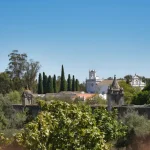
Monsaraz sits inside medieval walls on a ridge above the Alqueva reservoir, the largest artificial lake in Western Europe. The village is tiny — fewer than 150 permanent residents — but the views across the dark water into Spain stop you mid-step. Walking the main street from the castle parapet down to the village square takes about ten minutes, but most people spend two or three hours here without noticing.
The light in late afternoon turns the white-washed walls amber. From the castle battlements, the silence is almost physical — just wind and the occasional gull over the water far below.
Get there by car: 58 km southeast of Évora, roughly 45 minutes via the N256. No direct bus service exists in 2026. Taxis from Évora cost approximately €55–€65 one way. Many visitors combine Monsaraz with a short boat trip on the Alqueva — operators at the Monsaraz marina run 90-minute sunset cruises for around €18 per person.
Mértola — Portugal’s Islamic Heritage Town on the Guadiana River
Mértola is one of the most underrated towns in southern Portugal. Its parish church was a mosque until the 13th century and still has the original mihrab intact inside — a rare survival anywhere in the Iberian Peninsula. The town museum is actually spread across seven small nuclei covering everything from Roman artefacts to Islamic geometric tilework. The Guadiana river curves tightly around the old quarter, and the castle above it has been partially restored without the over-polished feel that ruins some heritage sites.
Distance from Évora: 130 km south, about 1 hour 30 minutes by car via the A2 and IP2. This is a longer trip — go early and plan to have lunch there. The market area near the river serves grilled freshwater fish caught locally. No reliable bus connection runs from Évora directly in 2026.
Arraiolos — The Carpet Town Worth the Short Drive
Arraiolos is only 22 km north of Évora, making it the easiest half-day option on this list. The town has been producing hand-embroidered wool rugs since the 16th century, and the craft is still genuinely alive — not a tourist performance. Several family workshops sell directly, and prices are honest compared to Lisbon shops. The rugs use cross-stitch on a linen base, and the geometric patterns have barely changed in four centuries.
The castle ruin above the town is freely accessible and gives clean views over the Alentejo plain. Combine it with a coffee in the main square and you have a relaxed morning that costs almost nothing. Rede Expressos runs one or two buses daily between Évora and Arraiolos — check current timetables at rede-expressos.pt before travel, as schedules shift seasonally.
Estremoz — Marble, Markets, and a Royal Castle
Estremoz is 46 km northeast of Évora and worth a full morning. The upper town — reached by a short walk or a quick drive up — is dominated by a 13th-century tower and a royal palace that now operates as a pousada. The lower town has a large Saturday market where regional ceramics, charcuterie, and local wines are sold alongside the kind of practical agricultural supplies that remind you this is still a working Alentejo town, not a museum piece.
The area around Estremoz produces some of the Alentejo’s best marble — white with grey veins — and you’ll see it everywhere: paving stones, fountains, building facades. The regional cheese, queijo de Évora, is also produced here and sold fresher than anything you’ll find in a Lisbon supermarket.
Rede Expressos connects Évora to Estremoz with a few departures daily. By car, it’s a 35-minute drive on the A6.
Vila Viçosa — Ducal Palace and the Soul of the Alentejo Aristocracy
Vila Viçosa, 55 km east of Évora, was the seat of the House of Bragança before they became the royal family of Portugal. The Paço Ducal — the ducal palace — is one of the longest palace facades in the country, stretching across one end of a wide marble-paved square. The guided tour inside is genuinely interesting: the rooms have been preserved with personal objects from the last royal residents, not rearranged for effect.

The town is quiet and well-kept, with good lunch options near the castle quarter. It pairs naturally with a stop in Borba — 5 km away — which produces some of the Alentejo’s most respected red wines and has several cooperative cellars open to visitors. Car strongly recommended for this combination.
Beja — Roman Roots and a Moorish Keep in the Plains
Beja sits 78 km south of Évora on one of the flattest stretches of the Alentejo. It was the Roman city of Pax Julia, and the regional museum — housed in a former convent — holds an exceptional collection of Roman mosaics and Visigothic jewellery that most visitors to Portugal never see. The castle keep, Torre de Menagem, is the tallest in Portugal and climbable — the view from the top across the cereal plains feels genuinely vast.
Rede Expressos and Flixbus both serve the Évora–Beja route in 2026, with several departures daily. Journey time is around one hour. By car, take the IP2 south — no tolls on this stretch.
Portalegre — Gateway to the Serra de São Mamede Mountains
Portalegre is the only destination on this list that offers real mountain terrain — the Serra de São Mamede rises to 1,025 metres and is a protected natural park with marked walking trails. The town itself has a 16th-century cathedral, a well-preserved historic centre, and a cork and tapestry manufacturing history that shaped its wealth. The José Régio Museum, dedicated to the poet and his obsessive collection of folk religious art, is oddly compelling.
Distance: 107 km north of Évora, about 1 hour 15 minutes by car on the A6 and IP2. Bus connections exist but are slow and infrequent. This trip is best done by car if you want to explore the natural park.
Cromeleque dos Almendres — Megalithic Stones Older Than Stonehenge
Only 15 km west of Évora near the village of Guadalupe, the Cromeleque dos Almendres is one of the most significant megalithic sites in Europe — predating Stonehenge by roughly 2,000 years. Around 95 standing stones are arranged in an oval on a cork oak hillside. There are no crowds, no entrance fee, and no fence between you and the stones. You can walk among them and touch them.
A dirt track leads the last kilometre to the site. A regular car can manage it, but a hire car with higher clearance is more comfortable after rain. There’s no public transport. A taxi from Évora and back, including 45 minutes waiting time, costs around €30–€35. On the way, stop at the single standing stone Menir dos Almendres, 2 km before the main site — it’s easy to miss and rarely visited.

Setúbal and the Arrábida Coast — When You Want the Sea
Évora is 130 km from the coast, but if you want Atlantic water and dramatic limestone cliffs, the Arrábida Natural Park near Setúbal is worth the 1 hour 30 minute drive northwest. The sea here is clear and cold — turquoise in the shallower bays — and the road through the park above the cliffs is one of the most spectacular in Portugal. Portinho da Arrábida and Galapinhos beaches require a parking reservation in summer (mandatory May–September via the Arrábida park booking system).
No public transport connects Évora to Arrábida directly. Drive the IP1/A2 north and follow signs for Setúbal. This is a long day — leave Évora by 8:00 and return by early evening.
2026 Budget Reality — What These Day Trips Actually Cost
Transport is the main expense for day trips from Évora. Here’s a realistic breakdown by tier:
- Budget (public transport + walking): Arraiolos, Estremoz, and Beja are reachable by bus for €5–€12 return. Add €10–€20 for lunch and museum entries. Total day: €20–€35 per person.
- Mid-range (hire car shared between two): A compact hire car from Évora in 2026 costs €45–€65 per day including insurance. Split between two people, most day trips cost €60–€100 per couple including fuel, lunch, and any paid sites.
- Comfortable (private transfer or taxi): A taxi to Monsaraz and back runs €110–€130 for the round trip. Private driver services bookable through Évora hotels cost €150–€200 for a full-day custom route.
Museum entries across the Alentejo remain low compared to Lisbon — most charge €2–€5. The Paço Ducal in Vila Viçosa costs €8 for the full guided tour. The Arrábida beach parking reservation costs €1.50 per vehicle in 2026.
Lunch in a regional tasca outside Évora typically runs €10–€14 per person for a full meal with wine. Avoid tourist menus near castle entrances — walk one street back and prices drop noticeably.
How to Get Around Without a Car in 2026
The honest reality: the Alentejo is not designed for car-free travel. Most of the destinations above require private transport. That said, here’s what works:
- Rede Expressos buses serve Arraiolos, Estremoz, and Beja from Évora’s bus terminal on Avenida São Sebastião. Book at rede-expressos.pt — online booking works reliably in 2026.
- Flixbus added the Évora–Beja–Faro corridor in 2025 and continues operating it in 2026, giving a second option for Beja.
- Taxi apps: Bolt operates in Évora in 2026 with reasonable coverage. For longer trips, negotiate a fixed return price before departure.
- Car hire: Both Europcar and Rent-a-Car local operators work out of Évora. Book at least 48 hours ahead in summer — availability tightens in July and August.
- Organised day tours: Several Évora-based operators run small-group tours to Monsaraz, Vila Viçosa, and Almendres. Ask at the Évora tourism office on Praça do Giraldo for current listings — the roster changes each season.

Frequently Asked Questions
What is the easiest day trip from Évora for someone without a car?
Arraiolos is the most accessible — just 22 km away with occasional bus service. Estremoz and Beja also have bus connections from Évora’s main terminal. For anywhere else on this list, you’ll need a hire car, taxi, or organised tour to make the trip practical.
How many day trips can you realistically fit into a 3-day stay in Évora?
Two full day trips and one half-day excursion is a comfortable pace. A typical pattern: Monsaraz on day one, Estremoz market on day two morning, and Cromeleque dos Almendres on day three before checkout. Any more and you spend more time driving than experiencing.
Is Monsaraz worth it if I’ve already seen Óbidos?
Yes — they feel nothing alike. Óbidos is polished and heavily visited. Monsaraz is quieter, more remote, and the Alqueva lake setting gives it a completely different atmosphere. If you visit in late afternoon rather than midday, you’ll likely have the castle parapet almost to yourself.
Do I need to book anything in advance for these day trips?
For Arrábida beach parking between May and September, advance booking is mandatory through the park’s online system. The Paço Ducal in Vila Viçosa runs timed guided tours — worth calling ahead in summer. All other sites on this list are walk-in with no reservation needed in 2026.
What’s the best time of year for day trips from Évora?
March to June and September to November are ideal. Summer (July–August) sees temperatures above 38°C regularly across the Alentejo interior, making outdoor sites like Almendres or Monsaraz castle walls genuinely uncomfortable by midday. Winter is mild and crowd-free but check bus schedules, which reduce in low season.
Explore more
The Ultimate Evora Travel Guide: Planning Your Trip to Portugal’s Alentejo
Evora’s Culinary Crown Jewels: The Best Restaurants You Can’t Miss
Best Day Trips from Evora: Your Ultimate Alentejo Exploration Guide
📷 Featured image by Bartosz Kwitkowski on Unsplash.