On this page
- The Problem Every Lisbon Visitor Faces in 2026
- Getting to Sintra by Train — The Only Sensible Option for Most Visitors
- Buying Your Ticket — Navegante Card, Single Tickets, and What Changed in 2026
- Where to Board in Lisbon — Rossio, Oriente, or Entrecampos
- Arriving at Sintra Station — First Moves and What to Expect
- Getting Around Sintra Once You Are There
- Driving to Sintra from Lisbon — When It Actually Makes Sense
- 2026 Budget Reality — What Transport Actually Costs
- Timing Your Trip — First Trains, Last Trains, and the Seasonal Reality
- Frequently Asked Questions
The Problem Every Lisbon Visitor Faces in 2026
Sintra is only 40 kilometres from Lisbon, but bad transport planning can cost you three hours of your day. In 2026, visitor numbers to Sintra have not dropped — if anything, the opening of new direct flight routes into Lisbon from North America and the Gulf has pushed crowds higher between April and October. If you show up at Rossio station at 10am on a Saturday in August without a plan, you will join a very long queue of people who made the same mistake. This guide tells you exactly how to move, where to start, what to pay, and how to avoid the worst of it.
Getting to Sintra by Train — The Only Sensible Option for Most Visitors
The CP Linha de Sintra is a suburban rail line operated by Comboios de Portugal. It runs directly from central Lisbon to Sintra without any changes. The journey takes between 40 and 45 minutes depending on the service, and trains run frequently throughout the day — roughly every 15 to 20 minutes during peak hours and every 30 minutes in the early morning or late evening.
This is, by a wide margin, the most practical way to reach Sintra. There is no traffic, no parking stress, and no hidden costs. The train drops you at Sintra station, which sits at the edge of the historic centre. You walk out of the station and the town is right in front of you.
The line operates from around 5:30am until midnight, with the last train from Sintra back to Lisbon typically leaving just before midnight. Always check the CP timetable at cp.pt before your trip because the exact last departure shifts slightly by season. Missing the last train back is not a disaster — taxis and rideshares exist — but it is an expensive inconvenience.

Buying Your Ticket — Navegante Card, Single Tickets, and What Changed in 2026
You have two main options for paying your fare: a reloadable Navegante card or a single-journey paper ticket. Which makes sense depends on how much time you are spending in Lisbon.
The Navegante Card
The Navegante card is a contactless smart card used across Lisbon’s public transport network — metro, buses, trams, ferries, and suburban trains including the Linha de Sintra. You buy the physical card for €0.50 at any Carris Metropolitana or CP ticket machine, then load credit onto it. A single trip to Sintra and back deducted from a Navegante card costs significantly less than buying two paper tickets. If you are spending three or more days in Lisbon and plan to use public transport regularly, the card pays for itself quickly.
As of 2026, the Lisboa Card — the tourist pass sold separately — also covers CP suburban trains to Sintra, which makes it competitive if you are also planning to visit several museums and monuments in the city. Compare the Lisboa Card price against your expected transport and entry costs before buying.
Single Paper Tickets
Single tickets can be bought at ticket machines inside Rossio, Entrecampos, and Oriente stations. The machines have English-language menus. You select your destination (Sintra), the number of tickets, and pay by card or cash. Paper tickets are fine for a one-off day trip if you are not planning to use Lisbon’s network otherwise. Just keep the ticket with you — you need it to exit the platform at Sintra station.

One change worth knowing about in 2026: Rossio station’s ticketing area was updated with additional self-service machines in late 2025 to reduce queue times during peak hours. In previous years, the single-machine setup caused 20- to 30-minute waits on busy weekends. The situation has improved, but buying your ticket the evening before on the CP app — now fully functional in English — remains the fastest option.
Where to Board in Lisbon — Rossio, Oriente, or Entrecampos
The Linha de Sintra has multiple stops in Lisbon. The three most relevant for visitors are Rossio, Entrecampos, and Oriente. Each suits a different starting point.
Rossio Station
This is the classic departure point and the one most visitors use. Rossio station sits in the heart of Baixa, the flat central district of Lisbon, steps from Praça do Rossio and easy walking distance from Chiado and Bairro Alto. The station building itself is a beautiful piece of 19th-century architecture with horseshoe arches on the facade — you will recognise it immediately. For anyone staying in central or western Lisbon, this is your station. The Linha de Sintra platforms are downstairs at the back of the main hall.
Oriente Station
Oriente is Lisbon’s main intercity hub, located in the Parque das Nações district in the east of the city. If you are staying near the airport, in Parque das Nações, or arriving on a long-distance train from Porto or the Algarve, boarding at Oriente is logical. The Linha de Sintra does stop here, though the journey to Sintra is a few minutes longer than from Rossio because the train travels westward across the city first. Oriente is also a major Rede Expressos bus terminal and has direct metro connections.

Entrecampos
Entrecampos is a useful option if you are staying in the Avenidas Novas or Saldanha area, or if you take the metro to Entrecampos station (Yellow Line) and transfer there. It is less crowded than Rossio at peak times, and the train journey to Sintra from here takes around 38 minutes. Not well known by tourists, which means shorter platform queues.
Arriving at Sintra Station — First Moves and What to Expect
Sintra station is a single-floor building with blue azulejo tile panels inside depicting scenes from Portuguese history and mythology — worth thirty seconds of your time before you head out. The station sits at the bottom of the town, a short uphill walk from the historic centre and Sintra Vila.
Outside the station, you will immediately encounter a cluster of tuk-tuks, taxi drivers, and the bus stop for lines 434 and 435. In high season — May through September — this area fills up within minutes of a train arriving. If your plan is to walk into the historic centre, turn left out of the station and follow the main road uphill. It takes about 10 minutes on foot.
The town has an official tourist information point near the station entrance. It is useful for paper maps, but for real-time bus information, the Scotturb app (the operator of Sintra’s local buses) is more reliable. Download it before you leave Lisbon.
Getting Around Sintra Once You Are There
Reaching Sintra by train is the easy part. The palaces and viewpoints are spread across steep hillside terrain, and the distances between them are longer than they look on a map. Getting this leg wrong is what ruins most people’s days.
Bus 434 — The Circular Palace Route
Bus 434 runs a circular route from the station through the historic centre, up to Pena Palace, across to Moorish Castle, and back down. It is the standard option for visiting the two most popular sites. Buy your ticket on board or at the station kiosk. A day pass for the 434 is worth it if you plan to ride it more than twice. The bus runs frequently in summer — every 15 to 20 minutes — but can be standing-room only. At the height of summer, queues at the Pena Palace bus stop can mean waiting for two or three buses before you get on.

Bus 435 — Monserrate and Quinta da Regaleira
Bus 435 runs from the station to Quinta da Regaleira, Monserrate Palace, and the village of Colares. If Monserrate or Quinta da Regaleira is on your list — and Quinta da Regaleira absolutely should be — this is your bus. It runs less frequently than the 434, so check the Scotturb timetable in advance.
Walking
Walking between the station, the historic centre, and Quinta da Regaleira is realistic — the route is about 1.5 kilometres. Walking from Sintra Vila up to Pena Palace is a steep 3-kilometre climb and is not practical for most visitors during hot weather. The path does exist and is used by hikers, but in July and August the midday temperature on the exposed sections can reach 30°C or above, even though Sintra is generally cooler than Lisbon.
Tuk-Tuks and Taxis
Tuk-tuks operate fixed tour circuits rather than point-to-point trips. They are entertaining but expensive and not the most efficient way to see the sites. Taxis and Uber/Bolt are available and are genuinely useful for specific situations — getting from one palace to another quickly, or for travellers with mobility limitations. A taxi from the station to Pena Palace costs approximately €8–€10 in 2026.
Driving to Sintra from Lisbon — When It Actually Makes Sense

Driving is not the recommended option for most visitors, but it is not always wrong either. The IC19 motorway connects central Lisbon to Sintra in about 30 to 40 minutes outside rush hour. From the A5 or A37, navigation is straightforward. Google Maps and Waze both handle the route well.
The problem is parking. Sintra’s historic centre has a small number of paid car parks that fill early on weekends and public holidays. By 9am on a summer Saturday, the main car parks near the historic centre and at the base of the Pena Palace road are full. You will find yourself parking 2 kilometres away and walking uphill anyway — which defeats much of the point.
Driving makes sense if you are travelling with young children or elderly relatives who cannot easily use public transport, if you plan to visit Cabo da Roca or the Sintra coast (Praia das Maçãs, Azenhas do Mar) on the same day — sites not served well by the train — or if you are based outside Lisbon and Sintra is on your route.
Tolls on the IC19 apply if you enter from the Lisbon side. Make sure your rental car has a working Via Verde transponder or factor in the toll cost. In 2026, the toll from the Lisbon ring road to the Sintra exit runs approximately €1.80 each way.
2026 Budget Reality — What Transport Actually Costs
Here is a clear breakdown of what you will spend on transport for a Sintra day trip in 2026, depending on your approach.
Budget Option — Navegante Card + Bus Day Pass
- Navegante card purchase (one-time): €0.50
- Lisbon to Sintra train (single fare, Navegante): approximately €2.25 per trip
- Return train: approximately €2.25
- Scotturb bus day pass (lines 434/435): approximately €15.00
- Total transport cost per person: approximately €20
Mid-Range Option — Single Paper Tickets + Individual Bus Tickets
- Return train ticket (paper): approximately €5.20
- Bus 434 return ride (two individual tickets): approximately €10.00
- Total transport cost per person: approximately €15–€16

Note: The day bus pass is more economical if you plan to use buses 434 and 435 more than twice. If you are only going to Pena Palace and back, two individual tickets cost less than a day pass.
Comfortable Option — Train + Taxis Between Sites
- Return train ticket: approximately €5.20
- Two or three taxi journeys within Sintra: €8–€12 each
- Total transport cost per person: approximately €25–€35
Driving Option
- Petrol (Lisbon to Sintra return, average car): approximately €4–€6
- Tolls (both directions): approximately €3.60
- Parking (full day in the main car parks): €8–€12
- Total: approximately €16–€22 per car (spread across passengers)
Timing Your Trip — First Trains, Last Trains, and the Seasonal Reality
For the return journey, the last train from Sintra back to Lisbon Rossio departs close to 11:30pm, though you should confirm this at cp.pt as seasonal adjustments apply. Evening Sintra — after 6pm when the day-trippers have cleared — has its own atmosphere. The light on the palaces at dusk is striking, the restaurants in the historic centre are calmer, and the town feels like it belongs to people who actually chose to be there.
In November through February, Sintra is quieter but not empty. Weekdays in winter see a fraction of summer crowds, and the Linha de Sintra runs without difficulty. Some minor attractions have reduced hours in winter — check individual palace websites — but Pena and the Moorish Castle remain open year-round.
Frequently Asked Questions
How long is the train journey from Lisbon to Sintra?
The direct CP train from Rossio station takes 40 to 45 minutes. From Oriente it takes around 50 minutes because the train passes through more of the city first.
Can I use my Lisbon Metro card on the train to Sintra?
Yes. The Navegante card — the standard reloadable smart card used on Lisbon’s metro, buses, and trams — is also valid on CP suburban trains including the Linha de Sintra. Load credit onto the card and tap in and out at the station gates. The Lisboa tourist pass also covers CP suburban trains to Sintra as of 2026.

Is it possible to visit Sintra without a car?
Completely. The train from Rossio is faster and more reliable than driving, and Sintra’s local buses (434 and 435) connect the station to all major palaces and gardens. Only consider driving if you plan to visit the Atlantic coast as part of the same day.
What time should I leave Lisbon to avoid the worst crowds at Sintra?
Take the first or second train of the morning — ideally departing Rossio before 8:30am. This gets you to Sintra before the main wave of tour buses arrives between 9:30 and 10:30am. Pena Palace opens at 9:30am, and being in the first group through the gates makes a significant difference to your experience of the site.
Are there direct buses from Lisbon to Sintra?
There is no direct express bus service connecting central Lisbon to Sintra in the way the train does. Some coach tour operators run organised day trips with bus transport included, but for independent travellers the CP train is faster, cheaper, and more flexible. Local buses within Sintra (Scotturb lines 434 and 435) are a separate network covering travel once you have arrived by train.
Explore more
The Best Day Trips from Sintra: Coastal Towns, Palaces & Hidden Gems
The Ultimate Sintra Travel Guide: Palaces, Castles & Enchanted Forests
Sintra’s Must-Buy Souvenirs: Where to Find Local Crafts, Ceramics & Unique Gifts
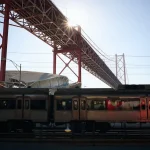
📷 Featured image by Filipe Nobre on Unsplash.