On this page
- The Old Town: Cascais’s Pedestrian Core
- The Beaches: Which One Suits You?
- The Boca do Inferno and the Atlantic Coast Walk
- Museums and Cultural Stops Worth Your Time
- Where to Eat and Drink in Cascais
- Day Trip or Overnight? Making the Decision
- Getting There and Getting Around
- 2026 Budget Reality: What Cascais Actually Costs
- Frequently Asked Questions
💰 Click here to see Portugal Budget Breakdown
💰 Prices updated: August, 2026. Budget figures are estimates — always verify before travel.
Exchange Rate: $1 USD = €0.86
Daily Budget (per person)
Shoestring: €40.00 – €90.00 ($46.51 – $104.65)
Mid-range: €130.00 – €200.00 ($151.16 – $232.56)
Comfortable: €250.00 – €500.00 ($290.70 – $581.40)
Accommodation (per night)
Hostel/guesthouse: €15.00 – €45.00 ($17.44 – $52.33)
Mid-range hotel: €100.00 – €190.00 ($116.28 – $220.93)
Food (per meal)
Budget meal: €10.00 ($11.63)
Mid-range meal: €35.00 ($40.70)
Upscale meal: €100.00 ($116.28)
Transport
Single metro/bus trip: €2.00 ($2.33)
Monthly transport pass: €40.00 ($46.51)
Cascais has always attracted crowds, but 2026 has brought a new pressure point: the town is busier than ever on summer weekends, with day-trippers from Lisbon flooding in on the same morning trains. If you want to see the best of this place — the good beaches, the quiet corners, the honest seafood restaurants — you need a sharper plan than most travel sites offer. This guide gives you one.
The Old Town: Cascais’s Pedestrian Core
The heart of Cascais is compact enough to cover on foot in an hour, but it rewards people who slow down. The streets between Largo Luís de Camões and the fishing harbour are lined with whitewashed buildings, azulejo-tiled facades, and the kind of small shops that have been here for decades — not Instagram pop-ups, but a proper cobbler, a bakery, a wine merchant with cases stacked to the ceiling.
The fishing harbour itself is still active in the early morning. Arrive before 9am and you’ll see the boats unloading, the smell of brine sharp in the cool air, the catch laid out in plastic crates while buyers inspect it. By 10am the tourist cafés open and the character shifts. The harbour is always worth a look, but the hour matters.
Largo Rainha Dona Amélia, the central square, has been pedestrianised for years. The tiles underfoot, the outdoor café tables, and the 17th-century Nossa Senhora da Assunção church give it a lived-in elegance that doesn’t feel performed. This is a genuine Portuguese town that happens to also be beautiful.
The Beaches: Which One Suits You?
Cascais has three beaches within easy reach, and they are genuinely different from each other. Picking the right one saves you time and disappointment.
- Praia de Cascais — The town beach, closest to the centre. Convenient and popular, with calm water in a sheltered bay. In July and August it gets crowded by 11am. Best for families with small children or anyone who wants to be close to cafés and restaurants.
- Praia da Rainha — Smaller and slightly less visited, just west of the centre. Often overlooked because it sits between the other two. A good option if you want sand without the full summer crush.
- Praia da Ribeira — The smallest of the three, right beside the fishing harbour. More of a local spot. Not ideal for long beach days but good for a quick swim before lunch.
For wilder conditions, Praia do Guincho is 9 kilometres west and a completely different experience — wide, windswept, and backed by dunes and the Sintra-Cascais Natural Park. The water is cold and the Atlantic swells are real. Surfers and kitesurfers use it year-round. There is a bus (line 405 from Cascais station) but service is limited outside summer.

The Boca do Inferno and the Atlantic Coast Walk
The Boca do Inferno — “Mouth of Hell” — is a sea cave and blowhole carved into the cliffs about 2 kilometres west of the town centre. It is on every itinerary and yes, it can be busy. But the reason people keep coming is simple: on a day with any Atlantic swell, the sight and sound of waves forcing through that narrow rock channel is genuinely impressive. The low rumble you feel in your chest before you hear the crash is the kind of detail that photographs cannot capture.
The cliffside promenade connecting Cascais to Boca do Inferno is one of the best short walks on this coast. It takes about 25 minutes each way, runs along the top of the cliffs with ocean views the entire route, and costs nothing. There are information boards in English explaining the geology. Go in the late afternoon for the best light and fewer people.
Museums and Cultural Stops Worth Your Time
Cascais has a stronger cultural offering than most visitors expect from a beach town. Two stops stand out above the others.
Casa das Histórias Paula Rego is one of the best modern art museums in Portugal, full stop. The building itself — two rust-red pyramid towers designed by Eduardo Souto de Moura — announces its ambition before you step inside. The permanent collection covers the full arc of Paula Rego’s career, from her early figurative work to the dark, unsettling narratives she became internationally known for. Budget 90 minutes. Admission is around €6 in 2026.
Museu dos Condes de Castro Guimarães sits inside a romantic early 20th-century manor beside a small lake and park at the edge of town. The collection includes Indo-Portuguese furniture, azulejo panels, and a 16th-century illuminated manuscript. It is the kind of place that feels slightly forgotten by the main tourist circuit, which makes it worth finding. Entry is €2.

The park surrounding the Castro Guimarães museum, Parque Marechal Carmona, is also worth 30 minutes on its own. Peacocks roam freely, there are shaded benches, and on weekday mornings it is almost entirely locals.
Where to Eat and Drink in Cascais
The restaurants directly on the harbour tend to run on tourist pricing and mediocre fish. You can do better by walking one or two streets back.
Taberna da Praça on Rua da Palmeira is a small, honest tasca that does daily specials based on what came off the boats that morning. No printed menu beyond the chalkboard. The caldo verde is thick and properly smoky, and the grilled corvina comes with nothing more than olive oil, lemon, and boiled potatoes — which is exactly right.
O Tradicional near Largo do Poço is reliable for bacalhau à brás and arroz de lingueirão. It fills up fast at lunch; arrive by 12:30 or expect to wait.
For coffee and pastries, Sacolinha on Rua Frederico Arouca has been going for decades. The queijadas — small cheese tarts that are a local speciality, denser and less sweet than a pastel de nata — are baked fresh each morning. The pastry shell crumbles, the filling is warm and faintly savoury. Buy two.
In the evening, the wine bars around Largo Luís de Camões are the right place to end up. A glass of local Colares or a crisp Vinho Verde from the Minho alongside a board of local cheeses costs under €15 and takes the edge off any over-planned day.
Day Trip or Overnight? Making the Decision
Cascais is 40 minutes from Lisbon’s Cais do Sodré station by train — one of the most scenic commuter rail routes in Europe, running along the Tagus estuary and then the coast. That makes it a very natural day trip, and millions of people do exactly that.
But Cascais after 6pm, once the day-trippers have cleared, is a different town. The restaurants are calmer, the streets have space, and the light over the harbour in the evening is the kind of thing that makes people stay longer than they planned.
Stay overnight if: you want to reach Guincho beach in the morning before the wind picks up, you plan to walk the extended coastal trail, or you want to combine Cascais with a visit to Sintra the next day (they are 12 kilometres apart by road). One night is usually enough. Two nights gives you genuine breathing room.

Getting There and Getting Around
The Cascais Line train from Cais do Sodré runs every 20 minutes throughout the day. The journey takes 38–42 minutes depending on the service. A single ticket costs €2.55 in 2026 with a Navegante card loaded, or €3.20 without one. The Navegante card is worth getting if you are spending more than two days in the Lisbon region.
From Cascais station, the old town is a 5-minute walk. Buses to Guincho (line 405) and Sintra (line 403) depart from directly outside the station. The Sintra bus takes about 45 minutes and runs roughly every hour — check the schedules at the station, as timetables adjusted in early 2026.
Within Cascais, walking covers most of what you need. The council’s free bike-share scheme, Bicas, has docking stations throughout the town and along the seafront promenade. It is a sensible way to reach Boca do Inferno or the Parque Marechal Carmona without walking in full sun.
2026 Budget Reality: What Cascais Actually Costs
Cascais sits in a higher price bracket than most Portuguese towns outside Lisbon and Porto, but it is not unreachable on a moderate budget.
- Budget (under €60/day per person): Day trip from Lisbon on the train, packed lunch or a tasca lunch for €10–13, free beaches and walking, entry to one museum. Entirely doable.
- Mid-range (€100–150/day per person): One night in a guesthouse or 3-star hotel (€80–120 for a double room in 2026), sit-down lunch and dinner at solid local restaurants (€15–25 per person per meal), museum entries, a coffee and queijada.
- Comfortable (€200+/day per person): Boutique hotel or design property near the seafront (€180–280+ for a double), dinner at one of the better seafood restaurants with wine (€40–55 per person), spa or guided activities.
Accommodation prices spike sharply in July and August. Booking 8–10 weeks ahead is normal now in 2026; leaving it to 3 weeks out in peak season will cost you significantly more or leave you with limited options.
Frequently Asked Questions
Is Cascais worth visiting in winter?
Yes. Winter in Cascais means mild temperatures (12–16°C), no crowds, lower hotel prices, and the same scenery and town character. The beaches are empty but still walkable. Some seasonal restaurants close November through February, but enough is open to eat well. The cliff walk to Boca do Inferno is actually better in rough winter conditions.

How long do you need in Cascais?
One full day covers the core: the old town, one beach, the cliff walk to Boca do Inferno, and a proper lunch. Add a second day if you want Guincho beach, the Casa das Histórias museum, and a relaxed evening dinner. Two days is the sweet spot for most visitors who want to experience the town properly without rushing.
Can you visit both Cascais and Sintra in one day?
Technically yes, but you will feel the pace. The bus between the two takes about 45 minutes. A realistic approach is Cascais in the morning — arrive early on the train from Lisbon — then bus to Sintra for the afternoon. You get the town, the cliff walk, and one Sintra palace. Expect a long day. Better to give each place a separate day if your schedule allows.
What is the water temperature at Cascais beaches?
Atlantic water here is cooler than the Mediterranean. In summer (July–August) it reaches 18–21°C — refreshing but not warm. At Praia do Guincho, exposed to stronger Atlantic currents, it tends to run 1–2°C cooler. From October through May, water temperatures drop to 14–17°C. Wetsuits are common at Guincho year-round among regular swimmers.
Is Cascais family-friendly?
Very. The town beach has calm, shallow water suitable for young children. The pedestrian old town is safe and easy to navigate with a pushchair. Parque Marechal Carmona has open space, a small animal enclosure, and the free-roaming peacocks that children tend to find extraordinary. The train journey from Lisbon is itself an easy, enjoyable part of the trip for families.
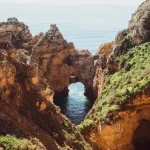
📷 Featured image by Artem Zhukov on Unsplash.